Quick Summary
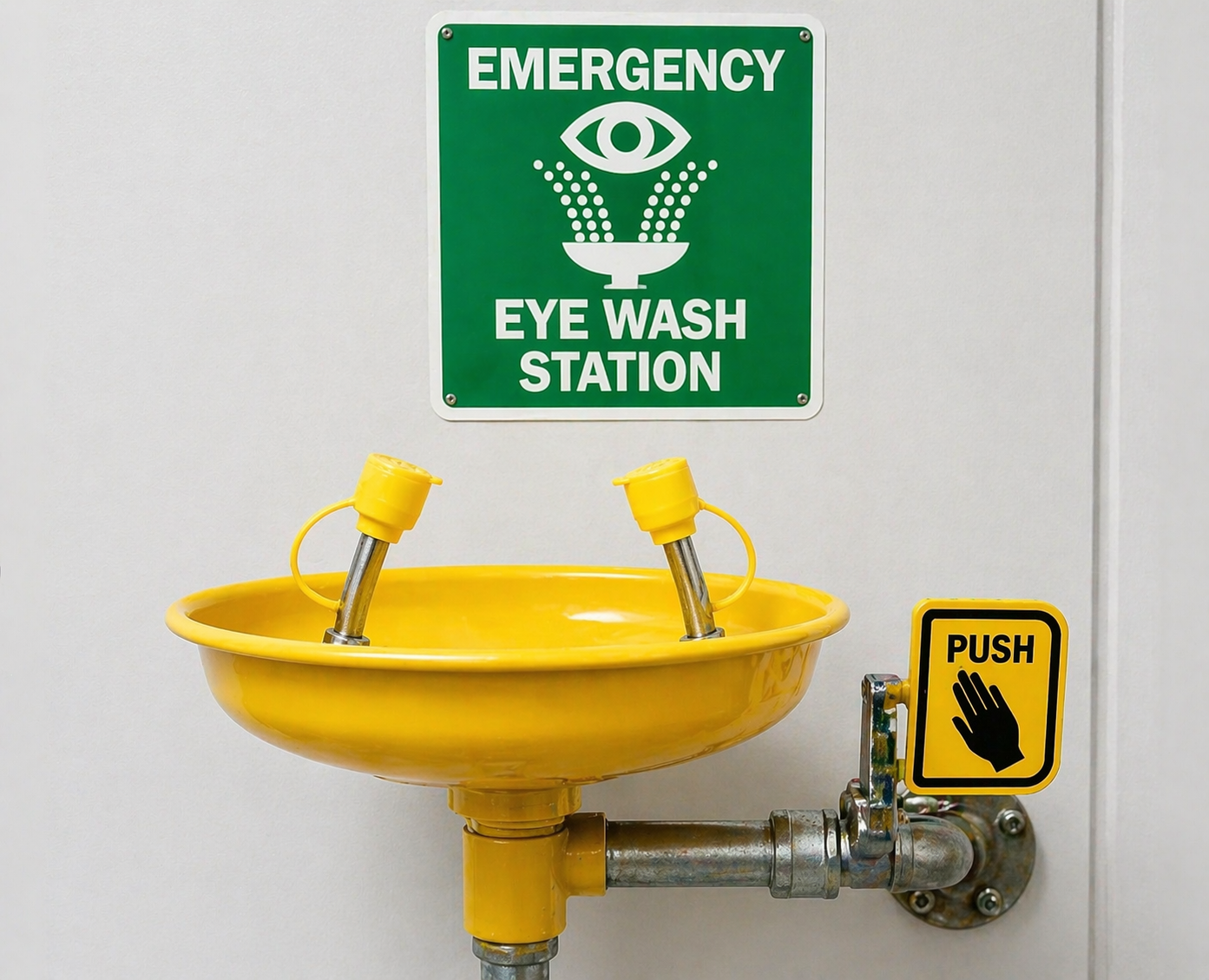
Eye wash stations are critical emergency safety equipment used to flush hazardous substances from the eyes. ANSI Z358.1 sets the standard for proper installation, performance, and maintenance, while OSHA requires access to suitable facilities for quick drenching or flushing.
What Is an Eye Wash Station?
An eye wash station is a safety device designed to rinse the eyes immediately after exposure to hazardous materials such as chemicals, dust, or debris.
They are commonly installed in laboratories, industrial facilities, and workplaces where eye hazards are present.
Why Eye Wash Stations Are Essential
- Prevents permanent eye damage
- Provides immediate emergency response
- Reduces severity of chemical exposure
- Ensures workplace compliance
OSHA Requirements for Eye Wash Stations
OSHA standard 29 CFR 1910.151 requires that suitable facilities for quick drenching or flushing of the eyes be provided where hazardous materials are present.
View OSHA regulation: OSHA Medical and First Aid Standard (1910.151)
Additional workplace safety guidance: NIOSH Eye Safety Resources
ANSI Z358.1 Eye Wash Station Requirements
1. Location and Accessibility
- Must be within 10 seconds of hazard
- No obstructions
- Same level as hazard
2. Flow Rate
- Minimum 0.4 gallons per minute (GPM)
- Continuous flow for at least 15 minutes
3. Water Temperature
- Tepid water (60°F–100°F)
- Prevents shock and encourages full usage
4. Hands-Free Operation
- Must activate in one second or less
- Remain on without holding
Types of Eye Wash Stations
- Plumbed eye wash stations
- Portable eye wash units
- Combination eye/face wash stations
- Personal eye wash bottles
Maintenance and Inspection Requirements
- Weekly activation tests
- Annual compliance inspections
- Keep units clean and unobstructed
- Check water flow and temperature
Common Mistakes to Avoid
- Placing stations too far from hazards
- Blocked access paths
- Incorrect water temperature
- Lack of regular maintenance
Additional PPE for Eye Protection
Eye wash stations are emergency solutions, but PPE is the first line of defense.
- Safety goggles
- Face shields
- Protective gloves
Explore related safety gear: High-Visibility Clothing Guide
Related Safety Equipment
Conclusion
Eye wash stations are a critical component of workplace safety. Following ANSI Z358.1 guidelines and OSHA requirements ensures proper emergency response and helps prevent serious eye injuries.
People Also Ask
How close should an eye wash station be?
It must be within 10 seconds of the hazard and easily accessible.
What is ANSI Z358.1?
It is the standard that defines requirements for emergency eye wash and shower equipment.
Does OSHA require eye wash stations?
Yes, when employees are exposed to hazardous materials.
How often should eye wash stations be tested?
Weekly activation tests and annual inspections are required.
What temperature should eye wash water be?
Between 60°F and 100°F (tepid water).
About the Author
Mick Chan is a Safety Supplies industry professional with over 15 years of experience specializing in OSHA compliance, PPE regulations, and workplace safety solutions.