Quick Answer
A welding blanket can help protect immovable surfaces or nearby items from sparks and spatter when hot work cannot be moved away from the hazard. Choose the blanket for the actual process, expected exposure, orientation, size, and manufacturer-rated use. It does not replace clearing combustibles, a fire watch where required, extinguishing equipment, or a hot-work permit procedure. Start with the work area, then match the blanket to that exposure.
Who This Guide Is For
This guide is for facilities and crews buying blankets to shield surfaces or equipment during welding, cutting, or related hot work. It is educational, not a fire-protection design or permission to work in an unsafe area. Follow the employer's hot-work program, applicable OSHA rules, local fire requirements, and the exact blanket's manufacturer instructions.
Move the Hazard First
OSHA's general-industry welding rule starts with a simple preference: if the object to be welded or cut can be moved, take it to a safe place. If it cannot be moved, move nearby combustible materials. When neither the work nor all the fire hazards can be moved, guards may be needed to confine heat, sparks, and slag and protect immovable hazards. If those basic precautions cannot be followed, the work should not go ahead.
That order matters. A blanket is not a reason to leave cardboard, rags, or packaging under a grinding or cutting operation. Walk the area before selecting a product. Look above, below, behind, and through floor or wall openings; sparks do not stop at the edge of a workbench. Consider the far side of metal walls or partitions that may conduct heat to hidden combustibles.
Blanket, Curtain, or Pad?
Product names can blur together. A welding blanket is commonly draped over an object or surface to shield it from hot-work debris. A curtain hangs to separate an area; it may also address light and spatter, depending on its documented use. A pad can be intended for heavier or more concentrated exposure. Do not infer that a blanket suitable for occasional sparks can tolerate prolonged direct contact with a torch or molten metal.
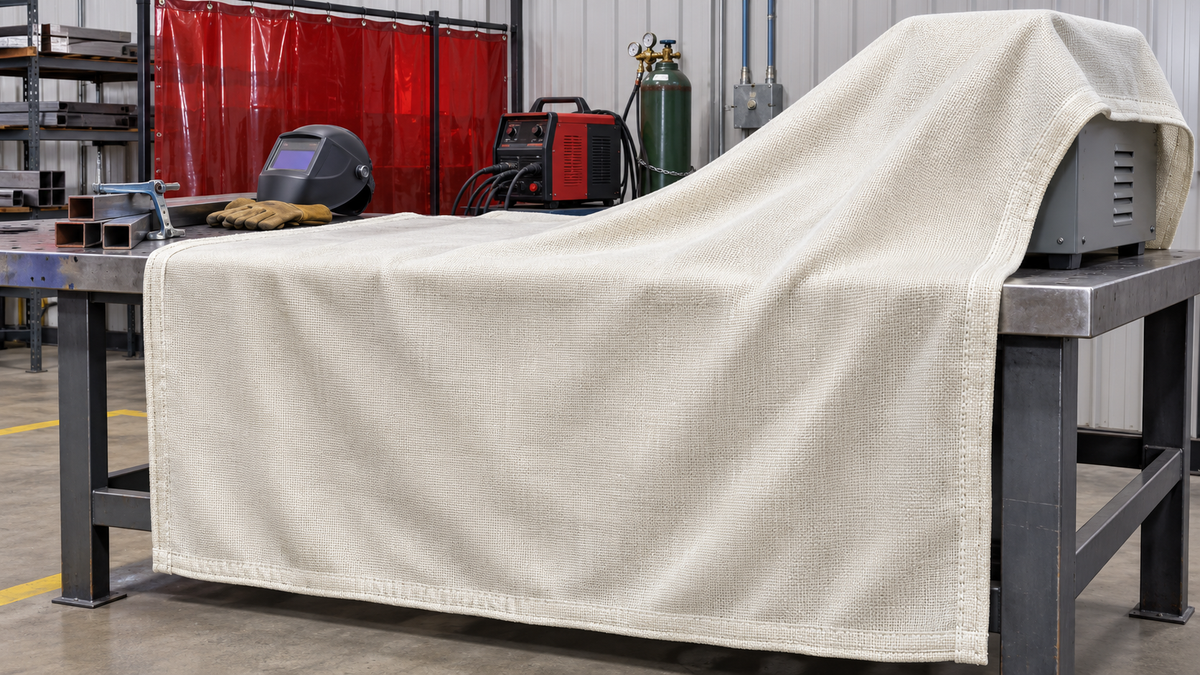
Ask how the product will actually be installed. A blanket laid flat over equipment needs enough coverage and a way to keep gaps closed. A vertical barrier needs suitable hanging points, overlap, and restraint so it cannot fold away from the hazard. Check the manufacturer's stated use and performance for that orientation. Never drape a blanket over a person or use a welding blanket as a substitute for personal welding PPE unless the manufacturer explicitly specifies that use.
Compare the Exposure, Not Just Fabric Weight
ESS carries an active Radnor 18-ounce fiberglass welding blanket and heavier models. Weight can help distinguish products, but it is not a complete measure of fire performance. Fiberglass, silica, carbon-fiber, and leather products may serve different exposure patterns. Manufacturer documentation should identify the process, spark or spatter intensity, temperature or duty limits, and whether the product is designed for horizontal or vertical placement.
For example, intermittent grinding sparks across a broad surface are not the same as a focused torch near one seam. A hole, grommet, or overlap can become the weak point even when the main fabric has an impressive specification. Choose the entire installed barrier, not just a material name.
Size and Placement Checklist
Measure the area to be shielded before ordering. Add enough overlap to cover edges and account for the way the blanket will drape. Verify that cables, clamps, or workpiece movement will not pull it away. If a blanket has grommets, use compatible mounting that does not create a new trip or snag hazard. Keep the blanket clear of paths that people need for escape or fire-watch access.
Check for nearby combustible liquids, dust, insulation, roof membranes, or concealed cavities. A blanket may stop a shower of sparks from reaching one surface while heat travels through a metal partition or falls through a nearby opening. Where the worksite is complex, have the hot-work permit issuer and fire watch review the setup before starting.
Inspection and Fire Watch Still Matter
Before each use, look for burns, holes, frayed edges, contaminated areas, damaged grommets, and previous repairs. A blanket that once worked for light spatter may have accumulated damage. Follow the manufacturer's cleaning and retirement instructions; do not assume a dirty or oil-soaked blanket remains suitable.
OSHA calls for suitable fire-extinguishing equipment to be ready for immediate use. A fire watch is required under specified conditions, including certain nearby combustible exposures and openings. The watch must be trained and continue for at least half an hour after welding or cutting stops. A blanket does not shorten that period. Record who is watching, what area they can see, and how they will sound an alarm.
Buying Questions to Put on the Order
- What process is being used: welding, cutting, brazing, or grinding?
- What direction and intensity of sparks, spatter, slag, or radiant heat is expected?
- Which immovable item or surface needs shielding, and what lies behind or below it?
- Will the blanket be horizontal, vertical, draped, or suspended?
- What size, overlap, grommets, and supports are needed?
- Which exact manufacturer performance claim supports the intended use?
- Who inspects the blanket, and when will it be replaced?
Common Questions
Are welding blankets fireproof?
Treat that as an unsafe shorthand. A blanket has documented limits and can be damaged by exposure. Match the exact product to the process and follow its instructions.
Can a welding blanket replace a fire extinguisher?
No. OSHA requires suitable extinguishing equipment to be ready for use during hot work. A blanket is one possible guard for nearby hazards, not the complete fire-prevention plan.
Can one blanket be used for both light grinding and heavy cutting?
Only if its manufacturer documentation covers both exposures and the installation protects the full hazard area. The process and orientation matter as much as the blanket's size.
Final CTA
Document the hot-work exposure and measure the shielding area first. Then compare ESS welding blankets against their manufacturer specifications, or request a quote with the process, placement, size, and quantity your crew needs.
About Mick Chan: Mick Chan contributes safety supply guidance for eSafetySupplies content, with a focus on practical PPE selection, workplace readiness, and helping teams connect safety requirements to the right supplies. His review perspective is included to keep recommendations grounded in real purchasing and jobsite use.