
Quick Answer
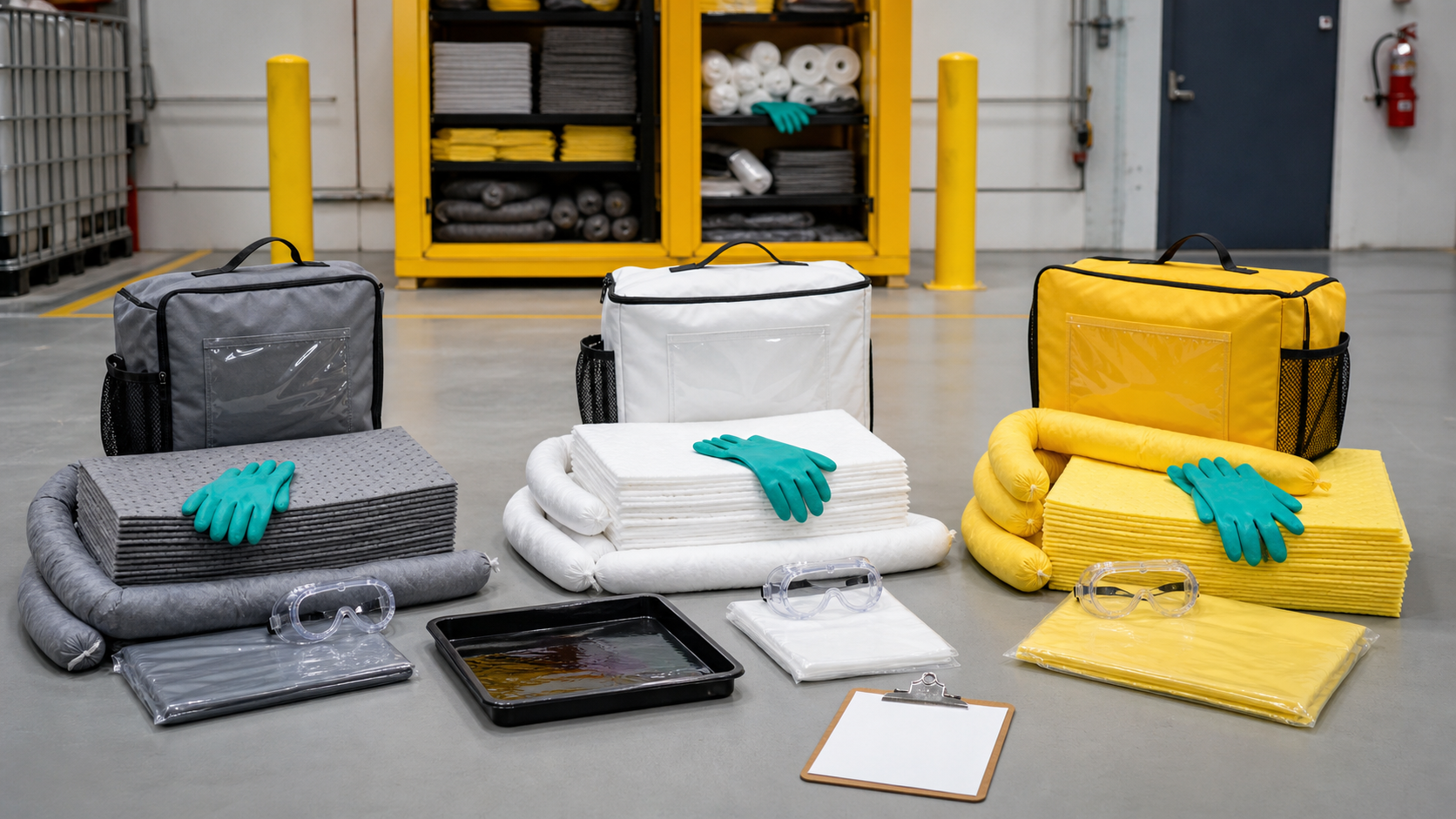
Universal spill kits are used for many non-aggressive water-based fluids, coolants, and general maintenance spills. Oil-only spill kits are designed for petroleum-based fluids and are commonly used where oil, fuel, or hydraulic fluid may be present. Hazmat spill kits are selected for more hazardous chemicals and should be matched to the specific chemical, Safety Data Sheet, response plan, and worker training.
The right kit depends on what can spill, where it can spill, how much can spill, and whether the spill is incidental or requires emergency response.
Spill Kit Types At A Glance
| Kit type | Common use | Buyer caution |
|---|---|---|
| Universal | General facility leaks, coolants, water-based fluids, maintenance spills | Not for every chemical. Check SDS and absorbent compatibility. |
| Oil-only | Oil, fuel, hydraulic fluid, petroleum spills, outdoor or wet areas | Choose capacity based on realistic worst-case leaks. |
| Hazmat | Acids, bases, solvents, unknown or aggressive chemicals | Requires chemical-specific review and trained response procedures. |
| Biohazard | Blood or potentially infectious material cleanup | Separate from chemical spill kits; follow exposure control procedures. |
Universal Spill Kits
Universal kits are often used in warehouses, maintenance shops, production floors, and facility areas where general leaks are possible. They usually include absorbent pads, socks, pillows, disposal bags, and basic PPE. They are a practical baseline for many routine spills, but “universal” does not mean suitable for every chemical.
Oil-Only Spill Kits
Oil-only absorbents are selected where petroleum-based liquids are the main concern. They are commonly used around fleet maintenance, hydraulic equipment, compressors, generators, fueling areas, and outdoor work. Many oil-only absorbents repel water, which can be useful when oil is present in wet areas.
Hazmat Spill Kits
Hazmat kits require more care. The Safety Data Sheet should drive PPE, absorbent, neutralizer, disposal, and response decisions. Some spills can be handled as incidental releases by trained employees; others may require emergency response under OSHA HAZWOPER rules. If the spill involves unknown substances, high toxicity, fire risk, large volume, or worker exposure beyond training, stop and escalate according to the site plan.
Buying Checklist
- List liquids stored, used, transferred, and transported on site.
- Review SDS guidance for spill response, PPE, incompatibilities, and disposal.
- Place kits near likely spill points, not only in a central closet.
- Choose kit capacity based on realistic container and transfer volumes.
- Include compatible gloves, goggles, disposal bags, and labels.
- Train workers on incidental spill limits and when to evacuate or escalate.
- Inspect kits after use and on a recurring schedule so supplies stay complete.
Common Mistakes To Avoid
Do not buy one kit and assume it covers every department. Do not store spill kits behind locked doors if spills happen on the floor. Do not let used kits remain half-empty. Also avoid treating hazmat spill response as a simple product purchase; training, procedures, disposal, and emergency escalation matter as much as absorbents.
FAQ
What is the difference between universal and oil-only absorbents?
Universal absorbents are used for many general facility fluids. Oil-only absorbents are designed for petroleum-based fluids and may repel water, making them useful for oil spills in wet areas.
Do I need a hazmat spill kit?
You may need a hazmat kit if your site stores or uses hazardous chemicals. The SDS, spill volume, chemical properties, and response plan should drive the decision.
Where should spill kits be placed?
Place kits close to likely spill sources such as chemical storage, loading areas, maintenance shops, fueling areas, and production lines.
Mick Chan Bio
Mick Chan contributes practical safety supply guidance for eSafetySupplies.com, helping buyers compare PPE by hazard, task, compliance context, and day-to-day usability. His content is written to support safer purchasing decisions and should be paired with site-specific safety review.
Final CTA
Need spill kits, absorbent pads, socks, disposal bags, or PPE for facility response? Compare spill control supplies at eSafetySupplies.com, and match each kit to your SDS, response plan, and expected spill volume.
Sources: OSHA 29 CFR 1910.120, OSHA Hazard Communication, EPA Oil Spills Prevention and Preparedness Regulations.