
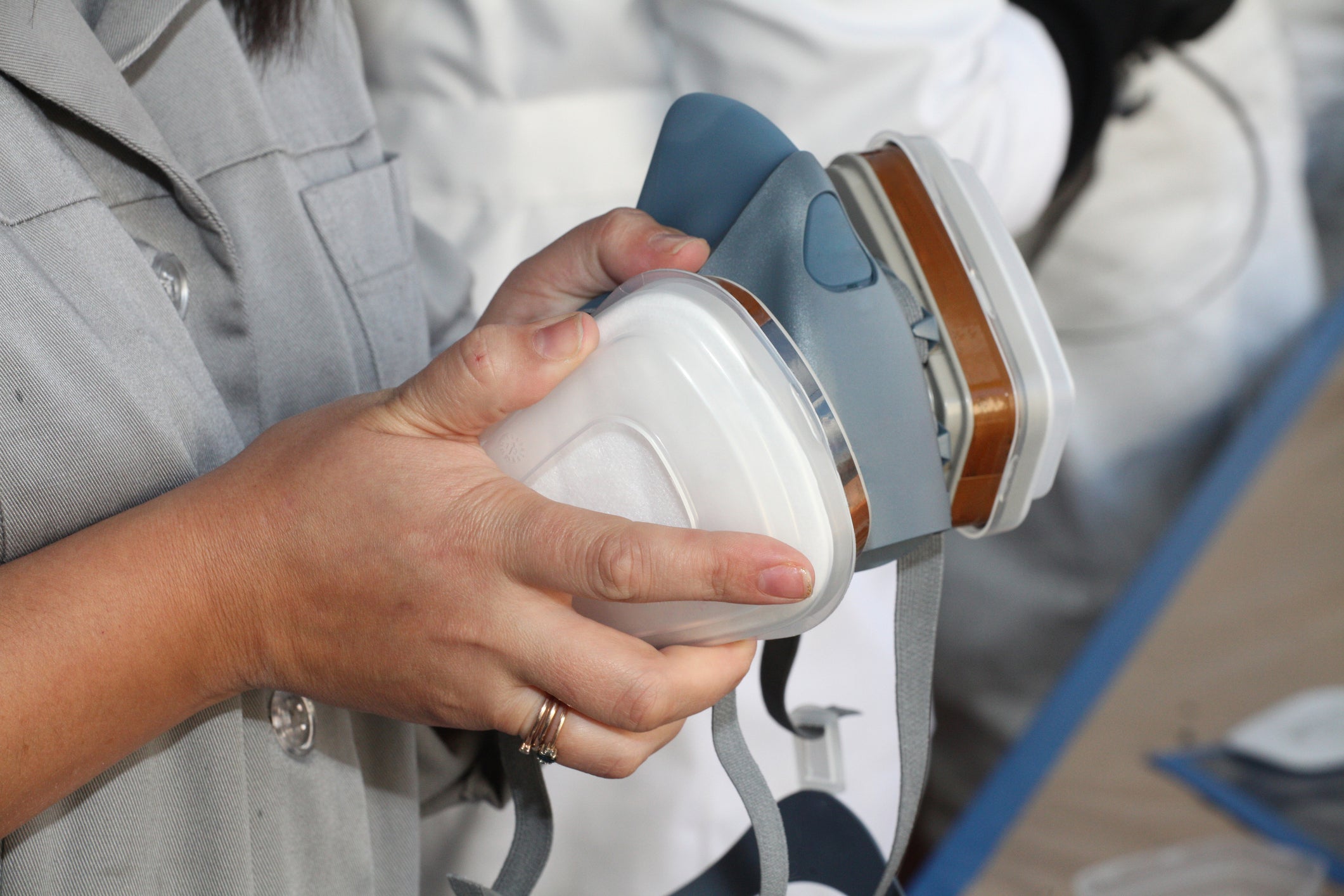
Quick Summary: Respirator filters and cartridges protect workers from airborne hazards such as dust, fumes, mists, vapors, and gases. OSHA requires proper respiratory protection when engineering controls cannot eliminate exposure. This guide explains respirator filters vs cartridges, N95 vs P100 ratings, gas and vapor cartridges, replacement schedules, and OSHA compliance requirements.
Why Respirator Filters and Cartridges Matter
Airborne hazards are present across construction, manufacturing, welding, painting, chemical handling, and healthcare environments. Inhalation of particulates or toxic vapors can lead to acute injury, chronic illness, and long-term respiratory disease.
Respirators only work when paired with the correct filter or cartridge. Using the wrong type can result in dangerous exposure even when the respirator appears to be functioning properly.
OSHA Requirements for Respiratory Protection
OSHA regulates respiratory protection under 29 CFR 1910.134. Employers must implement a written respiratory protection program when respirators are required. This includes hazard evaluation, respirator selection, medical evaluations, fit testing, training, and maintenance.
Filters and cartridges must be NIOSH-approved and appropriate for the specific airborne hazard.
Filters vs Cartridges: What’s the Difference?
Respirator filters protect against airborne particulates such as dust, smoke, fumes, and mists. Cartridges protect against gases and vapors. Some respirators use combination cartridges that protect against both particulates and vapors.
Particulate Filters Explained: N95, P100, and More
N95 Filters
N95 filters remove at least 95% of airborne particles. They are commonly used for nuisance dust, sanding, and some biological hazards.
P100 Filters
P100 filters provide the highest level of particulate protection, removing at least 99.97% of airborne particles. They are oil-proof and commonly used in industrial and welding environments.
Gas and Vapor Cartridges Explained
Gas and vapor cartridges are color-coded and designed to protect against specific chemical hazards.
- Organic Vapor – solvents, paints, adhesives
- Acid Gas – chlorine, sulfur dioxide
- Ammonia/Methylamine
- Multi-Gas cartridges
Combination Cartridges
Combination cartridges protect against both particulates and gases. These are common in painting, spraying, and chemical handling tasks.
When to Replace Respirator Filters and Cartridges
Filters should be replaced when breathing resistance increases or when damaged. Gas and vapor cartridges must be replaced according to a change-out schedule or when odor breakthrough occurs.
Storage and Maintenance Best Practices
Improper storage can reduce cartridge service life. Cartridges should be stored in sealed containers away from contaminants.
Employer Responsibilities for Cartridge Selection
Employers must ensure cartridges match workplace hazards and provide training on proper use and replacement.
People Also Ask
What is the difference between N95 and P100?
P100 provides higher filtration efficiency.
How often should respirator cartridges be replaced?
Based on exposure and manufacturer guidance.
Can respirator cartridges be reused?
Yes, if properly stored and within service life.
Do cartridges expire?
Yes, unused cartridges have expiration dates.
Does OSHA require cartridge change-out schedules?
Yes, when using gas or vapor cartridges.
Author
Mick Chan is a safety supplies industry professional with over 15 years of experience specializing in OSHA respiratory protection compliance, PPE selection, and industrial hazard mitigation across California.