
Quick Answer
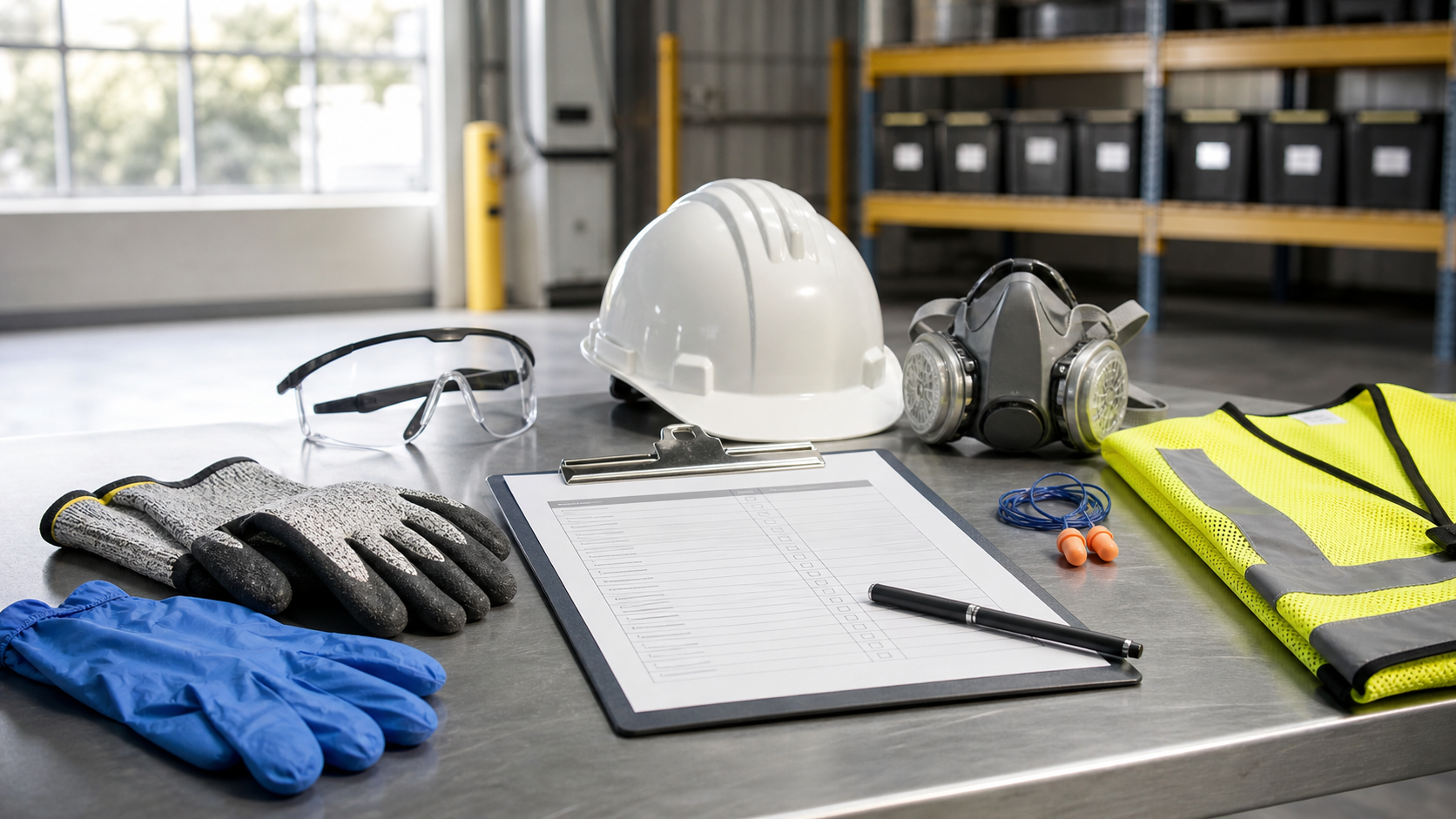
A PPE hazard assessment checklist helps employers identify workplace hazards, decide what personal protective equipment is needed, confirm proper fit, train employees, and replace damaged gear before it fails. OSHA requires employers to assess the workplace for hazards that require PPE, select protective equipment that matches those hazards, communicate the selection to affected employees, and ensure PPE fits properly.
The best PPE plan starts before the purchase order. Instead of buying gloves, vests, glasses, respirators, or first aid supplies by habit, use the actual task, exposure, environment, and worker fit requirements to guide every product decision.
Who This Checklist Is For
Use this guide if you are responsible for buying or standardizing safety supplies for a workplace, job site, warehouse, facility, school, lab, shop, or maintenance team. It is especially useful when you need to turn a safety review into a practical order list.
This article is educational and does not replace legal, regulatory, industrial hygiene, or site-specific safety advice. Always verify requirements against the applicable OSHA standard, state plan, local rule, manufacturer instructions, and your workplace hazard assessment.
Why a PPE Hazard Assessment Matters
Personal protective equipment is often treated like a shopping list: hard hats, safety glasses, gloves, vests, earplugs, respirators, and first aid kits. That approach is easy, but it can miss the point. PPE only works when it matches the hazard.
OSHA's general PPE standard, 29 CFR 1910.132, requires employers to assess the workplace and determine whether hazards are present, or are likely to be present, that make PPE necessary. If those hazards exist, employers must select PPE that protects affected employees, communicate the selection, and make sure the equipment properly fits.
That makes the assessment step more than paperwork. It is the bridge between "we bought safety supplies" and "our workers have protection suited to the job."
There is one important nuance: respirators and electrical protective equipment have their own detailed OSHA requirements. Include them in your overall PPE planning, but verify respiratory protection, fit testing, cartridge change schedules, and rubber insulating equipment against the specific standards and manufacturer instructions that apply.
Start With the Hierarchy of Controls
PPE should not be the first or only safety decision. NIOSH describes the Hierarchy of Controls as a preferred order for reducing workplace exposure:
- Elimination
- Substitution
- Engineering controls
- Administrative controls
- Personal protective equipment
In plain terms, remove or reduce the hazard first when possible. Use PPE when other controls cannot fully eliminate exposure, while other controls are being developed, or when PPE is the practical layer needed for the task.
For example, a chemical splash risk may require better dispensing equipment, written procedures, worker training, and splash-rated PPE. Buying goggles alone does not fix the entire exposure path.
PPE Hazard Assessment Checklist
Use this checklist before ordering new safety supplies, replacing old gear, or standardizing PPE across a team.
1. Identify the Work Area
Start with a specific area or task, not the whole company at once. PPE needs can vary dramatically between a shipping dock, fabrication bench, maintenance room, janitorial closet, lab, warehouse aisle, and outdoor traffic zone.
Record:
- Department or work area
- Task being performed
- Equipment or tools used
- Materials handled
- Number of affected workers
- Shift conditions, including night work or outdoor exposure
- Person completing the assessment
- Date of assessment
OSHA also requires written certification that the hazard assessment has been performed. The certification should identify the workplace evaluated, the person certifying the evaluation, the assessment date, and that the document is a certification of hazard assessment.
2. List the Hazards Workers Face
Walk the area and observe the work. Ask what could strike, cut, splash, burn, irritate, contaminate, crush, puncture, or expose the worker.
Common hazard categories include:
- Flying particles, dust, chips, or debris
- Chemical splashes, vapors, oils, solvents, or cleaning agents
- Bloodborne pathogens or biological contaminants
- Falling objects or overhead impact hazards
- Sharp edges, wire, glass, sheet metal, or blades
- Heat, sparks, flame, or molten material
- Cold storage, wet weather, or extreme outdoor conditions
- Noise from machinery, compressors, tools, or vehicles
- Vehicle traffic, forklifts, road work, and low-visibility areas
- Slip, trip, puncture, or crush hazards for feet
- Respiratory hazards such as dusts, fumes, mists, gases, or vapors
Do not assume the job title tells the full story. A warehouse worker may need high-visibility apparel around forklifts, cut-resistant gloves for packaging materials, safety glasses for strapping work, and hearing protection near conveyors.
3. Match the Hazard to the PPE Category
Once the hazard is clear, match it to the right PPE category. This is where a general safety supplies checklist becomes a practical buying plan.
| Hazard type | PPE category to evaluate | Product direction |
|---|---|---|
| Flying particles, dust, splash | Eye and face protection | Safety glasses, goggles, face shields |
| Falling objects or head impact | Head protection | Hard hats, hard caps, bump caps where appropriate |
| Cuts, chemicals, abrasion, heat | Hand protection | Work gloves, disposable gloves, chemical-resistant gloves, cut-resistant gloves |
| Vehicle or equipment visibility | High-visibility apparel | High-visibility apparel, safety vests, hi-vis shirts, jackets, pants |
| Noise exposure | Hearing protection | Earplugs, earmuffs |
| Dust, fumes, mists, vapors | Respiratory protection | Respiratory protection, disposable respirators, reusable respirators, filters, cartridges |
| Minor injuries and response | First aid and emergency supplies | First aid kits, refills, eyewash, emergency response supplies |
| Chemical spills or leaks | Spill control | Sorbents, spill kits, containment products |
For glove-heavy workplaces, compare nitrile gloves, latex, vinyl, and task-specific work gloves by exposure risk, fit, allergy concerns, and change frequency.
Turn the Assessment Into an Order Map
After you match hazards to PPE categories, convert the assessment into a simple order map. This helps purchasing teams buy the right safety supplies without losing the safety logic behind the selection.
| Assessment finding | Buying decision | Reorder note |
|---|---|---|
| Workers cut strapping, cardboard, or sharp packaging | Select cut-resistant or coated gloves by task | Track pairs per worker per week |
| Workers handle oils, cleaners, or low-grade chemicals | Verify glove material compatibility | Keep disposable and reusable options separate |
| Forklift or vehicle exposure exists | Select appropriate hi-vis apparel | Stock seasonal sizes over jackets or rain gear |
| Dust, fumes, or airborne exposure may exist | Confirm if respirators are required under a respiratory protection program | Track filters, cartridges, and fit-test needs separately |
| Splash exposure exists | Choose goggles or goggles plus face shield where needed | Replace scratched lenses and worn straps promptly |
| Minor injuries are likely | Place first aid kits and refills by work area | Assign a refill owner and inspection interval |
This is the practical ESS angle: the goal is not simply to name a PPE category. The goal is to make the product order traceable to a real hazard, a real worker group, and a real replacement plan.
PPE Selection by Common Workplace Scenario
Different workplaces need different PPE combinations. Use the scenario, not a one-size-fits-all kit, to guide selection.
Warehouse and Shipping Areas
Warehouse teams often work near forklifts, pallet jacks, shelving, shrink wrap, packaging tools, and moving loads.
Evaluate:
- High-visibility apparel for forklift and dock areas
- Work gloves for abrasion, grip, cuts, or cold handling
- Safety glasses for strapping, cutting, or debris
- Safety footwear when there is crush or puncture risk
- Hearing protection near loud conveyors or machinery
- First aid kits and eyewash placement
Janitorial and Facility Maintenance
Cleaning and maintenance teams may handle chemicals, wet floors, dust, sharp debris, and equipment repairs.
Evaluate:
- Disposable gloves or chemical-resistant gloves
- Splash goggles or face shields for chemical transfer
- Respiratory protection only when required by the exposure and program
- Slip-resistant footwear or overshoes
- Safety signs, labels, and barriers for wet or restricted areas
- Spill kits matched to the liquids used on site
Construction and Outdoor Work
Construction and outdoor crews face changing conditions: traffic, weather, impact hazards, dust, noise, and tool-related injuries.
Evaluate:
- ANSI-compliant high-visibility apparel where traffic or equipment exposure exists
- Hard hats for head impact or falling-object hazards
- Safety glasses, goggles, or face shields for cutting and grinding
- Cut-resistant, coated, leather, or impact-resistant gloves by task
- Hearing protection for loud tools
- Respiratory protection for dust or airborne hazards when required
- Rain gear, cold-weather gear, or heat-stress supplies as conditions change
Food Service, Healthcare, and Light-Duty Contamination Control
These environments often focus on hygiene, cross-contamination control, skin protection, and frequent glove changes.
Evaluate:
- Disposable gloves by material, fit, and allergy considerations
- Powder-free options where contamination control matters
- Aprons, sleeves, hair nets, beard covers, or shoe covers
- First aid supplies and skin care products
- Cleaning and spill response supplies
Always verify whether a glove or product is rated for the exact application. Do not rely on material name alone.
Fit, Comfort, and Worker Acceptance
PPE that fits poorly gets adjusted constantly, worn incorrectly, or avoided. OSHA emphasizes that PPE must properly fit each affected employee, and training must cover how to put it on, adjust it, wear it, remove it, care for it, and understand its limitations.
Check:
- Multiple glove sizes, not one default size
- Safety eyewear that does not leave large side gaps
- Respirators that meet required fit and program rules
- Hard hat suspension fit and compatibility with other PPE
- Hi-vis apparel that fits over seasonal clothing
- Hearing protection workers can insert or wear correctly
Comfort is not a luxury detail. It affects whether the selected PPE is actually used.
Build a Reorder Plan, Not Just a First Order
A good PPE hazard assessment should feed into purchasing. Once you know which hazards exist and which workers are affected, turn the assessment into a reorder plan.
Track:
- PPE type and size by department
- Disposable vs reusable items
- Expected usage rate per shift or week
- Minimum stock level
- Replacement triggers
- Seasonal needs such as cooling products, rain gear, or winter protection
- Backup items for visitors, contractors, and new hires
This prevents two common problems: overbuying gear that does not match the hazard and running out of the items workers actually use every day.
Inspection and Replacement Checklist
Defective or damaged PPE should not be used. Build quick inspection habits into the start of each shift.
Inspect for:
- Torn disposable gloves
- Coated gloves with worn palms or exposed fibers
- Safety glasses with scratches, cracks, or cloudy lenses
- Goggles with stretched straps or damaged seals
- Hard hats with cracks, dents, fading, or damaged suspension
- Hi-vis apparel with faded fabric or peeling reflective tape
- Earplugs or earmuffs that are dirty, hardened, cracked, or compressed
- Respirator facepieces, straps, valves, filters, and cartridges that are damaged or expired
Replacement schedules should follow manufacturer instructions, workplace exposure, contamination, and visible condition. When PPE is damaged, contaminated, no longer fits, or no longer performs reliably, remove it from service.
Training: What Workers Need to Know
Under OSHA's PPE rules, affected employees must be trained before doing work that requires PPE. Training should not stop at "wear this."
Workers should know:
- When PPE is necessary
- What PPE is necessary
- How to put it on, adjust it, wear it, and remove it
- What the PPE can and cannot protect against
- How to inspect, clean, maintain, store, and dispose of it
- When to report damage, discomfort, or fit problems
Retraining is needed when workplace conditions change, PPE types change, or an employee shows they have not retained the needed understanding or skill.
Common PPE Buying Mistakes
Avoid these mistakes when turning your assessment into an order:
- Buying by price only instead of task and exposure
- Treating all gloves as interchangeable
- Using safety glasses when sealed goggles are needed
- Using a face shield without primary eye protection when impact or splash exposure exists
- Ignoring fit and size ranges
- Forgetting replacement parts such as respirator cartridges, hard hat suspensions, or earmuff cushions
- Choosing hi-vis clothing without checking the work environment and required class
- Stocking PPE but failing to train workers on use and limitations
The right safety supplies reduce risk because they are selected, fitted, maintained, and used correctly.
What Makes This Checklist Different From a Generic PPE List
Many PPE lists start with products. A stronger safety supplies plan starts with exposure.
Before adding an item to the cart, ask:
- Which hazard does this item control?
- Which worker group needs it?
- Does it fit with the rest of the PPE worn during the task?
- Is there a standard, rating, manufacturer instruction, or safety data sheet that affects selection?
- How often will it be inspected and replaced?
- Who owns the reorder process?
That extra step protects the budget as well as the worker. It reduces random overstock, prevents mismatched gear, and gives supervisors a clearer reason for every PPE rule they enforce.
Final PPE Hazard Assessment Checklist
Before you buy, confirm:
- The workplace area and task have been identified.
- Hazards have been observed and documented.
- Engineering and administrative controls have been considered.
- PPE is matched to the specific hazard.
- Applicable OSHA, ANSI, NIOSH, manufacturer, or industry guidance has been checked.
- PPE sizes and fit needs are included.
- Workers have been trained.
- Damaged or defective PPE is removed from service.
- Reorder quantities are based on real usage.
- The assessment is reviewed when tasks, tools, materials, or conditions change.
FAQ
What is a PPE hazard assessment?
A PPE hazard assessment is a workplace review used to identify hazards that require personal protective equipment. It helps employers decide what PPE is necessary, which workers need it, and how it should be fitted, used, maintained, and replaced.
Does OSHA require a PPE hazard assessment?
Yes. OSHA 29 CFR 1910.132 requires employers to assess the workplace for hazards that are present, or likely to be present, that make PPE necessary. Employers must also verify the assessment with written certification.
What should be included in a workplace PPE checklist?
A workplace PPE checklist should include the work area, task, hazards, selected PPE, fit requirements, training needs, inspection steps, replacement triggers, and reorder quantities. It should be updated when work conditions change.
Is PPE enough to control workplace hazards?
PPE is important, but it should not be the only control when other options can reduce the hazard. NIOSH recommends using the hierarchy of controls, starting with elimination, substitution, engineering controls, and administrative controls before relying on PPE.
Where can I buy workplace safety supplies?
You can compare workplace PPE and safety supplies at eSafetySupplies.com, including gloves, respiratory protection, high-visibility apparel, eye protection, head protection, first aid, spill control, and facility safety products.
About the Safety Supplies Specialist
Mick Chan is a safety supplies industry professional with over 15 years of hands-on experience. He specializes in OSHA compliance, PPE regulations, and bulk safety product procurement for high-risk industries. His work focuses on bridging safety compliance with practical product solutions for modern workplaces, including warehouses, construction teams, industrial facilities, maintenance departments, and safety managers responsible for keeping crews properly equipped.
Final CTA
The smartest safety supplies order starts with the hazards your team actually faces. Use this checklist to review each work area, then browse eSafetySupplies.com to compare PPE categories, disposable gloves, respiratory protection, hi-vis apparel, safety glasses, hard hats, hearing protection, first aid, spill control, and other workplace safety products.
For larger teams, build a recurring reorder list by department so the right PPE is available before workers need it.