
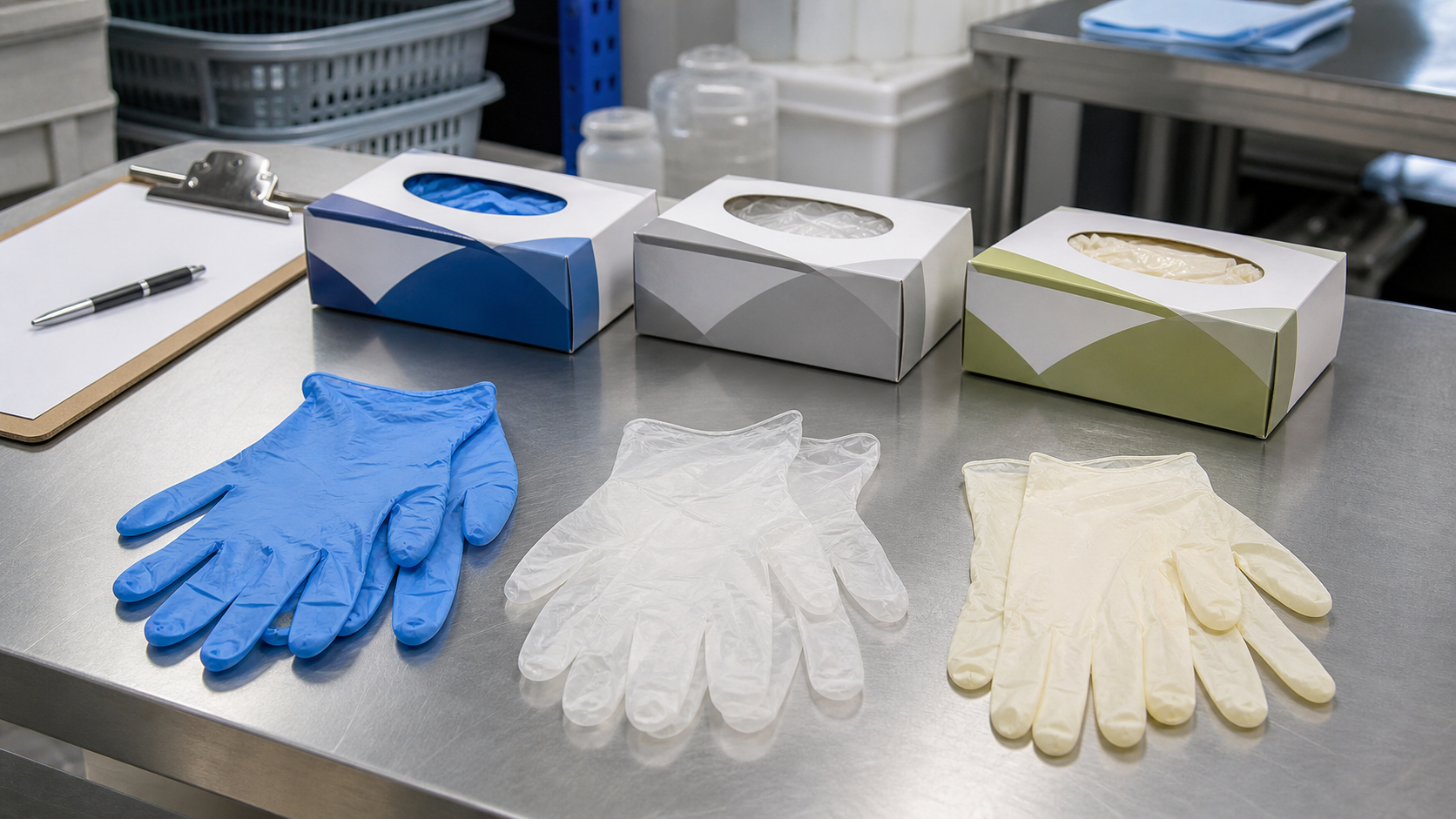
Quick Answer
Nitrile gloves are usually the best all-around disposable glove choice when workers need durability, puncture resistance, and a latex-free material. Vinyl gloves are often better for short, low-risk tasks where frequent glove changes and cost control matter. Latex gloves can offer excellent fit and flexibility, but they are not the right default when workers, customers, or patients may have natural rubber latex allergies.
The best glove is not just the cheapest box or the most popular material. OSHA's hand-protection rule says glove selection should be based on the task, conditions, duration of use, and the hazards identified in the workplace.
Why Glove Material Matters
Disposable gloves are easy to reorder by habit. A team may use the same glove for food prep, cleaning, maintenance, customer service, light assembly, and spill cleanup simply because it is already stocked.
That can create problems. A glove that works well for sandwich prep may not be the right glove for chemical handling. A comfortable latex glove may create allergy concerns. A low-cost vinyl glove may be fine for brief food-service tasks but may tear too easily for higher-stress work.
Before buying, match the glove material to the exposure, task length, dexterity needs, and user population.
Nitrile Gloves
Nitrile gloves are made from synthetic rubber. They are latex-free, generally durable, and widely used in workplaces that need a balance of fit, strength, and disposable convenience.
Nitrile is often a strong choice for:
- Janitorial and sanitation work
- Food service where latex avoidance is preferred
- Light industrial tasks
- Automotive and maintenance work
- Healthcare-adjacent or exam-style applications when the glove is properly rated
- Jobs where workers need a snug fit without natural rubber latex
Nitrile gloves are not all the same. Thickness, texture, cuff length, exam rating, powder-free status, and manufacturer claims matter. If the task involves chemicals, do not assume nitrile is automatically compatible. Check the safety data sheet and manufacturer chemical-resistance guidance.
Browse nitrile gloves when your workplace needs disposable gloves with stronger durability and latex-free material.
Vinyl Gloves
Vinyl gloves are commonly made from polyvinyl chloride, also called PVC. They are often chosen for short-duration, low-risk tasks because they can be economical and easy to change frequently.
Vinyl may be a practical choice for:
- Food handling tasks with frequent glove changes
- Light cleaning tasks without harsh chemical exposure
- Low-risk general use
- Tasks where tight fit and high dexterity are less important
- Workplaces that need a latex-free disposable glove option
The tradeoff is durability. Vinyl gloves may fit more loosely and can be less resistant to tearing or puncture than nitrile in many demanding tasks. That does not make vinyl a bad glove; it makes it a glove for the right use case.
If workers need high tactile sensitivity, extended wear, or more demanding barrier performance, compare vinyl against nitrile before standardizing the order.
Latex Gloves
Latex gloves are made from natural rubber latex. They are known for stretch, comfort, and tactile sensitivity. In some work environments, that fit can be valuable.
Latex can be considered when:
- The task requires strong stretch and close fit
- Latex allergy is not a concern for workers or people they serve
- The glove is appropriate for the specific application
- The workplace has a policy for latex-sensitive employees
The biggest issue is allergy risk. NIOSH warns that exposure to natural rubber latex can result in allergic reactions for some workers, especially with repeated exposure. OSHA also notes that powder-free gloves and other alternatives may be needed for employees who are allergic to gloves normally provided, and warns not to assume "hypoallergenic" means latex-free.
For many workplaces, nitrile or vinyl is simpler as a default because they avoid natural rubber latex.
Nitrile vs Vinyl vs Latex Comparison
| Factor | Nitrile gloves | Vinyl gloves | Latex gloves |
|---|---|---|---|
| Material | Synthetic rubber | PVC / synthetic plastic | Natural rubber latex |
| Latex-free | Yes | Yes | No |
| Fit and dexterity | Good to excellent | Looser fit for many users | Excellent stretch and sensitivity |
| Durability | Often strong for disposable use | Better for light, short tasks | Good flexibility, depends on glove |
| Allergy concern | Avoids natural rubber latex | Avoids natural rubber latex | Natural rubber latex allergy concern |
| Common buying reason | Balance of durability and protection | Cost-effective frequent changes | Fit, comfort, tactile sensitivity |
| Best use case | General workplace PPE, janitorial, maintenance, food service, exam-style tasks when rated | Low-risk food handling, light cleaning, short tasks | Fit-sensitive tasks where latex is acceptable |
This table is a starting point. Always verify product labeling, ratings, food-contact suitability, medical/exam claims, and chemical compatibility before using any glove for a regulated or hazardous task.
Best Glove by Workplace Use
Food Service
Food service teams often need frequent glove changes, easy donning, and latex avoidance. Vinyl can be useful for short food-handling tasks, while nitrile may be better when workers need more durability, better fit, or resistance to tearing.
For food-related work, confirm whether the specific glove is appropriate for the intended food-contact application. Material alone is not enough.
Browse disposable gloves and food-service-friendly options when building a glove program for kitchens, cafeterias, catering, and light-duty food handling.
Janitorial and Cleaning
Cleaning work can involve moisture, detergents, disinfectants, and repeated changes. Nitrile is often a useful default for general cleaning tasks because it balances fit and durability. Vinyl may work for very light tasks, but it may not hold up as well under friction or longer wear.
If workers handle chemicals, check the safety data sheet and glove manufacturer guidance. For stronger exposure concerns, compare chemical-resistant gloves instead of relying only on standard disposable gloves.
Healthcare-Adjacent and Exam Tasks
The FDA describes medical gloves as disposable PPE used to protect the wearer and/or patient from microorganisms during medical procedures and examinations. It also notes that medical gloves are regulated devices and should not be reused, washed, disinfected, or shared.
If a workplace needs exam gloves, chemotherapy-rated gloves, or other medical-use gloves, choose products labeled and cleared for that intended use. Do not treat general-purpose disposable gloves as medical gloves unless the product labeling supports it.
Industrial, Maintenance, and Automotive
Maintenance teams may need disposable gloves for grease, oils, dirt, minor fluids, and cleanup. Nitrile is commonly selected because it can offer better durability than vinyl while avoiding latex.
For sharp edges, abrasion, heat, or heavy material handling, disposable gloves may not be enough. Compare work gloves or cut-resistant gloves when the hazard is mechanical instead of only contamination.
Glove Selection Checklist
Before ordering disposable gloves, confirm:
- What task the glove is used for
- Whether workers need latex-free material
- Whether the glove must be food-contact appropriate
- Whether the glove must be medical/exam rated
- Whether chemicals, oils, or solvents are involved
- How often workers change gloves
- Whether dexterity or touch sensitivity matters
- Whether glove thickness, cuff length, or texture matters
- Which sizes are needed for proper fit
- How gloves will be stored and reordered
Fit matters. A glove that is too tight may tear or fatigue the worker's hand. A glove that is too loose can reduce grip and dexterity.
Common Buying Mistakes
Avoid these mistakes:
- Treating all disposable gloves as interchangeable
- Buying latex gloves without considering allergy risk
- Using vinyl gloves for tasks that need more durability
- Assuming nitrile is compatible with every chemical
- Buying one size for all workers
- Using general-purpose gloves for medical tasks
- Ignoring powder-free and food-contact requirements
- Choosing by price per box instead of cost per completed task
The cheapest glove can become expensive if workers double-glove unnecessarily, change gloves too often because they tear, or use the wrong glove for the hazard.
FAQ
Are nitrile gloves better than vinyl gloves?
Nitrile gloves are usually better when workers need a stronger fit, better durability, and a latex-free material. Vinyl gloves may be better for short, low-risk tasks where frequent glove changes and lower cost matter more.
Are vinyl gloves latex-free?
Yes, vinyl gloves are latex-free because they are made from synthetic PVC material. Always confirm product labeling if latex avoidance is important for your workplace.
When should I avoid latex gloves?
Avoid latex gloves when workers, customers, patients, or visitors may have natural rubber latex allergies. NIOSH and OSHA both recognize latex allergy as a workplace concern, especially in environments with repeated glove exposure.
Can nitrile gloves be used for food service?
Some nitrile gloves are suitable for food service, but the specific product must be labeled or documented for the intended food-contact use. Do not rely on material name alone.
Which disposable glove material is best for cleaning?
Nitrile is often a strong disposable choice for general cleaning because it balances fit, durability, and latex-free material. For stronger chemicals, check the safety data sheet and consider chemical-resistant gloves designed for that exposure.
About the Safety Supplies Specialist
Mick Chan is a safety supplies industry professional with over 15 years of hands-on experience. He specializes in OSHA compliance, PPE regulations, and bulk safety product procurement for high-risk industries. His work focuses on bridging safety compliance with practical product solutions for modern workplaces, including warehouses, construction teams, industrial facilities, maintenance departments, and safety managers responsible for keeping crews properly equipped.
Final CTA
Choosing between nitrile, vinyl, and latex gloves starts with the work your team actually performs. Compare nitrile gloves, disposable gloves, chemical-resistant gloves, and work gloves at eSafetySupplies.com to match glove material, size, and durability to your workplace needs.