
Quick Answer
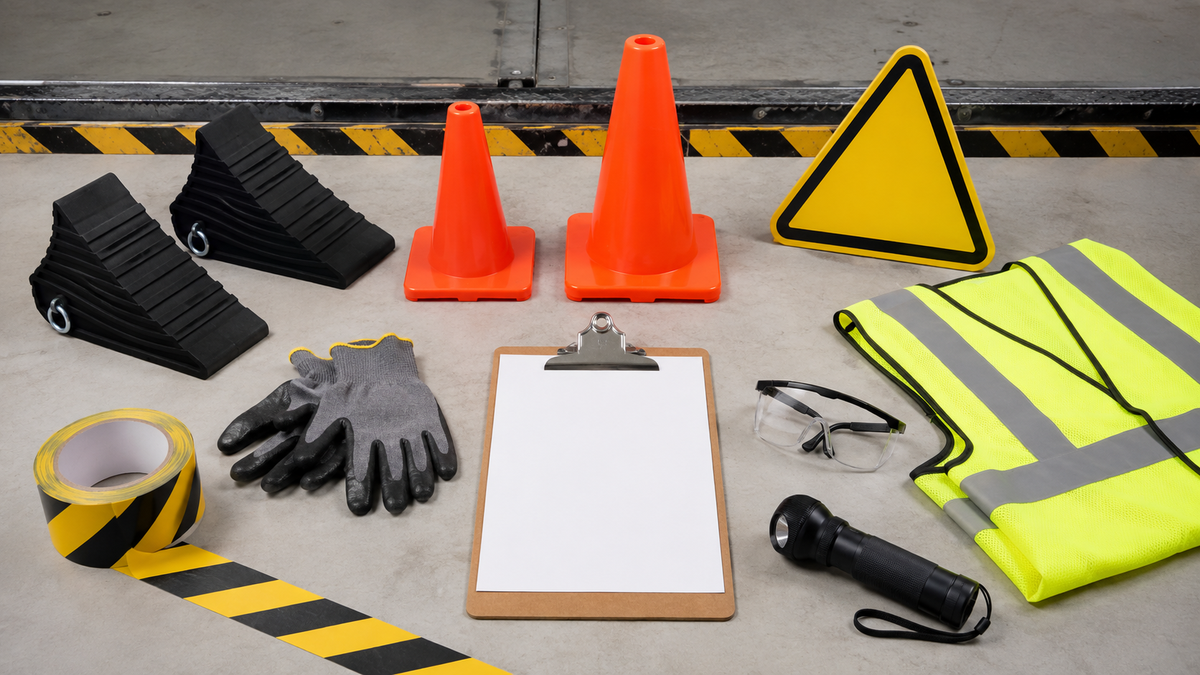
A loading dock safety checklist should verify trailer securement, dock edge protection, forklift and pedestrian separation, lighting, housekeeping, traffic control, and PPE before loading or unloading begins. Focus first on struck-by, caught-between, fall, slip, and trailer movement hazards, then match supplies such as wheel chocks, cones, signs, gloves, safety glasses, and high-visibility apparel to the work area.
Who This Guide Is For
This guide is for warehouse supervisors, shipping managers, receiving teams, forklift operators, facility managers, and safety buyers who manage loading docks, yard doors, trailers, and dock-adjacent pedestrian traffic. It is educational and does not replace OSHA requirements, state-plan rules, manufacturer instructions, powered industrial truck training, dock equipment instructions, or a site-specific hazard assessment.
Why Loading Dock Safety Matters
Loading docks combine moving vehicles, forklifts, pallets, pedestrians, dock edges, trailer gaps, weather exposure, and time pressure. A small miss can become a serious incident: a trailer shifts, a worker steps into an unprotected edge, a pedestrian crosses a forklift path, or a damaged pallet spills into a travel lane.
OSHA's materials handling and storage rules require stored materials to avoid creating hazards such as tripping, fire, explosion, or collapse. Powered industrial truck rules also matter when forklifts enter trailers, operate near pedestrians, or move loads across the dock. A practical dock checklist turns those broad duties into repeatable controls for every shift.
Loading Dock Safety Checklist
- Confirm the trailer is positioned, stabilized, and secured before loading or unloading.
- Use wheel chocks, dock locks, or other approved restraint methods required by your site procedure.
- Inspect dock plates, levelers, bumpers, doors, edge markings, and trailer floors before use.
- Keep workers away from open dock edges unless the area is controlled.
- Separate pedestrians from forklifts with marked walkways, cones, signs, mirrors, or barriers.
- Keep dock lights working so operators can see trailer floors, load condition, and pedestrians.
- Remove shrink wrap, broken pallet pieces, ice, oil, straps, and loose debris from walking surfaces.
- Make sure forklift operators follow site rules for speed, horn use, load visibility, and trailer entry.
- Tag damaged dock equipment, restraint devices, wheel chocks, doors, lights, or levelers out of service.
- Match PPE to the task, including high-visibility apparel, gloves, safety glasses, and protective footwear.
Product Category Match Table
| Loading Dock Need | ESS Category | What To Verify |
|---|---|---|
| Trailer and vehicle awareness | Traffic cones | Cone height, visibility, indoor/outdoor durability, and whether cones are enough or barriers are needed. |
| Pedestrian visibility | High-visibility apparel | Class, color, size range, laundering needs, and visibility in yard or indoor lighting. |
| Hand protection | Work gloves | Grip, abrasion resistance, cut risk, dexterity, and seasonal comfort. |
| Eye hazards | Safety glasses | Impact protection, fog resistance, side coverage, and compatibility with hard hats or hearing protection. |
| Out-of-service controls | Accident prevention tags | Clear wording for damaged dock plates, chocks, lights, doors, forklifts, or levelers. |
| Floor and edge communication | Safety signs and labels | Message, placement, durability, language needs, and whether floor marking should reinforce the sign. |
Use-Case Recommendations
For receiving docks, build a pre-shift checklist around trailer arrival, restraint, dock plate condition, forklift route, pallet condition, and pedestrian crossings. Keep cones, tags, gloves, and safety glasses close enough that workers use them before the rush starts.
For shipping docks, review outbound staging lanes, load securement areas, shrink-wrap debris, dock door status, and forklift charging or parking areas. High-visibility apparel and clear floor communication help drivers, pickers, and loaders read the area quickly.
For outdoor docks and yards, add weather checks. Rain, glare, darkness, ice, and wind can change the risk profile, especially around ramps, chocks, dock edges, and pedestrian routes.
Common Mistakes
- Treating a dock door as safe just because it is familiar.
- Letting pedestrians cross forklift paths without signs, markings, or traffic controls.
- Using damaged dock plates, chocks, bumpers, lights, or levelers without a clear out-of-service tag.
- Allowing wrap, straps, cardboard, or pallet debris to collect in walking and travel lanes.
- Skipping high-visibility apparel because the dock is indoors.
- Assuming a trailer floor is safe without checking damage, moisture, gaps, or load condition.
- Buying PPE without confirming fit, task hazards, and worker acceptance.
Key Takeaways
- Start with the trailer, dock edge, forklift route, and pedestrian path before choosing supplies.
- Use visible controls such as cones, signs, tags, and floor communication to make hazards obvious.
- Keep dock housekeeping active throughout the shift, not only after the work is done.
- Match PPE to actual tasks: visibility, grip, impact, and foot protection are common dock needs.
- Remove damaged equipment from service until the right person inspects, repairs, or replaces it.
FAQ
What should be on a loading dock safety checklist?
Include trailer securement, dock plate or leveler condition, dock edge control, forklift routes, pedestrian separation, lighting, housekeeping, damaged-equipment tags, and PPE. The checklist should match your dock layout and actual loading tasks.
Are wheel chocks always required at loading docks?
Requirements depend on the equipment, operation, and applicable rules, so follow OSHA requirements, manufacturer instructions, and your written site procedure. Many sites use wheel chocks, dock locks, or other vehicle restraint methods to help prevent unexpected trailer movement.
What PPE is commonly used at loading docks?
Common loading dock PPE includes high-visibility apparel, work gloves, safety glasses, and protective footwear. Additional PPE may be needed for cold weather, chemical handling, sharp packaging, noise, or powered industrial truck battery areas.
How can warehouses separate forklifts and pedestrians?
Use marked walkways, signs, cones, mirrors, barriers, speed rules, horn rules, lighting, and training. The best setup depends on traffic volume, blind spots, dock layout, and whether pedestrians must enter the same space as forklifts.
Mick Chan Bio
Mick Chan is an eSafetySupplies safety content contributor focused on practical workplace safety supply planning, PPE selection, and compliance-oriented checklists for facility, warehouse, construction, and maintenance teams.
Final CTA
Use this checklist to review each dock door, trailer route, and staging area before the next busy shipping window. Compare ESS traffic cones, high-visibility apparel, gloves, safety glasses, tags, and signs, then confirm the final setup against your dock equipment instructions and site safety program.
Sources
- OSHA 29 CFR 1910.176: https://www.osha.gov/laws-regs/regulations/standardnumber/1910/1910.176
- OSHA 29 CFR 1910.178: https://www.osha.gov/laws-regs/regulations/standardnumber/1910/1910.178
- OSHA Powered Industrial Trucks: https://www.osha.gov/powered-industrial-trucks
- OSHA Walking-Working Surfaces: https://www.osha.gov/walking-working-surfaces