
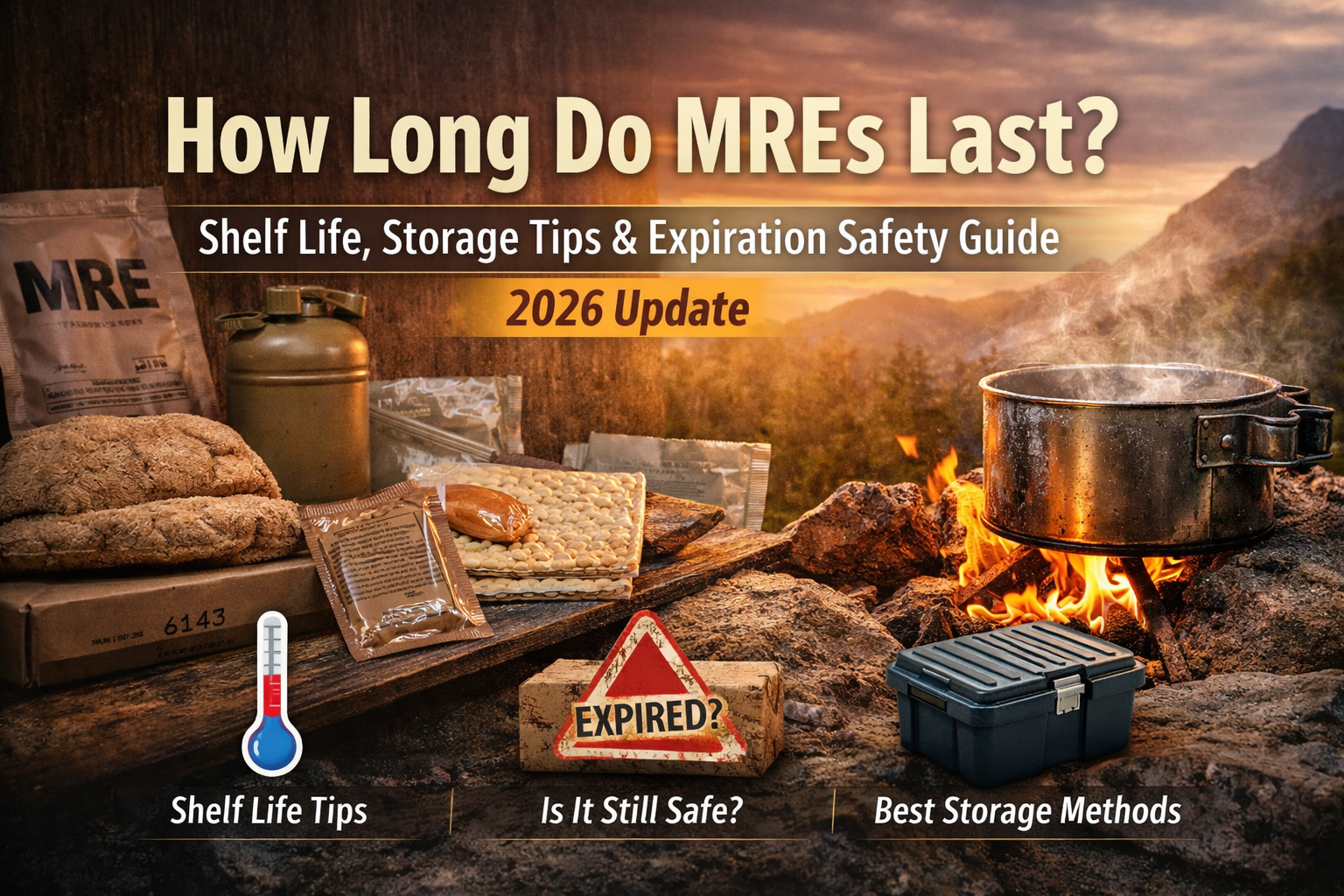
How Long Do MREs Last? Shelf Life, Storage Tips & Expiration Safety Guide (2026 Update)
Quick Summary
MREs (Meals Ready to Eat) typically last 3 to 8 years depending on storage temperature. When stored at 60°F, they may last 5–7 years. At higher temperatures (90°F+), shelf life can drop to under 3 years. Proper storage dramatically extends longevity. Most MREs remain safe past their inspection date if packaging is intact and stored correctly.
What Is an MRE?
An MRE (Meal Ready to Eat) is a self-contained, individual field ration originally developed for military use. Each meal includes an entrée, sides, dessert, heater, and utensils — designed to be consumed without refrigeration.
Today, MREs are widely used for:
- Emergency preparedness kits
- Earthquake readiness supplies
- Hurricane survival kits
- Camping and off-grid use
How Long Do MREs Last?
Average Shelf Life by Temperature
| Storage Temperature | Estimated Shelf Life |
|---|---|
| 50°F | Up to 10 years |
| 60°F | 5–7 years |
| 75°F | 3–5 years |
| 90°F | 1–3 years |
| 100°F+ | Less than 1 year |
Temperature is the single biggest factor affecting MRE longevity.
What Is the MRE Inspection Date?
MRE packages contain a Julian Date Code, not a traditional expiration date. The inspection date indicates when the military recommends quality review — not necessarily spoilage.
Many properly stored MREs remain safe well beyond their inspection date.
Can You Eat Expired MREs?
Yes — if stored properly and packaging is intact.
Before consuming, check for:
- Swollen or bloated packaging
- Leaks or punctures
- Strong sour odor
- Unusual color changes
If any of these signs are present, discard immediately.
How to Store MREs for Maximum Shelf Life
1. Keep Them Cool
Store MREs in a temperature-controlled environment between 50°F and 70°F.
2. Avoid Garages in Summer
High heat drastically shortens lifespan. Attics and garages are poor storage locations in warm climates.
3. Keep Them Dry
Moisture exposure can damage outer packaging and compromise seals.
4. Use Rotation System
Label purchase dates and rotate stock every few years.
MRE vs Freeze-Dried Food: Which Lasts Longer?
- MRE: 3–8 years
- Freeze-dried food: 20–25 years
MREs are ready-to-eat and require no water, while freeze-dried foods require rehydration.
Are MREs Safe for Earthquake Preparedness?
Yes. MREs are ideal for earthquake zones because they:
- Require no refrigeration
- Require no cooking
- Include flameless heater
- Are compact and durable
How Many MREs Should You Store?
FEMA recommends a minimum of 3 days of food per person.
- 1 adult typically needs 2,000–2,500 calories daily
- 1 MRE contains approximately 1,200–1,300 calories
- Plan for 2 MREs per person per day
Common Myths About MRE Shelf Life
Myth 1: MREs Last Forever
No food lasts forever. Storage temperature determines lifespan.
Myth 2: Inspection Date Means Expired
Inspection date reflects quality review timing — not automatic spoilage.
Myth 3: All MREs Taste the Same
Modern civilian MREs include diverse menus.
Where to Buy Fresh MREs
When purchasing, ensure products are:
- Recently manufactured
- Stored in climate-controlled warehouse
- Clearly labeled with date codes
Browse available options here:
People Also Ask (FAQ)
How long do MREs last in a car?
MREs stored in a car during hot weather may last less than one year due to high temperatures exceeding 100°F.
Can you freeze MREs to extend shelf life?
Freezing is not recommended as condensation during thawing can damage packaging and reduce quality.
Do MRE heaters expire?
Flameless ration heaters generally last as long as the meal if stored properly, though performance may decline over time.
Are civilian MREs different from military MREs?
Civilian MREs are similar but may differ in packaging, menu selection, and distribution channels.
What temperature ruins MREs?
Sustained temperatures above 100°F significantly reduce MRE shelf life and can compromise food safety.
Conclusion
MREs are one of the most reliable emergency food solutions available — but their lifespan depends heavily on storage conditions. Keep them cool, dry, and rotated regularly to ensure maximum shelf life. For earthquake readiness, disaster kits, or emergency preparedness planning, properly stored MREs offer dependable nutrition when you need it most.
Author
Mick Chan is a Safety Supplies industry professional with over 15 years of hands-on experience. He specializes in OSHA compliance, PPE regulations, and emergency preparedness solutions for high-risk industries across California.