Quick Answer
Orange, yellow-green, and red high-visibility vests can all be useful, but the best color depends on the background, lighting, traffic exposure, job role, and applicable rules. For many work zones, OSHA and MUTCD-related guidance point workers toward fluorescent high-visibility garments with retroreflective material, while the specific color should be chosen for contrast and visibility in the actual work environment.
Who This Guide Is For
This guide is for teams buying reflective vests and high-visibility apparel for warehouses, loading docks, construction sites, traffic control, parking lots, utilities, maintenance, and visitor programs.
This article is educational and does not replace legal, regulatory, industrial hygiene, traffic-control, or site-specific safety advice. Always verify requirements against applicable OSHA standards, state plans, DOT or MUTCD requirements, local rules, contract specifications, and your workplace hazard assessment.
Why High-Visibility Vest Color Matters
High-visibility apparel is used to help workers stand out from the background so drivers, equipment operators, spotters, and coworkers can see them sooner. Color matters because a vest that pops in one environment can blend into another.
NIOSH identifies struck-by incidents as a major construction hazard, and OSHA's construction struck-by resources emphasize that workers must be highly visible in all levels of light. High-visibility clothing is not the only control, but it is an important layer when workers are near vehicles, equipment, public traffic, or busy material-handling areas.
Start With the Work Area
Before choosing vest color, review the jobsite:
- Is the background mostly concrete, asphalt, dirt, grass, equipment, pallets, shelves, or traffic?
- Are workers exposed to public road traffic, forklifts, yard trucks, cranes, or delivery vehicles?
- Is the work indoors, outdoors, daytime, nighttime, or mixed lighting?
- Will workers need Class 2 or Class 3 apparel?
- Are there contract, DOT, city, state, or site-owner requirements?
- Should visitors, supervisors, and emergency roles use different colors?
Color is only one part of visibility. Reflective placement, garment class, fit, condition, cleanliness, and worker movement all matter.
Color Comparison Table
| Vest Color | Common Strength | What To Verify |
|---|---|---|
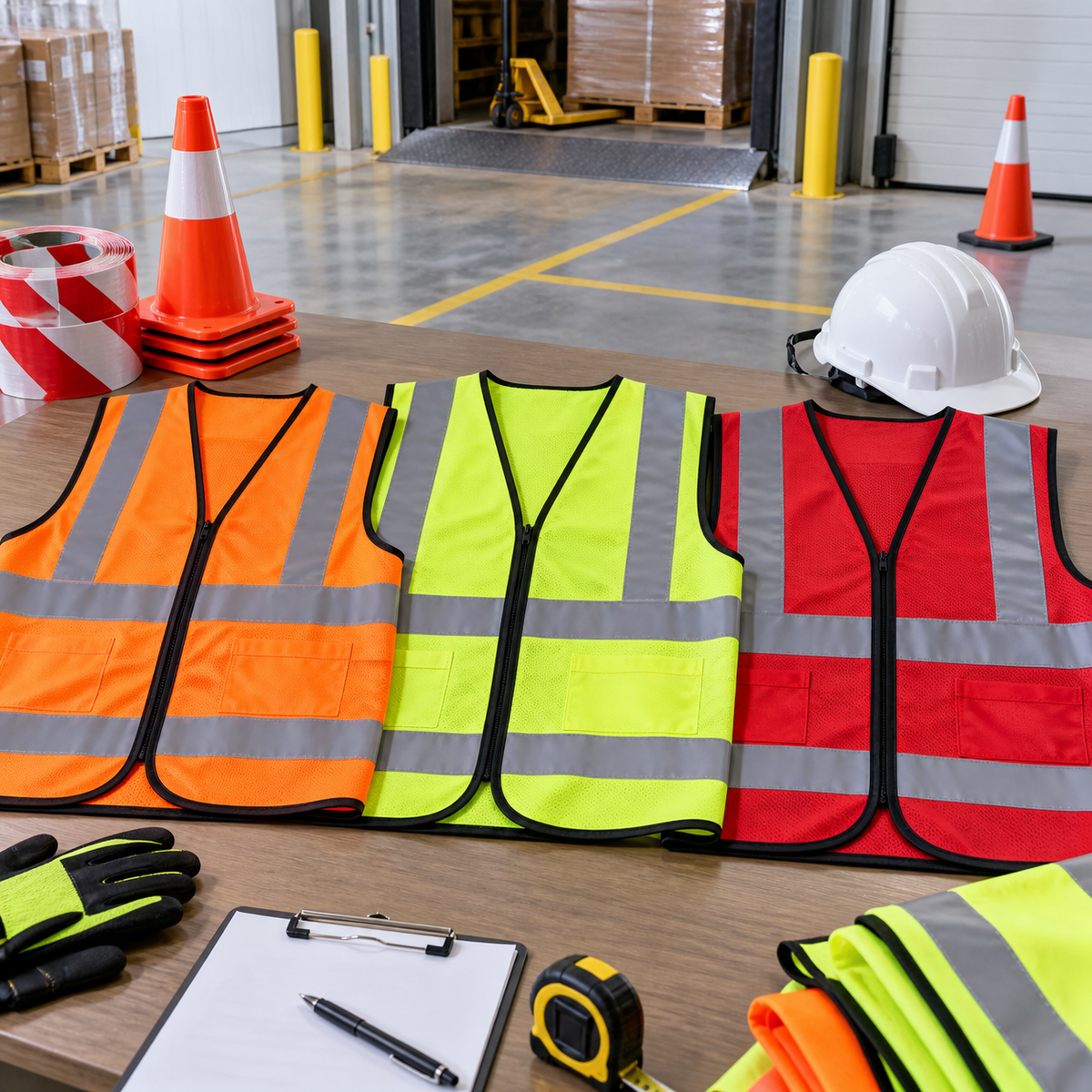
| Fluorescent orange | Strong contrast around road work, traffic control, earth tones, and many construction settings | Whether orange is required by the site, DOT, contract, or flagger rule |
| Fluorescent yellow-green | Strong daylight visibility and contrast against many dark indoor or outdoor backgrounds | Whether it blends into grass, vegetation, yellow equipment, or bright warehouse markings |
| Red or red-orange | Useful for role identification, emergency response, or certain flagging contexts | Whether it meets the needed high-visibility class and site rule |
| Two-tone apparel | Helps separate reflective tape from background fabric | Whether contrast panels improve visibility in that specific work area |
| Reflective striping | Critical for low-light and nighttime visibility | Whether the garment has the required retroreflective material and performance class |
Orange Safety Vests
Orange is common in roadwork, traffic control, construction, and areas with moving equipment. It can contrast well against blue sky, concrete, greenery, and many industrial backgrounds. OSHA's flagger interpretation discusses red or orange warning garments under the construction signaling standard, while also noting updated MUTCD language that allows additional fluorescent colors for daytime work.
Orange may be a strong default where workers need to be recognized quickly as part of a work zone. It can be less ideal where orange equipment, cones, barricades, or materials dominate the background.
Yellow-Green Safety Vests
Fluorescent yellow-green is highly visible in many daylight and warehouse settings. It often stands out against asphalt, darker interiors, shadows, racking, trailers, and equipment.
The main caution is background blending. In landscaping, roadside vegetation, bright yellow equipment, or areas with yellow floor striping, yellow-green may not create the best contrast. Walk the work area before standardizing on one color.
Red High-Visibility Vests
Red or red-orange high-visibility garments may be used for role identification, emergency response, visitor control, or specific site programs. A red vest can help supervisors, fire watch, emergency team members, or spotters stand apart from general workers.
Do not assume a red vest is automatically compliant for every work zone. Confirm the garment's performance class, retroreflective material, and any applicable site or traffic-control requirements.
Performance Class Still Matters
OSHA work zone guidance notes that flaggers should wear high-visibility clothing with a fluorescent background and retroreflective material, and that workers should check the label or packaging for performance class 2 or 3 where applicable.
OSHA's hurricane work-zone safety guidance also notes that ANSI/ISEA high-visibility performance classes include Classes E, 1, 2, and 3, with Class 3 offering the greatest level of visibility. Employers should perform a hazard analysis to decide which class is needed based on traffic speed, lighting, background complexity, task load, and proximity to traffic.
That means buying by color alone is not enough. A bright vest with the wrong performance class may not meet the job's needs.
Buying Checklist
Use this checklist before ordering high-visibility apparel:
- Identify the exposure: public traffic, forklifts, yard trucks, cranes, pedestrians, or visitors.
- Confirm whether the job requires Class 2, Class 3, or another garment type.
- Choose color based on background contrast, not preference alone.
- Confirm retroreflective material for low-light or nighttime work.
- Stock sizes that fit over seasonal clothing.
- Decide if supervisors, visitors, spotters, or emergency roles need separate colors.
- Inspect garments for fading, dirt, torn reflective tape, broken closures, and poor fit.
- Replace vests that no longer provide clear visibility.
- Link vest selection with cones, barricades, signs, lighting, and traffic-control plans.
Fit, Seasonality, and Worker Acceptance
A vest that is too small may not close over jackets. A vest that is too large can snag or shift while workers move. For cold-weather or rain work, consider high-visibility jackets, rainwear, or layered apparel instead of forcing a summer vest over bulky clothing.
For warehouses and loading docks, comfort and breathability matter because workers may wear vests all shift. For roadwork and traffic control, visibility at distance and in motion may matter more than minimum comfort.
Common Mistakes
- Buying color by habit instead of background contrast.
- Assuming any bright vest is a high-visibility safety vest.
- Forgetting performance class and retroreflective material.
- Letting dirty or faded vests stay in service.
- Ignoring winter jackets, rain gear, and size mix.
- Using the same vest color for every role when role identification matters.
- Relying on vests while skipping cones, barricades, signs, lighting, and traffic control.
Key Takeaways
- Orange, yellow-green, and red can all be useful, but contrast and required performance class drive the decision.
- High-visibility apparel should be selected as part of a hazard assessment.
- Reflective material matters for low-light and nighttime work.
- Class 2 and Class 3 garments are common choices for higher-exposure work zones.
- Replace worn, dirty, faded, or damaged high-visibility apparel before it stops doing its job.
FAQ
Is orange or yellow-green better for safety vests?
Neither color is always better. Orange often works well around roadwork and construction, while yellow-green can stand out strongly in many warehouse and outdoor settings. Choose the color that contrasts best with the work area's background and meets applicable requirements.
What color vest should flaggers wear?
Requirements can depend on the applicable standard, contract, and jurisdiction. OSHA guidance for work zones points to fluorescent high-visibility clothing with retroreflective material, and workers should verify the required performance class and local traffic-control rules.
Does reflective tape matter during the day?
Yes, reflective and fluorescent materials work together to improve visibility. Fluorescent background color helps daytime visibility, while retroreflective material is especially important in low-light and nighttime conditions.
When should high-visibility vests be replaced?
Replace vests when they are faded, dirty, torn, poorly fitting, missing reflective material, or no longer clearly visible. Follow manufacturer guidance and your workplace inspection policy.
Should visitors wear the same vest color as employees?
Not always. Some sites use a separate visitor color so supervisors can quickly identify people who may need escorting or extra instruction. The visitor vest still needs to fit the hazard and visibility requirements of the area.
About Mick Chan
Mick Chan contributes safety supply guidance for eSafetySupplies content, with a focus on practical PPE selection, workplace readiness, and helping teams connect safety requirements to the right supplies. His review perspective is included to keep recommendations grounded in real purchasing and jobsite use.
Final CTA
Choose vest color after walking the work area. Compare high-visibility apparel, cones, barricades, and related PPE so each crew, visitor group, and work zone has the visibility plan it actually needs.