
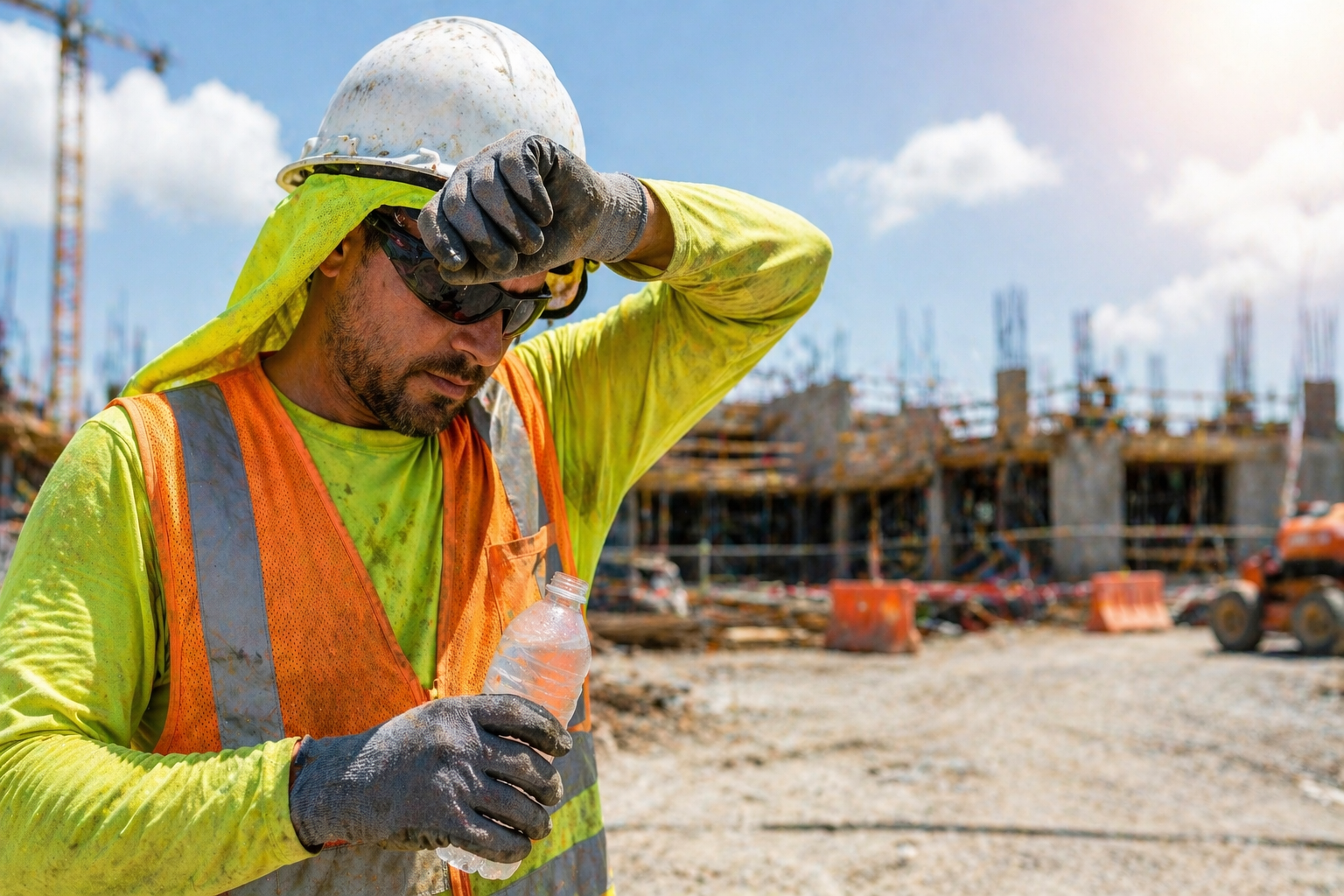
Quick Summary
Heat stress occurs when the body cannot cool itself properly, leading to serious health risks. Preventing heat stress requires proper PPE, hydration, rest breaks, and workplace safety practices aligned with OSHA guidelines.
What Is Heat Stress?
Heat stress happens when the body overheats due to high temperatures, humidity, or physical activity. It can lead to conditions such as heat exhaustion, heat cramps, and heat stroke.
Workers in outdoor or high-temperature environments are at the highest risk.
Why Heat Stress Prevention Matters
- Prevents heat-related illnesses
- Reduces workplace accidents
- Improves productivity and safety
- Ensures OSHA compliance
OSHA Heat Stress Guidelines
OSHA emphasizes prevention through hydration, rest, and shade.
Learn more: OSHA Heat Stress Safety Guidelines
Additional guidance: NIOSH Heat Stress Resources
Key Signs of Heat Stress
- Heavy sweating
- Dizziness or fainting
- Nausea or vomiting
- Rapid heartbeat
- Confusion or disorientation
Essential PPE for Heat Stress Prevention
1. Lightweight Protective Clothing
Breathable, moisture-wicking clothing helps regulate body temperature while maintaining protection.
2. Cooling Vests
Cooling vests help reduce body heat in high-temperature environments.
3. Wide-Brim Hard Hats or Sun Protection
Protects workers from direct sun exposure.
4. Gloves with Breathability
Gloves should balance protection with airflow to reduce heat buildup.
Explore hand protection options: mechanic gloves collection
Hydration Best Practices
- Drink water every 15–20 minutes
- Avoid sugary or caffeinated drinks
- Increase intake during high heat
- Provide electrolyte solutions when necessary
Workplace Safety Strategies
- Schedule heavy work during cooler hours
- Provide shaded rest areas
- Rotate workers to reduce exposure
- Monitor workers for symptoms
Common Mistakes to Avoid
- Ignoring early symptoms
- Insufficient hydration
- Lack of proper PPE
- Working during peak heat without breaks
Related Safety Equipment
Conclusion
Heat stress prevention is essential for worker safety, especially in high-temperature environments. By combining proper PPE, hydration, and workplace strategies, employers can significantly reduce risks and ensure compliance with safety standards.
People Also Ask
What causes heat stress in the workplace?
Heat stress is caused by high temperatures, humidity, and physical exertion without proper cooling measures.
How can heat stress be prevented?
Prevention includes hydration, rest breaks, shade, and proper PPE.
What PPE helps with heat stress?
Cooling vests, breathable clothing, and sun protection gear help reduce heat exposure.
Does OSHA regulate heat stress?
OSHA provides guidelines and enforcement under general duty clauses for heat-related hazards.
How often should workers drink water in heat?
Workers should drink water every 15–20 minutes during high heat exposure.
About the Author
Mick Chan is a Safety Supplies industry professional with over 15 years of experience specializing in OSHA compliance, PPE regulations, and workplace safety solutions.