
Quick Summary
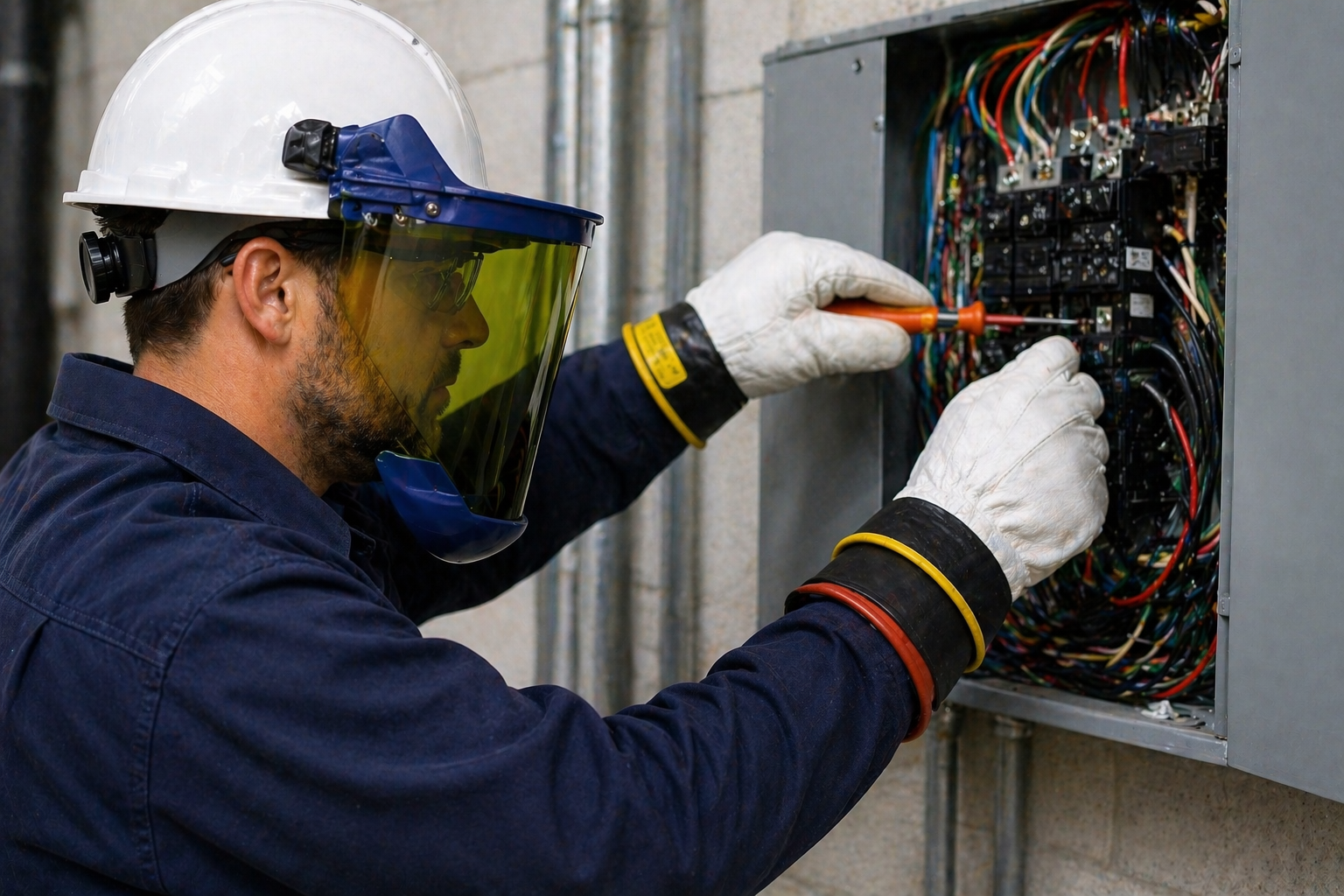
Electrical safety PPE protects workers from shocks, burns, and arc flash incidents. Essential equipment includes insulated gloves, arc-rated clothing, rubber mats, and face shields. Following OSHA guidelines is critical for workplace safety and compliance.
What Is Electrical Safety PPE?
Electrical safety PPE refers to protective equipment designed to reduce the risk of injury when working with or near electrical systems. These hazards include electric shock, arc flash, and arc blast.
Proper PPE acts as the last line of defense when engineering and administrative controls are not enough.
Why Electrical Safety Is Critical
- Prevents fatal electric shock incidents
- Reduces arc flash burn injuries
- Ensures OSHA compliance
- Protects workers in high-risk environments
Electrical hazards are among the most dangerous workplace risks due to their immediate and severe consequences.
OSHA Electrical Safety Requirements
OSHA mandates employers to protect workers from electrical hazards through proper training and PPE usage.
Key reference: OSHA Electrical Safety Standards
Additional safety guidance: NIOSH Electrical Safety
Essential Electrical Safety PPE Checklist
1. Insulated Rubber Gloves
Insulated gloves protect against electrical shock and must be rated for the voltage level of the task.
- Class 00–Class 4 ratings
- Regular testing required
- Used with leather protectors
2. Arc Flash Clothing
Arc-rated clothing protects against thermal hazards from arc flash incidents.
- Measured in cal/cm²
- Flame-resistant materials
- Required for high-voltage environments
3. Face Shields and Arc Flash Hoods
Protect the face and eyes from burns and flying debris.
4. Insulated Tools
Tools designed to prevent electrical conductivity and reduce shock risk.
5. Rubber Insulating Mats
Placed on floors to protect workers from ground faults.
6. Safety Footwear
Non-conductive footwear reduces electrical hazard exposure.
Importance of Hand Protection in Electrical Work
Hands are the most exposed part of the body during electrical tasks. Proper gloves are essential.
- Use voltage-rated insulated gloves
- Inspect gloves before each use
- Replace damaged gloves immediately
Explore additional hand protection options: mechanic gloves collection
Common Electrical Safety Mistakes
- Using damaged PPE
- Ignoring voltage ratings
- Lack of proper training
- Failure to inspect equipment
Best Practices for Electrical Safety
- Always de-energize equipment when possible
- Use lockout/tagout procedures
- Wear complete PPE
- Follow OSHA and NFPA 70E guidelines
Related Safety Equipment
Conclusion
Electrical safety PPE is essential for protecting workers from severe hazards. Using the correct equipment and following OSHA guidelines significantly reduces the risk of injury and ensures compliance in high-risk environments.
People Also Ask
What PPE is required for electrical work?
Electrical PPE includes insulated gloves, arc-rated clothing, face shields, insulated tools, and rubber mats.
What are insulated gloves used for?
They protect workers from electrical shock when working with live circuits.
What is arc flash PPE?
Arc flash PPE protects workers from thermal energy released during electrical faults.
Are rubber mats required for electrical safety?
Yes, they help insulate workers from ground faults and electrical currents.
Does OSHA require electrical PPE?
Yes, OSHA requires employers to provide appropriate PPE for electrical hazards.
About the Author
Mick Chan is a Safety Supplies industry professional with over 15 years of experience specializing in OSHA compliance, PPE regulations, and workplace safety solutions.