
Quick Answer
Choose heat-resistant gloves by identifying the kind of heat exposure first: brief contact with a hot surface, sustained contact, radiant heat, open flame, sparks, steam, or molten-metal splash. Then compare manufacturer test data for that specific hazard, along with exposure temperature, contact time, glove condition, cuff coverage, grip, dexterity, and any simultaneous cut or chemical risk. A glove labeled "heat resistant" is not automatically suitable for every hot-work task.
Who This Guide Is For
This guide is for teams selecting hand protection for welding, fabrication, foundry work, heat processing, maintenance, commercial kitchens, glass handling, and other tasks involving hot tools or materials.
It is educational and does not replace a workplace hazard assessment, manufacturer instructions, applicable OSHA requirements, or advice from a qualified safety professional. Never use a glove beyond its published limitations, and do not handle energized equipment, chemicals, or molten materials unless the glove is specifically selected for those combined hazards.
Why "Hot" Is Not One Hazard
Two jobs can involve the same temperature and still require different gloves. Picking up a dry metal part for two seconds is different from holding it for a minute. Standing near a furnace creates radiant exposure even without touching a surface. Welding adds sparks, flame, abrasion, sharp edges, and possible molten splash.
OSHA's hand protection rule requires employers to select hand protection based on the task, conditions, duration of use, identified hazards, and the glove's performance characteristics. That is the right buying logic too: define the exposure before comparing products.
Heat-Resistant Glove Selection Checklist
Use this checklist before ordering or approving a glove:
- Identify whether the exposure is contact heat, convective heat, radiant heat, flame, sparks, steam, or molten splash.
- Record the expected surface or process temperature and the longest likely contact time.
- Determine whether contact is planned, incidental, or emergency-only.
- Check for added hazards such as cuts, punctures, abrasion, chemicals, electricity, oils, or wet surfaces.
- Review the glove manufacturer's test results, warnings, and intended applications.
- Confirm the glove length covers the hand and wrist area exposed by the task.
- Test grip and dexterity with the actual tools and parts used on the job.
- Check compatibility with sleeves, welding jackets, face protection, and other PPE.
- Stock multiple sizes so the glove fits without excess material or restricted movement.
- Establish inspection, cleaning, retirement, and replacement rules.
Match the Glove to the Heat Exposure
| Heat exposure | Glove features to evaluate | What to verify before use |
|---|---|---|
| Brief contact with hot parts | Insulating construction, secure grip, dexterity | Tested contact temperature, allowable contact time, dry or wet conditions |
| Welding sparks and hot metal | Leather or task-rated welding construction, extended cuff, seam protection | Welding process, spark and spatter exposure, flame behavior, cut and abrasion needs |
| Radiant heat near furnaces | Reflective or aluminized surface, insulation, forearm coverage | Rated radiant-heat performance, distance, exposure duration, full-body PPE compatibility |
| Open flame or convective heat | Flame-resistant construction and appropriate insulation | Manufacturer flame and convective-heat test data; whether glove can shrink, char, or transfer heat |
| Molten-metal splash | Material and construction intended for the specific splash hazard | Metal type, splash size, shedding design, cuff orientation, emergency removal procedure |
| Hot, oily parts | Thermal barrier plus oil-compatible grip | Loss of grip, saturation, degradation, and whether oil changes heat transfer |
Start with the current heat-resistant gloves collection for task-specific options. For welding, compare the dedicated welding gloves collection. General work gloves should only be used for heat when their specifications support the actual exposure.
How to Read Heat-Performance Information
ANSI/ISEA 105 includes classifications for thermal hazards, while manufacturers may also publish results from other recognized test methods. A higher number in a particular test generally indicates greater performance in that test, but the rating is not a universal safe-temperature promise.
Pay attention to what was tested:
- Contact heat evaluates heat transfer when glove material touches a heated surface under defined laboratory conditions.
- Convective heat concerns heat transferred through moving hot air or gases.
- Radiant heat concerns energy received from a hot source without direct contact.
- Flame resistance evaluates behavior after flame exposure; it does not mean the glove cannot burn or transmit heat.
Laboratory ratings help compare products, but workplace conditions can differ. Wear, moisture, compression, contamination, repeated exposure, laundering, and flexing can change performance. Use ratings to narrow the field, then conduct a controlled workplace evaluation consistent with the manufacturer's instructions.
Material and Construction Tradeoffs
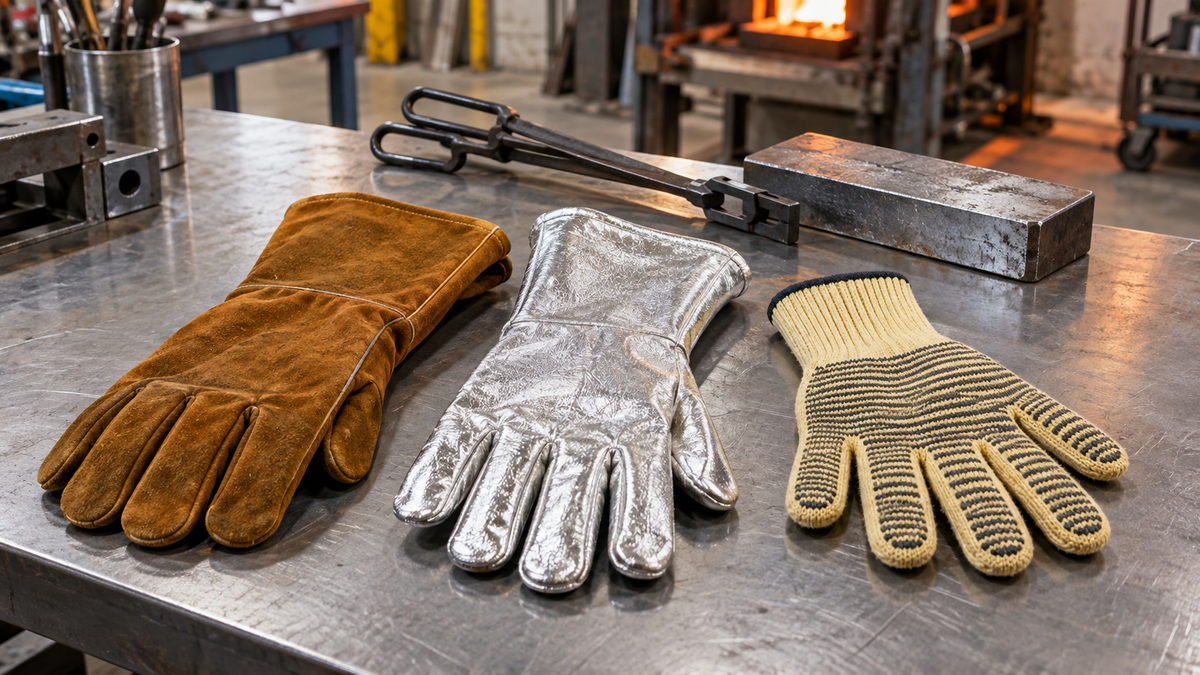
Leather welding gloves
Leather is common in welding gloves because it can provide a useful balance of heat, spark, abrasion, and mechanical protection. Construction still matters: leather type, thickness, lining, seams, cuff length, and quality vary. A welding glove chosen for heavy stick welding may feel too bulky for TIG work, while a thinner TIG glove may not suit heavier spatter.
Aluminized gloves and covers
Reflective surfaces can help with radiant heat, especially near furnaces or high-temperature process equipment. They are not a shortcut for direct contact performance. Confirm whether the product is designed as a complete glove, a cover, or one part of a larger protective system.
High-temperature knit or engineered fibers
Some knit constructions provide thermal protection with useful dexterity. Their performance can change when wet, contaminated, cut, or compressed. Check whether the glove also needs a coating or palm treatment for grip and whether that treatment is suitable for the temperature.
Coated and composite gloves
Composite designs can combine thermal layers with grip, cut resistance, or liquid protection. Do not assume every coating tolerates the same heat as the base material. Review the specifications for the complete glove, not just a familiar fiber name.
Fit, Grip, and Dexterity Are Safety Features
A glove can have impressive test data and still be a poor choice if it prevents a worker from controlling tools. Oversized fingertips can catch. A tight glove may reduce movement and compress insulating layers. A smooth palm can make hot parts harder to control.
Run a supervised wear trial with the actual tools, part shapes, postures, and other PPE. The worker should be able to grasp, reposition, and release the item without compensating in an unsafe way. Select enough sizes to fit the workforce instead of treating one size as universal.
Welding Requires a Complete PPE Decision
Gloves are only one part of welding protection. OSHA's welding standard says protective clothing varies with the size, nature, and location of the work. Welding tasks can also require appropriate eye and face protection, protective clothing, ventilation, screens, and respiratory controls.
Match the glove to the welding process and the workpiece. Consider spatter volume, amperage, torch control, sharp edges, part temperature, and how far protection must extend up the forearm. Coordinate gloves with sleeves or a jacket so movement does not open a gap at the wrist.
Inspection and Replacement
Inspect heat-resistant gloves before each use. Remove a glove from service when you find:
- Holes, open seams, deep cuts, or worn-through palms.
- Scorching, hardening, shrinking, glazing, or delamination.
- Wet or oily insulation that may transfer heat differently.
- Embedded metal fragments or contamination.
- Damaged cuffs, closures, or reflective surfaces.
- Loss of grip or dexterity that changes how the task is performed.
Do not invent a replacement interval based only on calendar time. Follow manufacturer guidance and replace the glove when damage, contamination, reduced performance, or the workplace PPE program requires it.
Common Buying Mistakes
- Shopping by a maximum-temperature headline without checking contact time.
- Treating contact, radiant, flame, and molten-splash protection as interchangeable.
- Assuming thicker always means safer for every task.
- Choosing a glove for heat while ignoring cuts, chemicals, oil, or electrical hazards.
- Buying one size for the entire crew.
- Using a general work glove because it feels heavy enough.
- Keeping scorched or contaminated gloves in service.
- Testing new gloves for the first time during live high-heat work.
Key Takeaways
- Define the heat transfer type, temperature, duration, and combined hazards before selecting a glove.
- Compare manufacturer data for the complete glove and the specific performance test that matters.
- Welding, radiant heat, direct contact, and molten splash often call for different constructions.
- Fit, grip, cuff coverage, and compatibility with other PPE can be as important as insulation.
- Inspect before use and retire damaged, contaminated, wet, or degraded gloves promptly.
FAQ
What temperature are heat-resistant gloves good for?
There is no single temperature that applies to every heat-resistant glove. Check the manufacturer's test method, contact time, exposure type, and limitations; a brief-contact rating should not be treated as permission for continuous handling.
Are welding gloves heat resistant?
Welding gloves are designed for welding-related hazards, but their protection varies by process and model. Verify the glove's specifications for heat, flame, sparks, spatter, dexterity, and cuff coverage before use.
Can cut-resistant gloves protect against heat?
Only when the complete glove is also tested and specified for the heat exposure. A cut rating alone says nothing about contact heat, flame, or molten splash.
Are leather gloves safe for handling hot metal?
Some leather gloves are designed for hot work, but leather type, thickness, lining, construction, and condition all matter. Use the product's published performance data rather than leather appearance alone.
Should heat-resistant gloves be tight or loose?
They should fit securely without restricting movement or leaving excess material that can catch. Evaluate all available sizes with the actual task because poor fit can reduce control and compress insulation.
Can wet heat-resistant gloves still be used?
Do not assume they provide the same protection when wet. Moisture can change heat transfer and grip, so follow the manufacturer's instructions and workplace procedure before returning them to service.
About Mick Chan
Mick Chan contributes safety supply guidance for eSafetySupplies content, with a focus on practical PPE selection, workplace readiness, and helping teams connect safety requirements to the right supplies. His review perspective is included to keep recommendations grounded in real purchasing and jobsite use.
Final CTA
Turn the next glove reorder into a task-based decision. List the heat source, exposure type, contact time, secondary hazards, sizes, and replacement triggers for each job, then compare heat-resistant gloves and welding gloves against that record.