
Quick Answer
A forklift daily inspection checklist should confirm that the truck is examined before being placed in service, unsafe conditions are reported, and any powered industrial truck needing repair is removed from service until restored to safe operating condition. OSHA requires powered industrial trucks to be examined before being placed in service and not used when the examination shows a condition adversely affecting vehicle safety.
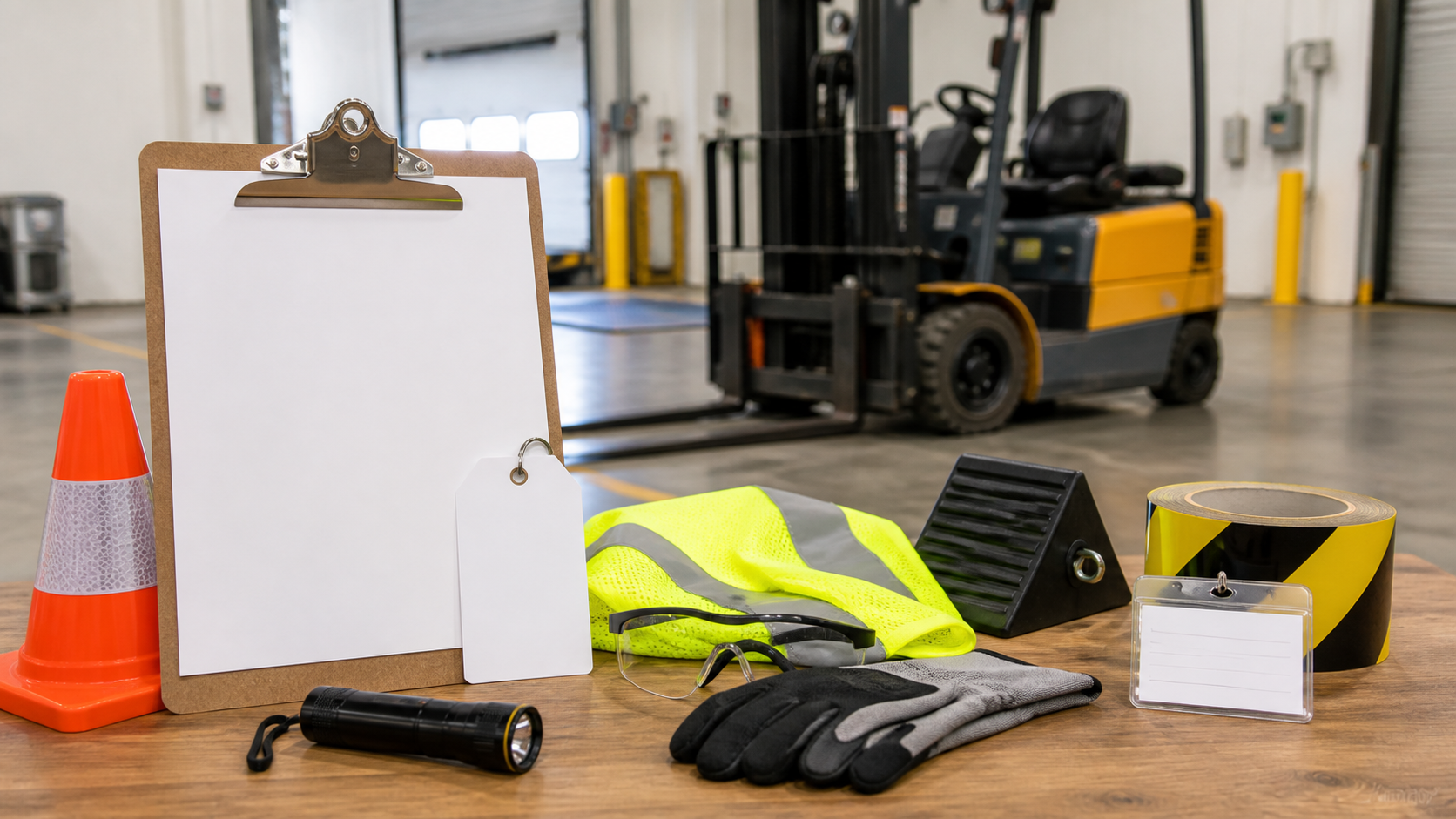
For warehouse teams, the checklist should be visible and repeatable: inspect the truck, document the status, tag unsafe equipment, and keep PPE and traffic-control supplies available around forklift work.
Forklift Daily Inspection Checklist
| Area | What to Check | Useful Supplies |
|---|---|---|
| Inspection record | Use a checklist or tag system to document that the truck was inspected before use. | Forklift inspection tags, clipboards, log books |
| Forks and mast | Check forks, chains, mast, carriage, backrest, and visible damage or unusual wear. | Inspection tags, flashlights |
| Tires and wheels | Look for tire damage, missing chunks, low pressure where applicable, loose hardware, or unsafe wheel condition. | Wheel chocks, maintenance tags |
| Controls and brakes | Test steering, brakes, parking brake, lift/lower controls, tilt, horn, lights, backup alarm, and warning devices. | Checklist forms, out-of-service tags |
| Leaks and power source | Check for fluid leaks, battery condition, charging connections, fuel system issues, and unusual odors. | Spill pads, battery PPE, warning labels |
| Operator area | Check seat belt, mirrors, data plate, overhead guard, pedals, and general cleanliness. | Replacement labels, cleaning supplies |
| Work zone | Confirm travel paths, pedestrian areas, docks, and loading zones are visibly controlled. | High-vis vests, cones, floor marking tape, signs |
Common Mistakes to Avoid
- Completing the checklist after the shift instead of before the truck is placed in service.
- Continuing to use a truck after reporting a condition that affects safe operation.
- Using one generic inspection sheet that misses attachments, battery type, or site-specific hazards.
- Letting inspection tags run out, which pushes the process into memory instead of documentation.
- Inspecting the forklift but ignoring the travel path, dock edge, and pedestrian controls.
FAQ
Does OSHA require forklifts to be inspected daily?
OSHA requires powered industrial trucks to be examined before being placed in service. If a truck is used around the clock, it must be examined after each shift.
What happens if a forklift inspection finds a safety issue?
If the examination shows a condition adversely affecting vehicle safety, the truck must not be placed in service. Repairs must be made before the truck is returned to safe use.
What supplies support forklift inspections?
Common supplies include inspection tags, checklist books, out-of-service tags, cones, high-visibility vests, floor marking tape, warning signs, flashlights, wheel chocks, and spill pads.
About Mick Chan
Mick Chan is part of the eSafetySupplies safety content team, helping translate workplace safety requirements into practical checklists that purchasing teams, supervisors, and crews can use when selecting PPE, signs, labels, tags, and facility safety supplies.
Final CTA
Keep forklift checks consistent with inspection tags, checklist books, out-of-service tags, cones, high-visibility vests, floor marking tape, warning signs, wheel chocks, flashlights, and spill supplies. eSafetySupplies can help keep daily inspection materials stocked where operators need them.
Sources
- OSHA 29 CFR 1910.178, Powered industrial trucks: https://www.osha.gov/laws-regs/regulations/standardnumber/1910/1910.178
- OSHA Powered Industrial Trucks eTool: https://www.osha.gov/etools/powered-industrial-trucks