
Quick Answer
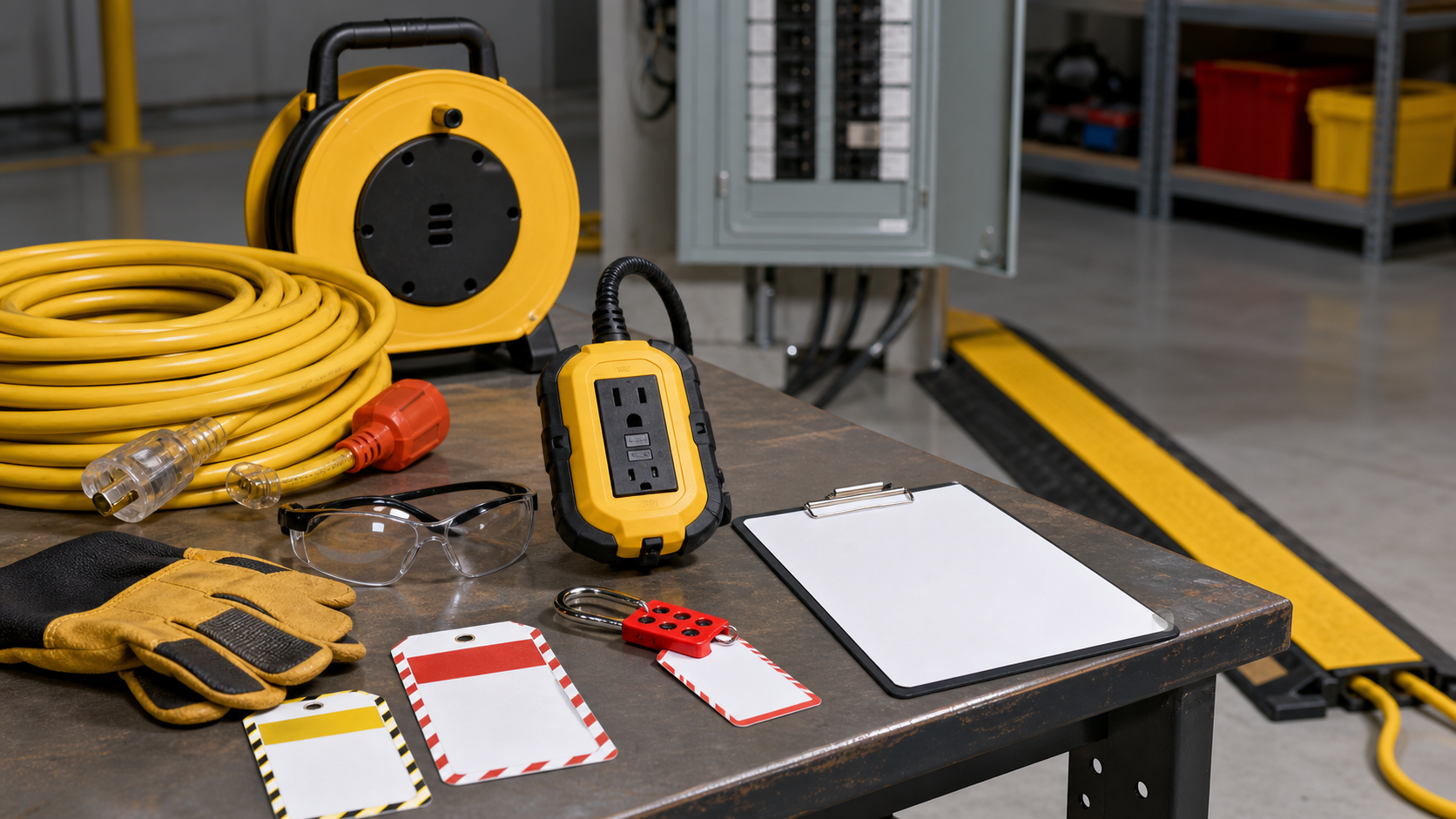
Extension cords and cable protectors should be managed as temporary power and trip-hazard controls, not permanent wiring. Inspect cords before use for damaged insulation, exposed conductors, cracked plugs, missing grounding pins, loose strain relief, heat damage, and improper routing. Use cable protectors where cords cross pedestrian or vehicle paths and where the protector is appropriate for the traffic load.
OSHA electrical safety rules address use of flexible cords, portable equipment, and safeguards. A good checklist helps workers identify damaged cords, reduce trip hazards, protect cords from traffic, and store electrical supplies correctly.
Extension Cord Safety Checklist
| Check area | What to inspect | Remove from service if |
|---|---|---|
| Cord jacket | Cuts, cracks, abrasion, crushed areas, or exposed conductors. | Insulation is damaged or conductors are visible. |
| Plug and connector | Prongs, grounding pin, strain relief, heat marks, and fit. | Prongs are bent, ground pin is missing, or connector is cracked. |
| Routing | Pinch points, doorways, wet areas, sharp edges, and traffic paths. | The cord creates a trip, shock, or damage risk. |
| Cable protector | Correct channel size, load rating, visibility, and secure placement. | Protector shifts, is overloaded, or does not fit the cord. |
| Temporary use | Whether the cord is being used as permanent wiring. | The setup has become a long-term substitute for fixed wiring. |
| Storage | Cords are coiled properly and kept dry, clean, and protected. | Cords are kinked, oil-soaked, wet, or damaged in storage. |
Where Cable Protectors Help
- Temporary work zones where cords cross walkways.
- Warehouse aisles where cords must be protected from carts or light equipment.
- Events, maintenance areas, and temporary lighting setups.
- Areas where visual warning and physical protection both matter.
Common Mistakes to Avoid
Do not run cords through doors, windows, or sharp-edged openings where they can be pinched. Do not tape over damaged insulation as a repair. Do not overload cable protectors beyond their intended use. Do not leave cords across aisles without a protector or other control.
FAQ
Can extension cords be used permanently?
Extension cords are generally for temporary use. Long-term power needs should be evaluated for permanent wiring or a safer designed solution.
When should an extension cord be thrown away?
Remove cords from service when insulation, plugs, grounding pins, strain relief, or connectors are damaged.
Are cable protectors the same as cord repair?
No. Cable protectors reduce damage and trip risk for intact cords. They do not make damaged cords safe.
About Mick Chan
Mick Chan is a safety supply specialist who helps businesses choose practical PPE, facility safety, and emergency readiness products for real workplace conditions. His guidance focuses on simple, usable safety programs that are easier for teams to follow every day.
Final CTA
Manage temporary power more safely with cable protectors, cord reels, warning labels, lockout tags, safety glasses, electrical gloves, and workplace safety supplies from eSafetySupplies.com.
Sources: OSHA 29 CFR 1910.334 Use of Equipment; OSHA 29 CFR 1910.305 Wiring Methods.