
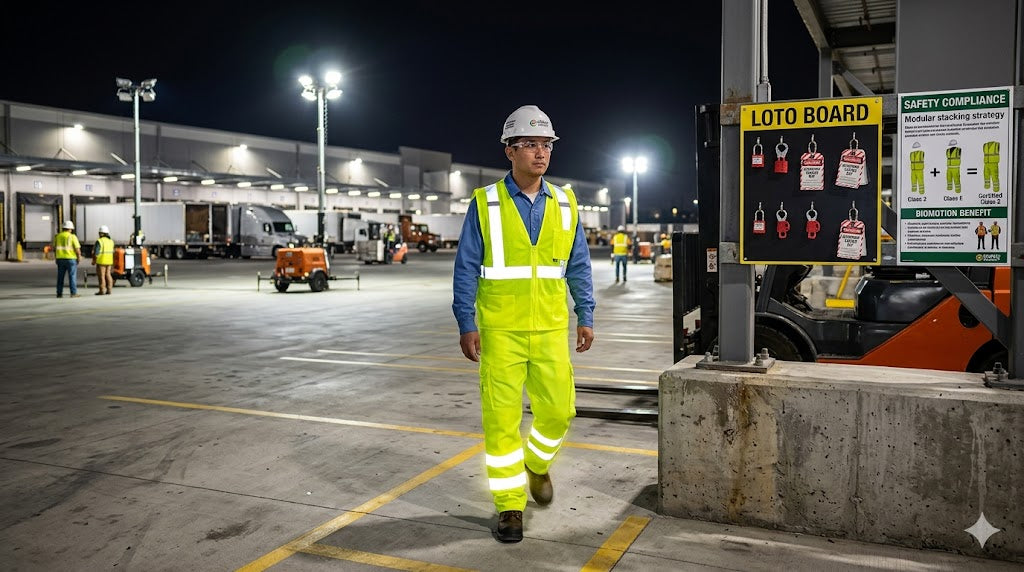
When engineering a workplace safety plan for complex, heavy material handling environments, relying solely on standard reflective vests can leave critical safety gaps. While basic vests protect upper torsos, maximum-risk zones—such as high-speed transport corridors, dimly lit loading yards, and overnight fulfillment footprints—demand a more comprehensive visual approach.
To address these volatile, multi-axis work spaces, savvy safety directors look past basic configurations to explore supplemental lower body apparel rules. Under the active consensus framework outlined in our high-visibility compliance metrics, specific parameters govern the use of lower body components known technically as Performance Class E gear.
This technical guide breaks down the structural design rules of Performance Class E supplemental apparel, examines the biomechanical safety power of biomotion configuration, and demonstrates how to combine gear layers to build a certified, bulletproof shield of Class 3 full-body visibility.
What Are the Engineering Metrics of Performance Class E Garments?
According to the compliance framework established under the active ANSI/ISEA 107 consensus review, lower body high-visibility components are governed by precise structural engineering parameters:
- Supplemental Categorization Only: Performance Class E garments—including trousers, bib overalls, shorts, and detachable leg gaiters—do not meet standalone compliance metrics for high-risk zones.
- The Ensemble Upgrade Rule: When a certified Class E lower body garment is paired with an ANSI Class 2 upper body vest or shirt, the entire combination is legally upgraded and certified as a maximum-environment Performance Class 3 outfit.
- Background Fabric Minimums: Class E trousers must incorporate substantial amounts of compliant fluorescent background material (yellow-green, orange-red, or red) to maintain daytime luminance thresholds.
- Retroreflective Tape Mandates: Reflective tape bands must be configured continuously around the lower limbs to bounce light back to an external source from a 360-degree radius.
- Rigorous Laundering Durability: Both the fluorescent base materials and retroreflective films must withstand multi-cycle testing for colorfastness, mechanical tearing, and reflective degradation over extended operational lifespans.
Deep Dive: Biomotion Engineering and Ensemble Synergy
To maximize the protection value of your apparel inventory, safety managers must understand how the human brain processes visual indicators in complex industrial backgrounds.
Step 1: Unlocking the Safety Science of Biomotion
In low-light spaces or busy shipping docks, a vehicle operator's attention is constantly divided by flashing machine indicators, warning beacons, and moving structures. If a worker is only wearing a standard high-vis vest, a driver at a distance may struggle to distinguish that static torso reflection from a common traffic cone or stationary barrier.
Performance Class E apparel addresses this vulnerability through the biomechanical principle of **biomotion**. By placing continuous retroreflective bands around moving lower extremities (such as ankles, calves, or knees), the natural walking motion of an employee is instantly highlighted. When an oncoming driver's headlights strike these moving bands, their cognitive processes instantly identify the object as a walking human being, triggering faster defensive braking responses.
Step 2: Executing the Class 2 + Class E = Class 3 Formula
Achieving absolute Performance Class 3 compliance normally requires purchasing full, specialized Class 3 jackets or long-sleeve shirts featuring integrated arm bands. However, the 2020 standard provides a flexible, modular pathway for compliance officers looking to scale protection across seasonal shifts.
By pairing an existing fleet of lightweight Class 2 mesh vests with compliant Class E trousers or rain gear, you successfully construct a certified Class 3 ensemble. This modular stacking strategy keeps your teams highly protected in extreme windward or low-light roadway exposures without requiring an entirely separate inventory of specialized heavy jackets.
       +-------------------------------------------------------+
       |             MODULAR BIOMOTION ENSEMBLE FORMULA        |
       +-------------------------------------------------------+
       | [ANSI CLASS 2 UPPER]  -> Torso Bands Only             |
       |          +                                            |
       | [ANSI CLASS E LOWER]  -> Leg & Extremity Bands        |
       |          =                                            |
       | [CERTIFIED CLASS 3]   -> Full Body Biomotion Shield   |
       +-------------------------------------------------------+
Step 3: Maintaining Reflective Integrity in Grim Environments
Lower body apparel faces an aggressive environment on industrial sites. Asphalt dust, grease from machine linkages, mud, and continuous friction rapidly degrade the reflective capabilities of leg bands.
To combat this, your maintenance plan must enforce strict inspection routines. If a pair of Class E pants becomes heavily soiled or stained around the ankles, its reflectivity coefficient falls far below compliant thresholds. To train field supervisors on spotting these visual drops before a nighttime shift, operations groups distribute clear reference instructions found in standardized Safety Awareness Handbooks.
Inspection, Washing, and Site Management Controls
Preserving the daytime fluorescence and night-time retroreflection of Class E gear requires careful coordination among equipment managers.
Strict Laundering Guidelines
Class E high-visibility apparel should never be washed using harsh industrial bleaches or laundry detergents containing optical brighteners, as these chemicals strip the fluorescent dyes right out of the synthetic fibers. Turn garments inside out and utilize mild, neutral detergents on a cold or warm cycle. Always prioritize line drying over high-heat drying machines to keep the heat-pressed adhesive backing on your retroreflective bands from cracking or peeling away prematurely.
Enforcing Daily Workspace Visual Audits
Before deploying teams into heavy machinery footprints or highway right-of-ways, execute a physical inspection. Managers should verify that: * The high-vis background material matches the bright intensity of a brand-new control garment. * Reflective limb bands are fully intact and free from severe abrasions or material tears. * Pants or gaiters are worn properly and not tucked into tall boots, which accidentally hides the required retroreflective surface area.
To maintain absolute safety alignment when updating field logistics, monitoring team movements, or performing facility audits, compliance officers frequently utilize a structured Warehouse Safety PPE Checklist to unify all site protective equipment metrics cleanly.
Performance Class E Apparel Frequently Asked Questions
Can a worker wear a Performance Class E garment by itself to satisfy roadway safety rules?
No. Performance Class E garments (such as high-vis trousers, shorts, or gaiters) do not meet standalone compliance thresholds for public roadways or active construction zones. They are legally classified as supplemental gear and must be paired with an upper body ANSI Class 2 or Class 3 garment to legally satisfy safety regulations.
How does combining a Class 2 vest with Class E pants affect the ensemble's overall safety rating?
When a Class E lower body garment is worn in combination with an ANSI Class 2 upper garment, the entire ensemble is legally upgraded and certified as a Performance Class 3 outfit, meeting maximum-hazard environment parameters.
What is the primary scientific principle behind biomotion engineering in high-visibility gear?
Biomotion utilizes the strategic layout of retroreflective tape on moving human limbs (sleeves or pant legs). When a vehicle operator views a moving reflection on an arm or leg, their brain instantly recognizes the shape as a human being rather than a static object, reducing reaction times exponentially.
What specific materials are evaluated when testing Class E compliance?
Testing mandates verify both the fluorescent background material (evaluating colorfastness, mechanical strength, and luminance before and after exposure) and the retroreflective bands (ensuring strict coefficients of reflection are met).
Are high-vis shorts allowed to be certified as Class E supplemental gear?
Yes, high-visibility shorts can be certified as Class E garments under the ANSI/ISEA 107 standard, provided they meet the minimum square-inch thresholds for fluorescent background fabric and retroreflective tape placement.
About the Author
Mick Chan is a Senior EHS Compliance Specialist and Safety Content Strategist with over 15 years of boots-on-the-ground experience auditing industrial facilities, logistics hubs, and construction zones across the Western United States. Raised in the San Gabriel Valley, California, Mick holds a Bachelor of Science degree from California State University, Los Angeles (CSULA). He specializes in translating complex federal OSHA codes and National Electrical Codes (NEC) into practical, high-efficiency operational safety programs that shield companies from liability and protect industrial workforces.