For facility managers, warehouse operations directors, and environmental health and safety (EHS) specialists, maintaining an investment-ready workplace safety protocol is a non-negotiable directive. While heavy-duty personal protective equipment like high-visibility apparel and regulatory field gear take center stage, one of the most frequent sources of sudden regulatory fines is a neglected, out-of-compliance first aid cabinet.
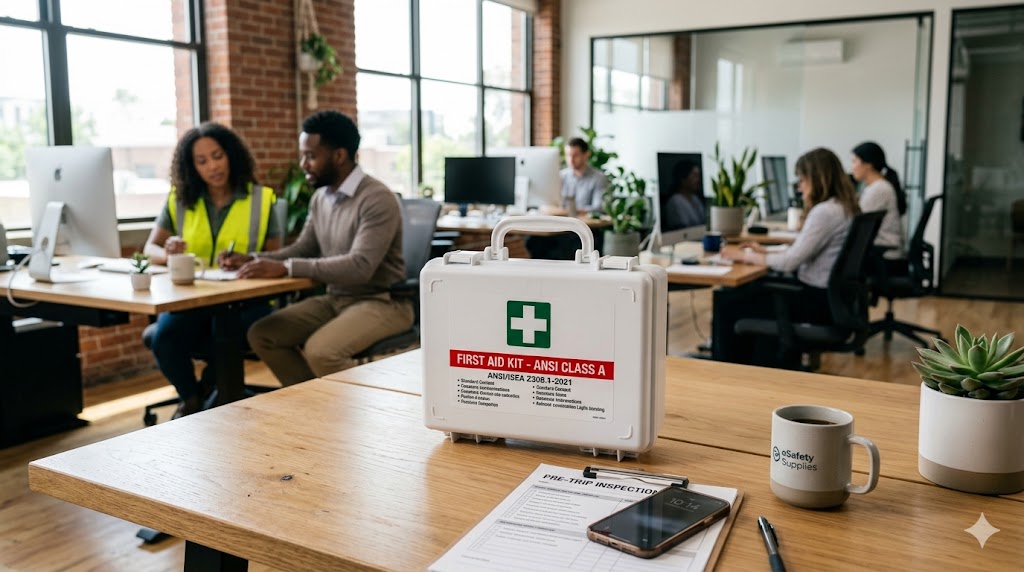
The regulatory landscape is strict. The Occupational Safety and Health Administration (OSHA) sets the foundational legal mandate under OSHA 29 CFR 1910.151, requiring employers to provide adequate medical supplies. However, OSHA defers to the International Safety Equipment Association (ISEA) and the American National Standards Institute (ANSI) to define what "adequate" actually means. Under the revised ANSI/ISEA Z308.1-2021 standard, workplace first aid kits are rigidly classified into two distinct performance categories: Class A and Class B.
Deploying the wrong kit classification or failing to maintain minimum component fill requirements can bring a sudden halt to operations during an inspection. This comprehensive compliance guide breaks down the technical differences between Class A and Class B first aid kits, analyzes the risk metrics that dictate your workplace requirements, and provides an audit-ready checklist to protect your workforce.
What is the Difference Between Class A and Class B First Aid Kits?
Under the ANSI/ISEA Z308.1-2021 standard, the critical difference between Class A and Class B first aid kits is determined by the complexity of the workplace risk environment and the volume of inventory required. Class A first aid kits are engineered to treat common, lower-severity workplace injuries (such as minor cuts, abrasions, and lightweight burns) typically found in standard office settings or low-density retail environments. Conversely, Class B first aid kits are legally mandated for high-risk, high-velocity industrial environments (including heavy manufacturing, commercial logistics hubs, and construction zones), featuring significantly higher quantities of core supplies alongside specialized trauma gear like a structural splint and a windlass tourniquet.
The ANSI/ISEA Z308.1-2021 Compliance Matrix
To pass your next safety audit, your first aid containers must contain precise quantities of mandatory items. Below is the side-by-side technical breakdown of the minimum required quantities for both classifications:
| Mandatory Minimum Components | ANSI Class A Requirement | ANSI Class B Requirement (Mandatory) |
|---|---|---|
| Adhesive Bandages | 16 units (1" x 3") | 50 units (1" x 3") |
| Adhesive Tape | 1 roll (2.5 yd total) | 2 rolls (5 yd total) |
| Burn Treatment (Gel/Ointment) | 10 applications (1/32 oz) | 25 applications (1/32 oz) |
| Sterile Pads | 2 units (3" x 3") | 4 units (3" x 3") |
| Trauma Pads | 1 unit (5" x 9") | 2 units (5" x 9") |
| Antiseptic Applications | 10 units (1/32 oz) | 50 units (1/32 oz) |
| Medical Exam Gloves | 2 pairs (Nitrile/Vinyl) | 4 pairs (Nitrile/Vinyl) |
| Eye Wash Fluid | 1 bottle (1 fl oz total) | 2 bottles (4 fl oz total) |
| Specialized Splint | Not Required | 1 unit (Minimum 4" x 24") |
| Tourniquet (Windlass Type) | Not Required | 1 unit (Combat-proven/ANSI-rated) |
1. The Risk Assessment Trigger: Choosing Your Class
Selecting your first aid profile is a matter of strict environmental metrics, not aesthetic preference. Safety directors must perform a workplace hazard assessment to evaluate three distinct risk vectors: workforce population density, proximity to professional emergency medical response, and active tool hazards.
- When Class A Suffices: If your environment consists of localized, sedentary office settings, administrative facilities, or corporate retail environments with low physical equipment exposure, a Class A kit meets compliance parameters.
- When Class B is Legally Mandated: If your team operates heavy machinery, power tools, commercial forklifts, or works in environments with high physical movement (such as multi-tier logistics yards or commercial construction sites), Class B is the mandatory federal baseline.
2. Key 2021 Revisions: The Foil-Pack and Tourniquet Update
The updated ANSI/ISEA Z308.1-2021 guidelines introduced a few critical updates that field managers frequently miss during routine internal audits:
- Foil-Pack Burn Geometry: Topical burn treatments must be stored in single-use foil packets to eliminate cross-contamination risks associated with multi-use tubes.
- The Tourniquet Mandate: Class B cabinets must contain an independent, dedicated windlass or mechanical tourniquet. Standard rubber bands or improvised cloth ties will result in an immediate audit failure. The standard recognizes that rapid severe-hemorrhage control is vital in high-speed manufacturing or processing facilities.
Frequently Asked Questions About Industrial First Aid Kits
1. Can multiple Class A kits be combined to satisfy a Class B requirement?
No. Even if you place multiple Class A boxes together, they will still lack the specialized, legally required trauma elements—such as a 24-inch structural splint and a mechanical windlass tourniquet—that define an ANSI Class B unit.
2. How often should workplace first aid cabinets be inspected?
While ANSI does not set a rigid calendar timeframe, OSHA compliance guides strongly suggest a monthly visual inspection. Inspections ensure safety seals are intact, component expiration dates have not passed, and internal inventory hasn't dropped below minimum baseline quantities due to daily workplace use.
3. Does an eye wash bottle inside a kit replace an OSHA eye wash station?
Absolutely not. The 1-ounce or 4-ounce eye wash solutions included in standard ANSI first aid kits are designed for minor topical rinsing. If your facility handles corrosive chemicals, OSHA 1910.151(c) mandates a dedicated, plumbed or self-contained emergency eye wash station capable of providing a continuous 15-minute flush.
4. Are medications like aspirin or ibuprofen required by ANSI?
No, over-the-counter oral medications are completely optional. If an organization decides to include pain relievers or cold remedies inside a workplace first aid cabinet, they must be packaged in single-dose, tamper-evident packets and cannot contain ingredients known to cause drowsiness during industrial machinery operation.
5. What is the difference between Type I, II, III, and IV kit containers?
While Class defines the contents, the Type classification defines the container. Type I is for indoor, stationary use; Type II is a portable indoor unit; Type III is a portable outdoor unit with a water-resistant seal; and Type IV is a heavy-duty waterproof unit engineered for marine, construction, and remote utility fleet operations.
Actionable Next Steps: Verify Your First Aid Fleet Today
Leaving your facility protected only by an unverified, expired, or depleted consumer-grade first aid box is an expensive gamble with regulatory compliance and employee safety. Take control of your organization's risk profile by executing a complete physical audit of your first aid cabinet locations and fill levels this week.
Are your high-risk fabrication zones, loading docks, and heavy equipment corridors equipped with the proper Class B trauma defense? Protect your team with industrial supplies engineered to perform under pressure.
Procure Fully Compliant ANSI Z308.1-2021 First Aid Supplies Today
Explore eSafety Supplies’ comprehensive industrial collection to secure ANSI Class A and Class B first aid kits, heavy-duty cabinet refills, and rugged Type III/IV waterproof emergency containers built to keep your operations compliant and your team safe.
Shop ANSI Compliant First Aid Cabinets
Seeking custom logo applications, automated regional fulfillment, or bulk volume pricing for your facility lines? Contact our corporate supply team today.
About the Author
Mick Chan is a Senior EHS Compliance Specialist and Safety Content Strategist with over 15 years of boots-on-the-ground experience auditing industrial facilities, logistics hubs, and construction zones across the Western United States. Raised in the San Gabriel Valley, California, Mick holds a Bachelor of Science degree from California State University, Los Angeles (CSULA). He specializes in transforming dense regulatory mandates into practical, high-efficiency operational safety programs that protect field crews and keep businesses compliant.