
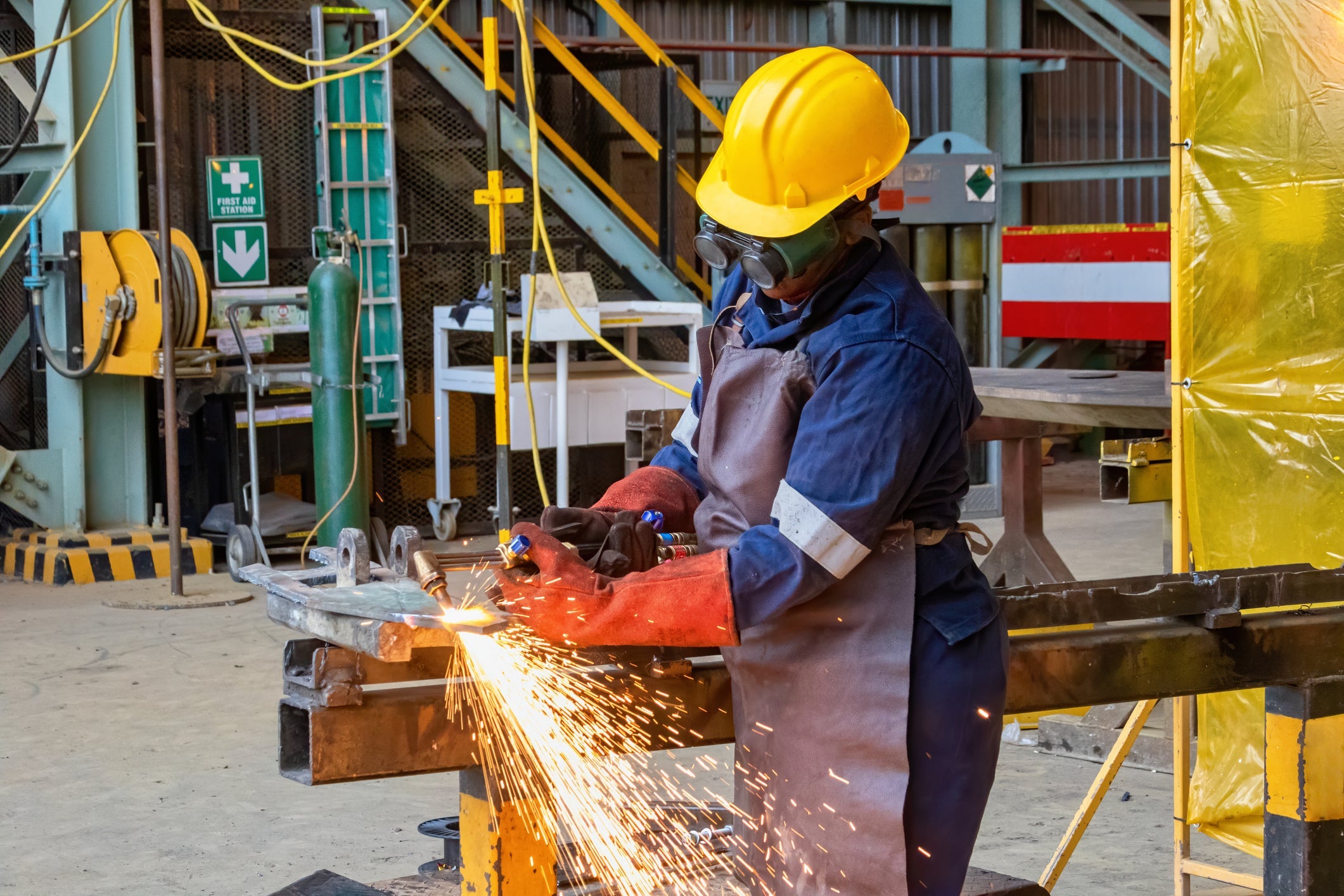
Quick Summary: Welding exposes workers to extreme heat, sparks, molten metal, ultraviolet radiation, and fumes. OSHA requires employers to protect welders from these hazards through proper personal protective equipment (PPE). This guide provides a complete welding PPE checklist, explains why each item is required, and outlines OSHA and ANSI compliance considerations for welding operations.
Why Welding Requires Specialized PPE
Welding is one of the most hazardous industrial tasks. Arc welding, MIG, TIG, and stick welding all generate intense heat, flying sparks, molten metal, and harmful radiation. Without proper PPE, welders face risks such as severe burns, eye damage, respiratory exposure, and long-term skin injuries.
OSHA Requirements for Welding PPE
OSHA regulates welding safety under 29 CFR 1910 Subpart Q, which covers welding, cutting, and brazing. Employers must ensure workers are protected from sparks, hot metal, radiation, and fumes through proper PPE selection and training.
Welding Helmets and Eye Protection
Welding helmets protect the eyes and face from arc radiation, sparks, and flying debris. Helmets must be equipped with appropriate filter lenses based on the welding process being performed.
All welding helmets, goggles, and protective eyewear should meet ANSI Z87.1 standards for impact resistance and optical clarity. Many job sites also require welders to wear safety glasses underneath welding helmets for added protection.
Auto-Darkening vs Passive Welding Helmets
Auto-darkening helmets automatically adjust lens shade when an arc is struck, improving visibility and reducing neck strain. Passive helmets use fixed-shade lenses and require manual positioning.
Employers should select helmets from approved welding helmet options that meet job-specific requirements.
Welding Gloves Explained
Welding gloves protect hands from heat, sparks, and molten metal while maintaining dexterity. Gloves are typically constructed from leather with reinforced stitching.
- MIG welding gloves – thicker insulation for high heat
- TIG welding gloves – thinner leather for precision work
- Stick welding gloves – heavy-duty heat protection
Properly rated welding gloves are essential for preventing burns and hand injuries.
Welding Jackets and Protective Clothing
Welding jackets protect the torso and arms from sparks and radiant heat. Common materials include flame-resistant (FR) cotton, treated fabrics, and leather.
Only approved welding jackets and flame-resistant clothing should be worn. Synthetic materials must be avoided, as they can melt and cause severe burns.
Welding Sleeves, Aprons, and Additional Protection
For overhead welding or high-exposure tasks, additional PPE such as welding sleeves and leather aprons may be required to prevent arm and torso injuries.
Foot Protection for Welders
Welders should wear leather safety boots with slip-resistant soles. Pants should be worn over boots to prevent sparks from entering footwear.
Respiratory Protection for Welding
Welding fumes may contain hazardous metals and gases. When ventilation or engineering controls are insufficient, appropriate respiratory protection must be provided in accordance with OSHA 29 CFR 1910.134.
Hearing Protection During Welding
Grinding and cutting operations associated with welding can generate excessive noise levels, making hearing protection necessary in many environments.
Welding PPE Inspection and Maintenance
All welding PPE should be inspected regularly for damage such as holes, cracks, worn insulation, or lens defects. Damaged PPE must be replaced immediately.
Common Welding PPE Mistakes
- Wearing non-flame-resistant clothing
- Using incorrect welding lens shade
- Failing to wear safety glasses under helmets
- Ignoring respiratory hazards
People Also Ask
What PPE is required for welding?
Welding PPE includes helmets, safety glasses, gloves, flame-resistant clothing, and additional protection depending on hazards.
Do welders need safety glasses under helmets?
Yes, safety glasses provide secondary protection from flying debris.
What gloves are best for welding?
Leather welding gloves designed for the specific welding process.
Is flame-resistant clothing required for welding?
Yes, flame-resistant clothing helps prevent burns and ignition.
Does OSHA require welding PPE?
Yes, OSHA requires employers to protect workers from welding hazards.
Author
Mick Chan is a safety supplies industry professional with over 15 years of experience advising businesses on welding safety, OSHA compliance, and PPE selection across California.