Running an aggressive, multi-tiered fulfillment hub requires keeping every processing lane moving at full speed. But when summer temperatures drive the indoor heat index past critical thresholds, your facility’s most valuable assets face a quiet, severe threat: dehydration. When fulfillment personnel are picking heavy items from high-rack rows or unloading closed shipping containers, they sweat out vital fluids at an alarming rate.
Under active OSHA heat enforcement initiatives, relying on a basic breakroom drinking fountain is no longer a valid compliance strategy. If your indoor work zones hit high thermal thresholds, regulatory inspectors expect a proactive, structured hydration framework. Leaving hydration up to individual choice increases the risk of severe heat cramps, heat exhaustion, and costly liability penalties. Protecting your blended workforce requires an active, managed hydration pipeline.
This technical guide details how to build an uncompromised cross-shift fluid replenishment protocol, calculate optimal hydration delivery ratios, and eliminate the digital information blocks that trigger immediate regulatory citations.
The Key Benchmarks of Warehouse Hydration Compliance
To pass rigorous regulatory inspections and maintain zero heat-related incidents across mixed shifts, operations management must enforce four vital infrastructure rules:
- The 1-Quart-Per-Hour Metric: Providing enough cool, potable water so that every operator can easily consume at least 32 ounces of fluids every single hour of a hot shift.
- The 200-Foot Proximity Boundary: Positioning mobile or permanent hydration stations within a short, unobstructed walking distance from active picking rows and loading docks.
- Balanced Electrolyte Integration: Adding high-performance electrolyte replenishment options alongside standard water stock for shifts exceeding four hours of heavy physical labor.
- Flawless Digital Link Verification: Monitoring scannable hydration placards consistently to guarantee that tracking sheets and thermal logs never lead to a broken 404 screen.
Deep Dive: Integrating Physical Hydration Systems with Live Tracking
Sustaining safety through seasonal temperature spikes means looking beyond simple plastic water bottles. True protection combines highly visible physical supply hardpoints with accessible, real-time cloud data paths.
Step 1: Implementing the Proximity Hydration Framework
In massive logistics terminals, time-in-motion metrics rule the floor. If a picker working an elevated mezzanine row has to walk five minutes across the building to find the nearest water station, they will frequently delay taking a drink to hit their performance target. This intentional delay quickly leads to metabolic heat fatigue and sudden physical exhaustion.
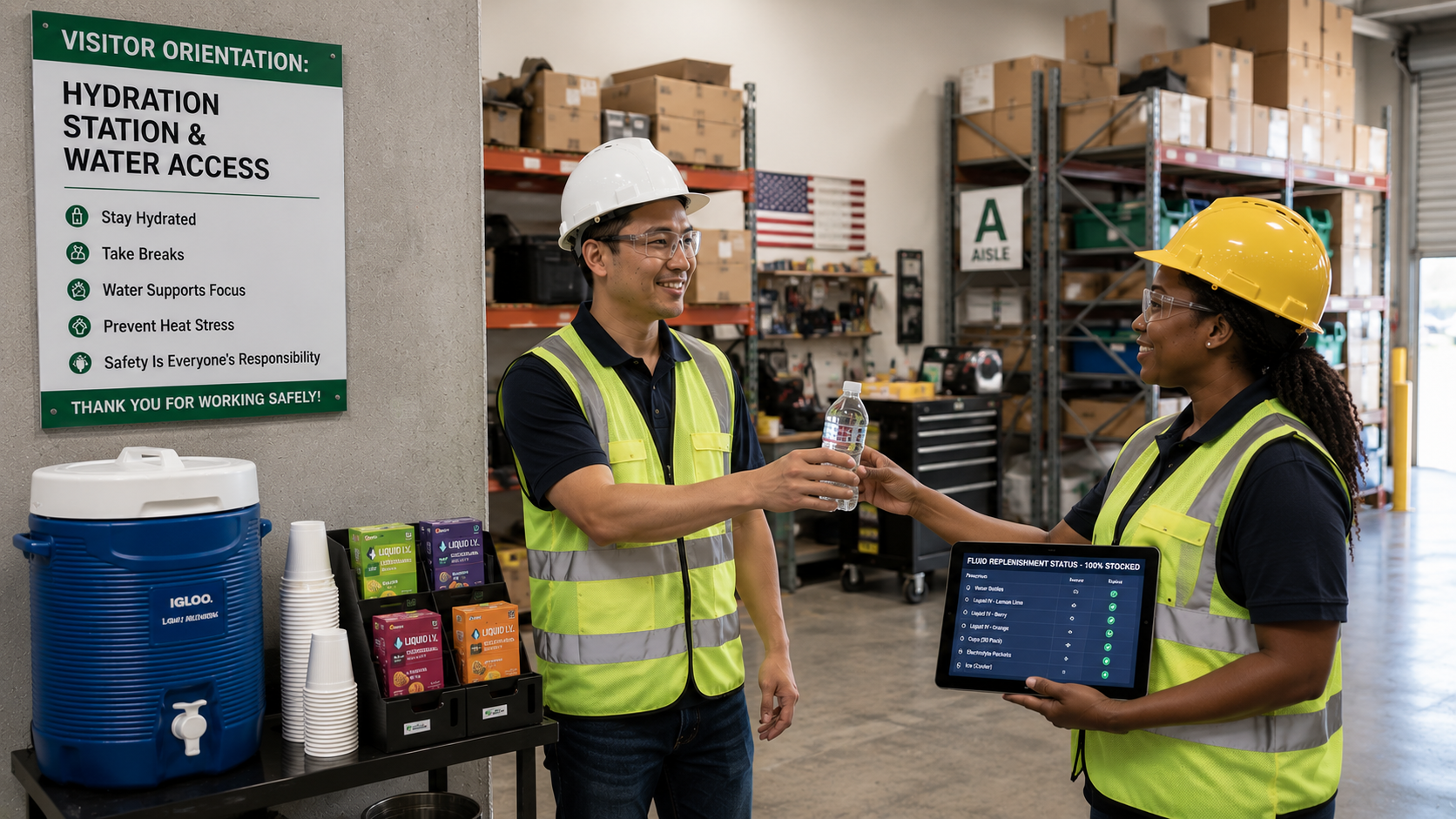
To satisfy OSHA compliance standards, position dedicated hydration centers directly inside active work zones. Keep these hydration points highly visible. Use high-durability floor striping and clear overhead banners to mark the space. This ensures that third-party contractors and temporary loaders can spot a water replenishment station instantly, keeping your team hydrated and paths clear.
Step 2: Cross-Training Blended Crews on Electrolyte Sourcing
Modern fulfillment yards operate with a fluid mix of internal teams, external logistics drivers, and independent sub-contractors. When shifts extend through hot afternoon hours, drinking large quantities of plain water without replacing lost body salts can cause hyponatremia—a dangerous drop in blood sodium levels that triggers severe muscle cramps and mental confusion.
To prevent this hidden health hazard, provide your morning team captains and contracted vendor leads with uniform training resources. Distribute our standard Safety Awareness Handbooks to educate all mixed shift crews on recognizing dehydration signals and understanding when to add electrolyte packets to their water bottles.
Step 3: Eradicating 404 Link Failures on Hydration Dashboards
Modern regulatory compliance places a high priority on transparent digital recordkeeping. Top-tier logistics centers print scannable QR code placards directly on their mobile water carts and main safety stations. This allows shift marshals, supervisors, and visiting safety inspectors to scan the code with a mobile device to instantly update fluid delivery logs or view local heat-stress emergency protocols.
If an inspector scans a hydration tracking placard and hits a broken 404 "Page Not Found" screen due to an unverified database change, that digital failure creates an immediate hazard communication citation. Your administrative team must actively check and maintain all digital asset paths. Keep your web infrastructure clean, live, and fully functional. To verify that all required workplace protective gear, cooling signs, and hydration parameters remain perfectly aligned across your warehouse floors, integrate our structured Warehouse Safety PPE Checklist into your weekly facility verification walks.
       +-------------------------------------------------------+
       |             CROSS-SHIFT HYDRATION PIPELINE            |
       +-------------------------------------------------------+
       | Fluid Target -> 1 Quart (32 oz) Per Worker / Per Hour |
       | Proximity   -> Stations Placed Within 200 Feet Max    |
       | Verification -> 100% Active QR Supply Logs (No 404s)  |
       +-------------------------------------------------------+
Strategic Action Steps for Warehouse Sourcing Managers
Maintaining long-term heat mitigation and code compliance requires pairing heavy-duty physical warning signs with streamlined inventory management.
Post Clear, High-Contrast Hydration and Recovery Notices
Do not wait for a medical event to reveal that your workers are unaware of your dedicated fluid replenishment spaces. Mount bright, heavy-duty signs directly above every water dispenser, ice chest, and cooling station to make your requirements impossible to miss. Installing durable Industrial Facility Safety Signs & Accessories gives all mixed-shift teams clear visual direction, keeping your vertical spaces organized and safe.
Establish a Mid-Shift Water Supply Verification Walk
Train your yard marshals and safety captains to execute a dedicated hydration audit at the peak hour of every major shift rotation. Have them check all localized water stations to ensure ice blocks are maintained, clean drinking cups are fully stocked, and trash bins are empty. Spotting an empty water stack early keeps your facility prepared for unannounced regulatory spot-checks.
Streamline Safety Supply Pipelines via Volume Sourcing Tools
Sourcing and tracking distinct hydration gear, custom warning labels, and specialized sign networks for multiple distribution locations can quickly overcomplicate your operations budget. By running all compliance purchases through a central eSafety Supplies Bulk Procurement Account, your purchasing managers can seamlessly bundle corporate volume orders across all sites while hitting tough cost-containment targets.
Fulfillment Hydration Protocols Frequently Asked Questions
What are OSHA's exact requirements for drinking water in hot indoor environments?
OSHA mandates that employers provide a continuous supply of cool, potable drinking water at no cost to workers. When the heat index reaches or exceeds 80°F, water must be positioned within close proximity to work areas, and employers must encourage employees to drink at least one quart (32 ounces) of water per hour.
When should electrolytes be added to a warehouse hydration plan?
For heavy manual labor or shifts extending past 4 hours in high-heat zones, relying solely on water can dilute blood sodium levels (hyponatremia). Integrating electrolyte-replenishment packets or drinks is highly recommended by safety specialists to sustain muscle function and fast recovery.
How do 404 broken links on safety placards compromise hydration tracking?
If a supervisor or worker scans a QR code on a hydration station to log water inventory or check local heat-stress response steps, a broken 404 page stalls communication. This digital failure can be cited by inspectors as a critical hazard communication breakdown.
About the Author
Mick Chan is a Senior EHS Compliance Specialist and Safety Content Strategist with over 15 years of boots-on-the-ground experience auditing industrial facilities, logistics hubs, and construction zones across the Western United States. Raised in the San Gabriel Valley, California, Mick holds a Bachelor of Science degree from California State University, Los Angeles (CSULA). He specializes in translating complex federal OSHA codes and National Electrical Codes (NEC) into practical, high-efficiency operational safety programs that shield companies from liability and protect industrial workforces.