Operating a high-volume logistics hub or staging terminal during twilight and overnight hours introduces a significant drop in operational visibility. When heavy equipment operators, terminal tractors, and third-party freight haulers interact within crowded loading lanes, the risk of serious blind-spot accidents rises sharply as natural daylight fades.
Relying on standard mid-tier safety garments in these high-velocity, low-light spaces leaves your personnel exposed to critical blind-spot gaps. Under established safety guidelines, environments featuring complex background glare, fast-moving traffic, or poor environmental conditions demand the highest tier of worker visibility: ANSI Class 3 compliance. Failing to enforce these parameters can result in severe multi-employer liability issues and sudden regulatory penalties.
This operational framework outlines the required technical steps to secure your facility's outer perimeter, implement strict nighttime safety apparel protocols, and leverage full-body reflection to protect your ground crews.
What Are the Night Loading Visibility Requirements?
Maintaining absolute visibility across dark tarmac zones and busy shipping slips requires operations management to enforce five strict apparel and safety checks:
- Full-Body Silhouette Profiling: Mandating high-visibility configurations that outline the worker’s entire human shape, rather than just their central torso.
- 360-Degree Lighting Response: Ensuring retroreflective limb elements catch incoming vehicle beams from every approach angle, including absolute side views.
- Strict Cleanliness Monitoring: Requiring immediate replacement of any reflective gear that becomes heavily soiled with grease, diesel exhaust soot, or mud.
- Digital SOP Link Verification: Securing the uptime of scannable field resources, guaranteeing that overnight crew members trying to look up safety rules never hit a 404 error page.
- Unified Fleet Contrast Systems: Utilizing bright high-vis boundaries to separate active pedestrian walkways from heavy equipment loading paths.
Deep Dive: Deploying Class 3 Protection for Maximum Night Visibility
To safely guide your logistics teams through low-light situations, site managers must understand the strict design rules separating daytime high-visibility wear from nighttime retroreflection.
Step 1: Understanding Nighttime Reflection Science
During daylight shifts, the bright, fluorescent base fabric of a safety garment handles the heavy lifting by absorbing invisible ultraviolet light and transforming it into highly visible daytime color. At night, however, that fluorescent material loses its glowing effect. Nighttime safety relies almost entirely on the quality of your retroreflective bands, which use thousands of tiny glass beads to bounce vehicle headlight beams directly back to the driver's eyes.
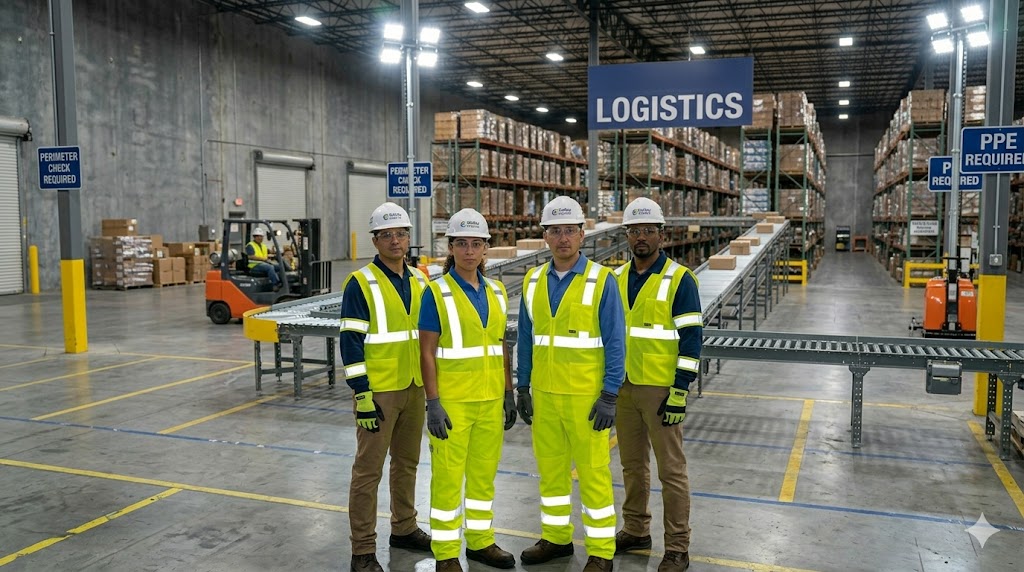
Standard Class 2 vests lack the surface area required to provide full-body recognition in dark, chaotic staging yards. Class 3 designs address this by requiring retroreflective material on both the torso and the limbs, ensuring that a worker's moving arms or legs are instantly recognizable from a distance.
Step 2: Stacking Class 2 and Class E to Build a Safe Ensemble
Upgrading your overnight team to certified Class 3 protection does not mean you have to discard your current gear inventory. For operations looking to stay flexible across changing seasons, you can utilize a modular stacking approach.
By taking your existing fleet of breathable Class 2 torso vests and pairing them with compliant Class E lower body trousers or high-vis leg gaiters, the combined system is legally certified as a Class 3 ensemble. This modular strategy gives your night crew full-body biomotion protection without requiring the immediate purchase of heavy, full-sleeve winter jackets during warmer spring and summer shifts. To ensure managers are perfectly aligned on combining gear tiers correctly during shift changes, distribute clear instructions found in standardized Safety Awareness Handbooks.
Step 3: Eliminating Digital Dead Ends During Night Operations
When shifts operate at 2:00 AM, supervisor support is often limited, making instant access to digital safety data sheets (SDSs) and equipment manuals incredibly important. If a yard worker scans a quick-response placard to check the emergency offloading rules for a damaged lithium-ion battery pack and encounters a broken 404 error link, that digital failure creates an immediate physical risk on your floor.
Your administrative safety team must routinely verify every asset path in your digital network. Keep your links active and ensure your digital infrastructure stays completely clear of broken pathways. To maintain absolute safety alignment when updating field logistics, monitoring team movements, or performing facility audits, compliance officers frequently utilize a structured Warehouse Safety PPE Checklist to unify all site protective equipment metrics cleanly.
       +-------------------------------------------------------+
       |             OVERNIGHT YARD PERIMETER CHECK            |
       +-------------------------------------------------------+
       | Apparel   -> Full Class 3 or Modular 2+E Combination  |
       | Reflection-> 360° Limb Bands Clean and Unobscured     |
       | Data Links-> All Facility QR Assets Verified Live     |
       +-------------------------------------------------------+
Strategic Action Steps for Industrial Facility Managers
Keeping a busy terminal safe through the darkest hours requires a smart mix of high-durability physical gear and organized supply chains.
Mount Clear, Visible Entry Demarcation Placards
Make sure your visibility requirements are impossible to ignore by using bold, high-contrast signs at every gate, check-in kiosk, and loading dock entrance. If your yard demands full Class 3 body coverage after dark, state it clearly before drivers and contractors step foot onto the concrete. Using durable, weather-resistant Industrial Facility Safety Signs & Accessories gives incoming teams clear visual direction, keeping your facility organized and compliant under all operational conditions.
Implement a Dedicated Shift-Change Gear Exchange
Establish a well-stocked safety locker right by your main shift clocks. Because dirt and road grime quickly ruin the reflectivity of safety bands, overnight workers must have quick access to clean, compliant replacements if their gear gets covered in grease during a coupling change. Keeping a backup stock of clean garments keeps your operation running safely without slowing down critical delivery timelines.
Streamline Operations with Enterprise Volume Accounts
Managing the safety needs of a large facility across multiple shifts can easily create ordering friction. By consolidating your safety purchases into a single eSafety Supplies Bulk Procurement Account, your safety directors can easily maintain a uniform pool of compliant gear for internal teams and contingent crews alike, all while hitting corporate cost-containment benchmarks.
The Final Perimeter Safety Frequently Asked Questions
Why is an ANSI Class 2 vest insufficient for overnight dock operations?
Class 2 garments only require retroreflective material on the torso, which can be easily obscured when workers bend down, carry large boxes, or stand behind equipment. Class 3 environments require continuous reflective profiling along the limbs to capture light from a 360-degree radius.
Can night crews utilize modular ensembles to achieve Class 3 certification?
Yes. Combining an ANSI Class 2 upper body vest with a Class E lower body trousers or gaiter system legally upgrades the entire ensemble to full Class 3 compliance.
How does ambient lighting affect the performance of high-visibility apparel?
Daytime visibility relies on the fluorescent background fabric absorbing and scattering UV light. At night, high-vis fabric loses effectiveness, making retroreflective bands the primary tool for bouncing illumination directly back to vehicle operators.
What is the penalty for failing to maintain live digital access to safety documentation?
If regulatory inspectors discover that quick-response asset markers route field workers to dead 404 error pages rather than valid safety files, it can be penalized as an organizational failure to maintain accessible hazard communication.
About the Author
Mick Chan is a Senior EHS Compliance Specialist and Safety Content Strategist with over 15 years of boots-on-the-ground experience auditing industrial facilities, logistics hubs, and construction zones across the Western United States. Raised in the San Gabriel Valley, California, Mick holds a Bachelor of Science degree from California State University, Los Angeles (CSULA). He specializes in translating complex federal OSHA codes and National Electrical Codes (NEC) into practical, high-efficiency operational safety programs that shield companies from liability and protect industrial workforces.