
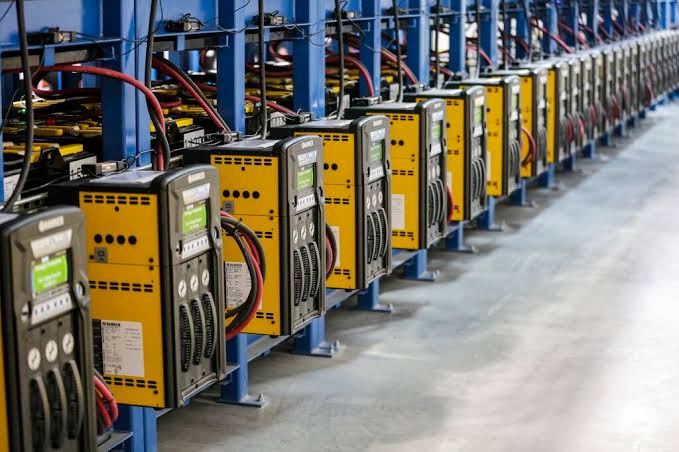
A bustling distribution center or manufacturing plant relies entirely on its forklift fleet to keep production metrics on target. But behind that smooth material handling operation sits one of the highest-risk zones in your entire facility: the forklift battery charging station.
When a heavy-duty lead-acid industrial battery hooks up to a high-output charger, it doesn't just draw electrical current—it undergoes an active chemical reaction that vents highly explosive hydrogen gas and introduces corrosive sulfuric acid hazards to your material handlers. Failing to properly engineer and equip this zone is a fast track to severe workplace injuries and costly structural damage. This guide breaks down the essential federal mandates, outlines your exact equipment requirements, and provides an inspection-ready blueprint to ensure your charging area remains safe, efficient, and 100% compliant.
What are the OSHA Requirements for Forklift Battery Charging Stations?
Under federal standard OSHA 29 CFR 1910.178(g), forklift battery charging stations must feature adequate ventilation to prevent the accumulation of explosive hydrogen gas pockets, facilities for flushing and neutralizing spilled electrolyte, and fire protection equipment like specialized extinguishers. Furthermore, employers are legally required under 1910.178(g)(2) to provide proper material handling equipment (such as a hoist or conveyor) for safely changing heavy batteries, alongside an emergency eyewash station capable of delivering a 15-minute continuous flush within a 10-second travel distance of the charging rack.
The Core Compliance Matrix: 1910.178(g) Breakdown
To make an industrial battery room safe, you have to protect against three distinct physical threats: chemical splashes, explosive gas accumulation, and crushing injuries during battery change-outs.
| Compliance Hazard | Specific OSHA Standard | Mandated Equipment / Action |
|---|---|---|
| Explosive Gas Accumulation | 29 CFR 1910.178(g)(1) | Forced mechanical ventilation / Hydrogen gas detectors |
| Acid Spills & Splashes | 29 CFR 1910.178(g)(2) | Emergency eyewash station & neutralizing chemical spill kits |
| Heavy Material Handling | 29 CFR 1910.178(g)(4) | Overhead hoists, cranes, or specialized battery transfer carts |
| Ignition Sources | 29 CFR 1910.178(g)(11) | Strict "No Smoking" signage, spark-proof tools, and Class ABC extinguishers |
1. Ventilation and Hydrogen Gas Mitigation
During the final stage of an industrial battery charging cycle, a process called "gassing" occurs. Water inside the electrolyte solution splits into hydrogen and oxygen gases. Hydrogen gas is lighter than air and rises rapidly to collect in ceiling pockets. It is highly flammable and possesses an explosive threshold starting at just 4% concentration by volume in the air.
Actionable Risk Reduction:
- Enforce Mechanical Air Exchange: Do not rely on open bay doors or passive airflow. Install forced mechanical exhaust ventilation tied directly to hydrogen gas detectors that automatically kick on if gas levels hit 1% (25% of the lower explosive limit).
- Eliminate Ceiling Pockets: Ensure your charging racks aren't positioned beneath deep structural drop-ceilings or unventilated roof mezzanines where gas can pocket undisturbed.
2. Emergency Eyewash and Shower Infrastructure
Because forklift batteries contain high concentrations of corrosive sulfuric acid, accidental splashes during watering, testing, or connection can cause immediate, irreversible ocular damage. OSHA references the ANSI/ISEA Z358.1 standard to enforce the parameters of your decontamination equipment.
CRITICAL COMPLIANCE TIMING: An emergency eyewash must be located within 10 seconds (approximately 55 feet) of the hazard. The path must be completely unobstructed. No curtains, steps, or pallet staging can block a blinded worker's path.
Your eyewash equipment must deliver a minimum of 0.4 gallons of water per minute for a full, continuous 15 minutes. Mandate a weekly written activation log to flush out sediment build-up and verify that the water temperature stays within the legally required "tepid" range (60°F to 100°F).
3. Mandatory PPE Array for Battery Handlers
Standard warehouse work wear will not protect an associate from a pressurized chemical spray if a battery cell cap bursts or bubbles over during a heavy charging sequence. Under OSHA 29 CFR 1910.132, employers must provide and enforce the use of task-specific personal protective equipment.
The Industrial Battery Handling Safety Uniform:
- Chemical Splash Goggles: Standard safety glasses with side shields are completely insufficient. Personnel must wear indirect-vent chemical splash goggles paired with a full-face shield to prevent acid from rolling down the forehead into the eyes.
- Acid-Resistant Aprons: Heavy-duty rubberized or neoprene sleeves and aprons must be worn to deflect clothing-corroding electrolyte spills.
- Nitrile or Neoprene Gauntlet Gloves: Extended-cuff, heavy-mil chemical-resistant gloves must be pulled over shirt sleeves to trap dripping fluid before it makes skin contact.
4. Spill Containment and Chemistry Neutralization
Sulfuric acid leaks don't just destroy concrete floors; they run into drainage systems and introduce massive environmental liabilities. OSHA mandates that your charging area have immediate facilities to neutralize and clean up spills.
Standard clay oil-dry will not neutralize acid. You must stock specialized chemical spill kits packed with sodium bicarbonate or soda ash neutralizing agents that react to neutralize the corrosive liquid to a safe pH balance before absorption.
Frequently Asked Questions About Forklift Charging Stations
1. Is a floor drain required in a forklift battery room?
No, OSHA does not explicitly require a floor drain in a battery charging room. In fact, if you do have a floor drain, environmental regulations require you to install a dedicated containment sump or interceptor system to completely prevent corrosive sulfuric acid from entering public sewer systems during a catastrophic wash-down or spill.
2. Can you smoke or weld near a forklift charging rack?
Absolutely not. Under OSHA standard 1910.178(g)(11), smoking is strictly prohibited in the battery charging area. Furthermore, open flames, welding torches, grinding tools that throw sparks, or unapproved electrical devices must be kept at least 20 feet away from active charging lines to completely eliminate potential ignition sources.
3. What kind of fire extinguisher is required in the charging bay?
You must maintain an easily accessible fire extinguisher with a minimum rating of Class ABC. Because charging stations contain heavy concentrations of energized electrical switchgear (Class C hazards) alongside structural wooden pallets or plastic battery casing materials (Class A/B hazards), multi-purpose dry chemical extinguishers are the facility standard.
4. Do forklift chargers need clear physical workspace boundaries?
Yes. OSHA tracks this under safe clearances for electrical equipment. You must maintain a minimum of 3 feet of completely clear, unobstructed workspace in front of all industrial battery charger electrical panels to allow maintenance technicians to safely operate disconnect switches during an emergency event.
5. Can standard warehouse tools be used to work on industrial batteries?
No. Working on battery terminals or cell connectors requires fully insulated hand tools. Dropping a standard chrome wrench across exposed metal lead-acid battery connectors can instantly spark, cause an arc-flash explosion, or trigger an immediate ignition of lingering ambient hydrogen gas.
Actionable Next Steps: Audit Your Facility Assets Today
An unvetted battery dock is a ticking clock for a major worker compensation event or a severe compliance penalty. Take control of your building's risk profile by executing a comprehensive site audit on your charging infrastructure this week.
Are your charging bays fully equipped with proper safety markings, acid counters, and operational eyewashes? Don't leave your warehouse compliance up to guesswork.
Ensure Your Facility's Compliance Today
Explore eSafety Supplies’ comprehensive inventory of commercial-grade warehouse items, including industrial-grade floor marking tapes, ANSI safety vests, protective eyewear, and premium first aid supplies designed to keep your facility 100% compliant.
Shop Compliant Warehouse Safety Equipment
Need bulk volume pricing or custom facility warning signs? Contact our enterprise safety specialists today.
About the Author
Mick Chan is a Senior EHS Compliance Specialist and Safety Content Strategist with over 15 years of boots-on-the-ground experience auditing industrial facilities, logistics hubs, and construction zones across the Western United States. Raised in the San Gabriel Valley, California, Mick holds a Bachelor of Science degree from California State University, Los Angeles (CSULA). He specializes in transforming dense regulatory mandates into practical, high-efficiency operational safety programs that protect field crews and keep businesses compliant.