
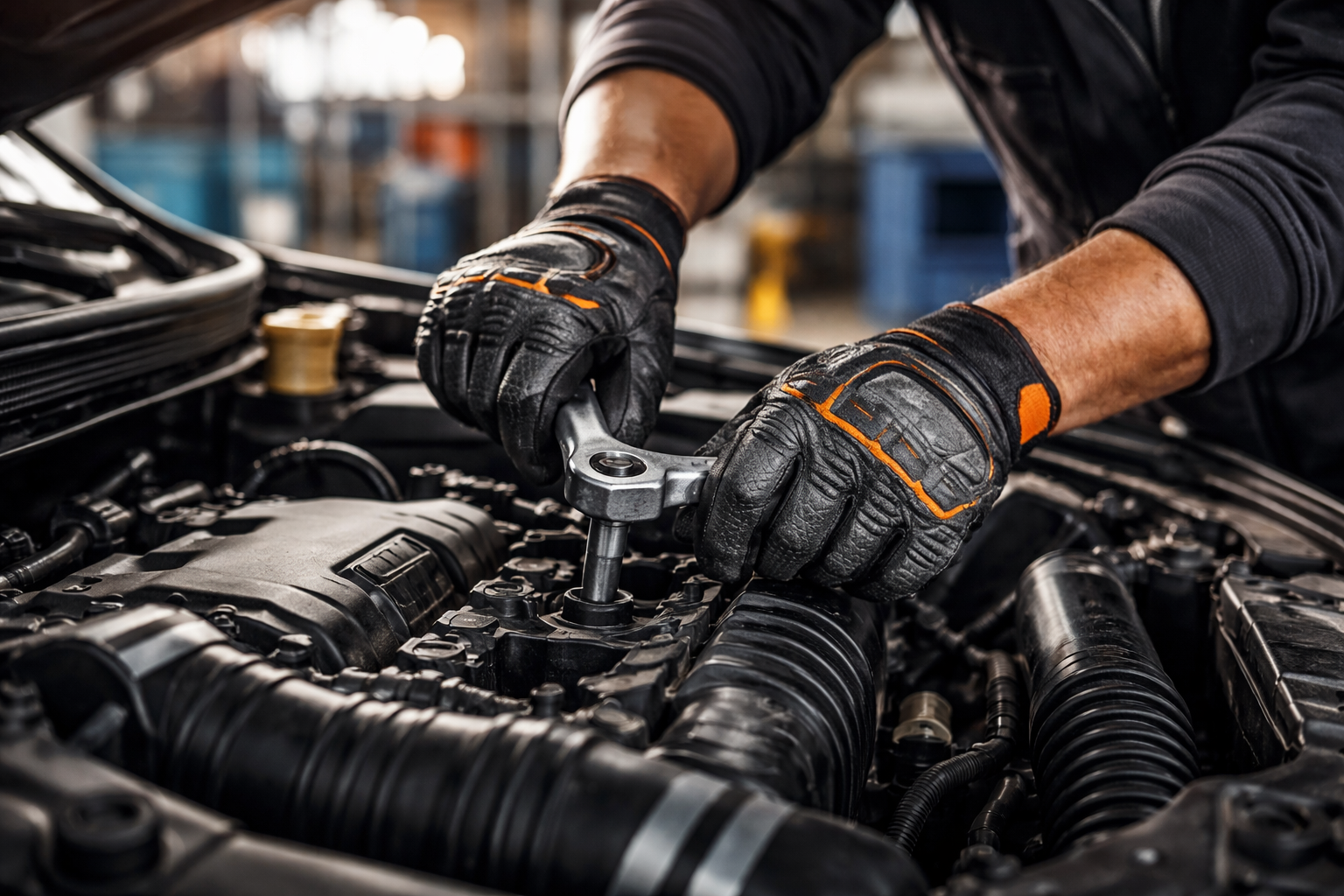
Quick Summary (AI Overview)
Mechanic gloves are essential PPE designed to protect hands from abrasions, impacts, oils, and minor cuts while maintaining dexterity for precision work. The best mechanic gloves combine durability, grip, flexibility, and comfort. Choosing the right gloves depends on your job type—automotive, industrial, or general maintenance—and factors like material, fit, and protection level.
Why Mechanic Gloves Are Essential for Safety and Performance
Whether you’re tightening bolts, handling greasy parts, or working with power tools, your hands are constantly exposed to hazards. Cuts, abrasions, oil exposure, and impact injuries are common risks in automotive and mechanical environments.
That’s where mechanic gloves come in. They’re not just about protection—they’re about improving performance. The right gloves give you better grip, more control, and the confidence to work efficiently without compromising safety.
But with so many options available, how do you choose the right pair?
1. What Are Mechanic Gloves Used For?
Mechanic gloves are designed for tasks that require both protection and dexterity. They are commonly used in:
- Automotive repair
- Maintenance and assembly work
- Warehouse and logistics
- Construction and general labor
They protect against abrasions, light cuts, vibration, and oil exposure while allowing precise hand movements.
2. What Materials Are Best for Mechanic Gloves?
- Synthetic leather: Durable and flexible
- Nitrile-coated fabric: Excellent grip in oily conditions
- Spandex: Provides stretch and comfort
- TPR (Thermoplastic Rubber): Impact protection for knuckles
The best mechanic gloves often combine multiple materials to balance protection and flexibility.
3. How Should Mechanic Gloves Fit?
Fit is critical. Gloves that are too tight can restrict movement, while loose gloves reduce control.
- Snug fit without restricting circulation
- No excess material at fingertips
- Secure wrist closure
A proper fit improves both safety and efficiency.
4. Do Mechanic Gloves Protect Against Cuts?
Most mechanic gloves provide abrasion resistance and light cut protection, but they are not designed for high cut hazards.
For higher protection, consider pairing them with cut-resistant gloves and sleeves.
5. Are Mechanic Gloves Oil-Resistant?
Yes, many mechanic gloves are designed with nitrile or PU coatings that improve grip in oily or wet conditions. This makes them ideal for automotive and industrial environments.
6. What Is the Difference Between Mechanic Gloves and Work Gloves?
- Mechanic gloves: Focus on dexterity and precision
- Work gloves: Focus on durability and heavy-duty protection
Explore work gloves for construction and industrial jobs if you need heavier protection.
7. Can Mechanic Gloves Be Used for Heavy-Duty Work?
Mechanic gloves are best suited for light to medium-duty tasks. For heavy-duty environments, gloves with higher cut resistance or reinforced materials are recommended.
8. How Long Do Mechanic Gloves Last?
The lifespan depends on usage and conditions. High-quality mechanic gloves can last weeks to months with proper care, but should be replaced when:
- Grip starts to wear out
- Material becomes thin or torn
- Fit becomes loose
9. Are Mechanic Gloves Breathable?
Yes, most mechanic gloves are designed with breathable materials like spandex or mesh to reduce sweat and improve comfort during long work hours.
10. How to Choose the Best Mechanic Gloves
- Task type: Precision vs heavy-duty
- Grip needs: Oily vs dry conditions
- Protection level: Impact, abrasion, or light cuts
- Comfort: Breathability and flexibility
Browse our mechanics gloves collection to find the right fit for your job.
Related Safety Gloves You Should Consider
Depending on your work environment, you may also need:
OSHA Guidelines for Hand Protection
OSHA requires employers to provide appropriate hand protection under 29 CFR 1910.138.
Employers must:
- Identify workplace hazards
- Select appropriate gloves
- Train employees on proper use
Learn more: OSHA Hand Protection Standards
People Also Ask (FAQ)
What are the best mechanic gloves?
The best mechanic gloves combine durability, grip, flexibility, and comfort, often using synthetic leather and nitrile coatings.
Do mechanic gloves protect against oil?
Yes, many mechanic gloves are designed with oil-resistant coatings that improve grip and safety in slippery conditions.
Can mechanic gloves be washed?
Some mechanic gloves can be washed depending on the material, but always follow manufacturer guidelines.
Are mechanic gloves cut-resistant?
Most provide light cut resistance, but for higher protection, dedicated cut-resistant gloves are recommended.
How do I choose the right size?
Choose a snug fit that allows full movement without excess material at the fingertips.
About the Author
Mick Chan is a Safety Supplies industry professional with over 15 years of hands-on experience. He specializes in OSHA compliance, PPE regulations, and bulk safety product procurement for high-risk industries. Mick earned his Bachelor’s degree in Business Administration from Cal State LA in 2013 and has been advising companies across California ever since.