
Quick Answer
Machine guarding labels and warning signs help workers recognize pinch points, rotating parts, blades, belts, hot surfaces, and restricted access areas. OSHA requires machine guarding where machine parts, functions, or processes may cause injury to the operator or others in the machine area.
Labels do not replace guards, interlocks, lockout/tagout procedures, or training. They support those controls by making hazards and required actions visible at the point of work.
Machine Guarding Label Checklist
| Check area | What to inspect | Why it matters |
|---|---|---|
| Guard labels | Labels are present on guards, covers, panels, and access points. | Workers need clear warning before removing or opening guarded areas. |
| Hazard type | Labels identify relevant hazards such as pinch point, crush, cut, rotating parts, or hot surface. | Specific labels are more useful than vague warnings. |
| Condition | Labels are readable, clean, and securely attached. | Oil, abrasion, heat, and cleaning chemicals can destroy visibility. |
| Lockout reminders | Lockout tags or labels are available where energy control is required. | Maintenance tasks need clear energy-control communication. |
| PPE reminders | Eye, hand, hearing, or face protection reminders match the task. | Point-of-use cues support training and compliance. |
| Replacement supply | Spare labels, tags, and markers are stocked. | Damaged labels should be replaced promptly. |
Where Labels Add Value
- Machine guards, removable covers, and access doors.
- Conveyors, rollers, belts, chains, blades, and pinch points.
- Electrical panels and lockout points.
- Hot surfaces, hydraulic equipment, and pneumatic equipment.
- Maintenance shops where spare parts and guard panels are handled.
Inspection Routine
Include labels and signs in machine safety inspections. If a guard is repaired, replaced, painted, or cleaned, verify that labels remain readable and correctly placed. If equipment is moved or modified, review whether hazard labels still match the machine configuration.
When labels are damaged, replace them. A handwritten temporary note can help during a short repair window, but durable labels should be restored as soon as practical.
Common Mistakes to Avoid
Do not use labels as a substitute for physical guarding. Do not let labels become generic clutter that workers stop noticing. Do not hide warning labels behind stored parts or tools. And do not forget multilingual or symbol-based communication needs where your workforce requires them.
FAQ
Can warning labels replace machine guards?
No. Labels communicate hazards, but guards and other controls are still required where machine hazards need physical protection.
When should machine safety labels be replaced?
Replace labels when they are faded, damaged, missing, covered, inaccurate, or no longer readable from the normal work position.
Should lockout tags be near machine guarding labels?
Lockout tags and energy-control instructions should be accessible where maintenance and servicing tasks require them.
About Mick Chan
Mick Chan is a safety supply specialist who helps businesses choose practical PPE, facility safety, and emergency readiness products for real workplace conditions. His guidance focuses on simple, usable safety programs that are easier for teams to follow every day.
Final CTA
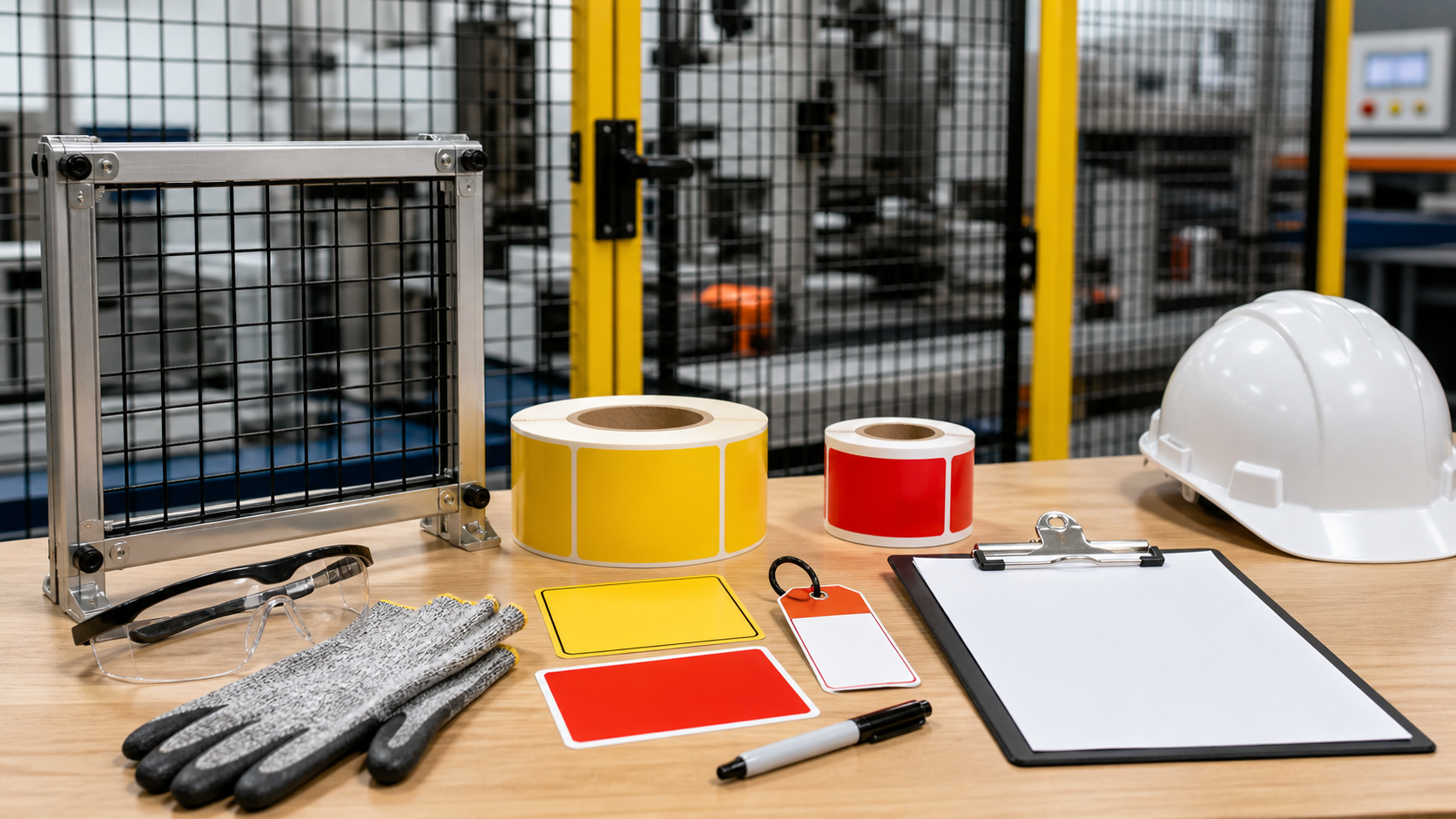
Maintain clearer machine areas with safety labels, lockout tags, warning signs, cut-resistant gloves, safety glasses, hard hats, and manufacturing safety supplies from eSafetySupplies.com.
Sources: OSHA 29 CFR 1910.212 Machine Guarding; OSHA 29 CFR 1910.147 Control of Hazardous Energy.