
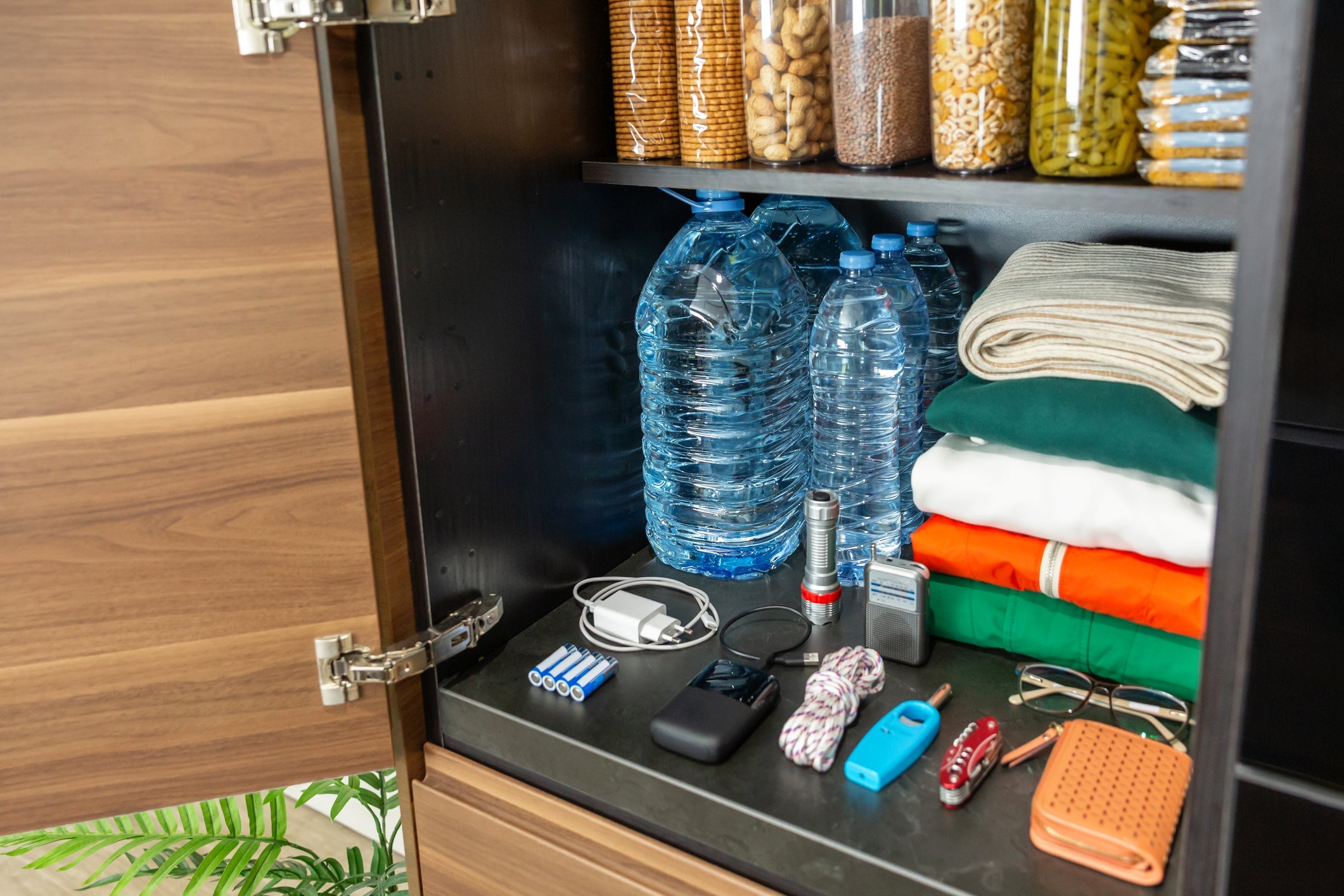
Quick Summary
Emergency water should be stored at a minimum of 1 gallon per person per day for at least 3 days. Proper storage requires food-grade containers, cool temperatures (50–70°F), protection from sunlight, and routine rotation every 6–12 months. Water itself does not expire, but storage conditions and container quality determine long-term safety.
Why Emergency Water Storage Is Critical in 2026
In California and other disaster-prone regions, earthquakes, wildfires, and power outages can disrupt municipal water systems without warning. Even short-term infrastructure damage can leave households and businesses without safe drinking water.
Unlike food, humans cannot survive long without water. Dehydration can begin within hours under stressful conditions. Proper water storage ensures safety during the first critical 72 hours following a disaster.
Water storage is the foundation of every emergency preparedness plan.
How Much Emergency Water Do You Need?
Minimum Recommendation
- 1 gallon per person per day
- Minimum 3-day supply
- 7 days recommended when possible
Example Calculation
Family of 4 × 1 gallon × 3 days = 12 gallons minimum.
Businesses should calculate based on employee count and potential shelter-in-place requirements.
Does Water Expire?
Pure water does not expire. However, contamination risks increase depending on:
- Container material
- Exposure to heat
- Sunlight exposure
- Seal integrity
Commercially bottled water typically carries a 1–2 year date due to packaging, not water degradation.
Best Containers for Long-Term Water Storage
Food-Grade Water Containers
Use BPA-free, food-grade plastic containers specifically designed for potable water storage.
Water Storage Barrels
Large-capacity barrels (30–55 gallons) are ideal for home preparedness.
Avoid These Containers
- Milk jugs (plastic degrades quickly)
- Non-food-grade buckets
- Containers previously used for chemicals
Containers must be airtight and durable to prevent contamination.
How Long Can You Store Emergency Water?
- Commercially bottled water: 1–2 years (check label)
- Home-filled containers: Replace every 6–12 months
- Sealed, professionally stored emergency water: Up to 5 years
Routine inspection is essential. Replace water if you notice cloudiness, odor, or damaged containers.
Proper Storage Conditions
1. Store in a Cool Environment
Ideal temperature: 50°F–70°F.
2. Keep Away from Direct Sunlight
UV exposure can weaken plastic and promote bacterial growth.
3. Avoid Chemical Exposure
Do not store water near gasoline, cleaning supplies, or pesticides.
4. Elevate Off Concrete Floors
Place containers on pallets or shelves to prevent leaching and temperature transfer.
Can You Store Water in the Garage?
Garages often experience extreme temperature fluctuations, especially during summer months. Sustained temperatures above 90°F accelerate plastic breakdown and reduce shelf life.
If garage storage is unavoidable:
- Keep containers shaded
- Use insulated storage bins
- Rotate more frequently
How to Sanitize Water Containers Before Filling
- Wash container with dish soap and water
- Rinse thoroughly
- Sanitize with 1 teaspoon of unscented household bleach per quart of water
- Let solution sit for 30 seconds
- Rinse again before filling
Use potable tap water from a treated municipal source whenever possible.
Emergency Water Treatment Options
If stored water becomes questionable or you must source water from unknown supplies:
- Boil water for 1 minute (3 minutes at high altitude)
- Use water purification tablets
- Use portable water filters
Filtration and purification add a secondary layer of protection.
Water Storage for Businesses
Workplaces should calculate water needs based on:
- Employee count
- Shift duration
- Shelter-in-place planning
Business emergency kits should integrate water storage with:
- MRE emergency meals
- First aid kits
- N95 respirators
- Lighting and communication tools
Common Water Storage Mistakes
- Failing to rotate water annually
- Using non-food-grade containers
- Storing near chemicals
- Leaving containers in direct sunlight
- Not labeling fill dates
Routine review ensures reliability.
Integrating Water into Your 72-Hour Emergency Plan
Water storage should be part of a complete emergency strategy that includes:
- Non-perishable food
- Medical supplies
- PPE
- Backup lighting
- Communication plans
Water is the foundation. Everything else supports survival.
People Also Ask
How long does bottled water last for emergency storage?
Commercial bottled water typically carries a 1–2 year date due to packaging, not the water itself. Store in cool, dark conditions to maximize shelf life.
Can I store tap water for emergencies?
Yes, potable tap water can be stored in sanitized, food-grade containers. Replace every 6–12 months for safety.