
Quick Summary
Choosing the right spill kit depends on the type of liquid, workplace environment, and potential spill size. Using the wrong kit can lead to ineffective cleanup and safety risks. This guide helps you select the best spill kit for your specific needs.
Why Choosing the Right Spill Kit Matters
- Ensures fast and effective spill cleanup
- Prevents workplace injuries
- Protects the environment
- Helps meet OSHA and EPA compliance
Types of Spill Kits Explained
Universal Spill Kits
Designed for water-based liquids, coolants, and general-purpose spills.
Oil Spill Kits
Absorb oil and hydrocarbons while repelling water—ideal for outdoor use.
Chemical Spill Kits
Used for hazardous and corrosive substances such as acids and solvents.
Hazmat Spill Kits
Provide maximum protection for highly dangerous materials.
Key Factors to Consider
1. Type of Liquid
Always match the spill kit to the liquid type—using the wrong kit can be dangerous.
2. Spill Size
Determine the maximum spill volume you may encounter and choose a kit with sufficient absorbent capacity.
3. Workplace Environment
Indoor environments may require smaller kits, while warehouses and industrial sites need larger, mobile units.
4. Compliance Requirements
Ensure the kit meets OSHA and EPA guidelines for hazardous materials handling.
Where to Place Spill Kits
- Near chemical storage areas
- Loading docks and warehouses
- Maintenance and equipment areas
- High-risk spill zones
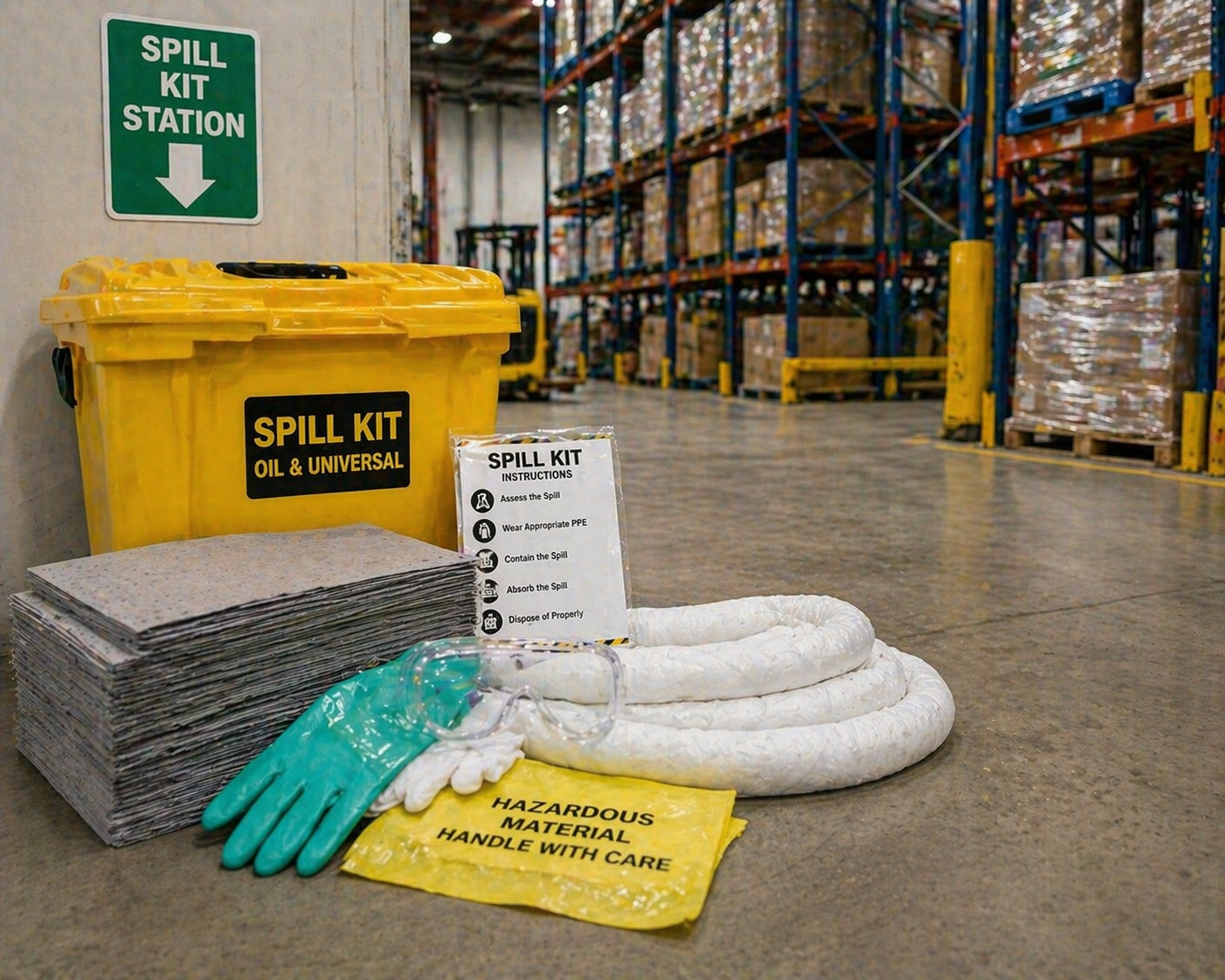
What Should Be Included in a Spill Kit
- Absorbent pads and socks
- Containment booms
- Disposal bags
- Protective gloves and goggles
- Instruction guide
OSHA and EPA Spill Preparedness Guidelines
Workplaces must be prepared for hazardous spills and provide appropriate cleanup materials.
OSHA guidance: OSHA HAZWOPER Standard
EPA spill prevention: EPA Spill Prevention (SPCC)
Common Mistakes to Avoid
- Using one kit for all spill types
- Underestimating spill size
- Poor placement of spill kits
- Not training employees
Related Safety Equipment
Conclusion
Selecting the right spill kit is critical for workplace safety and compliance. By understanding the types of spills and choosing the appropriate kit, businesses can respond quickly and minimize risks.
People Also Ask
What type of spill kit do I need?
It depends on whether you are handling oil, chemicals, or general liquids.
Where should spill kits be placed?
They should be located near areas where spills are most likely to occur.
Are spill kits required by OSHA?
OSHA requires workplaces to be prepared for hazardous spills, which includes having spill kits available.
What is the difference between oil and chemical spill kits?
Oil kits absorb hydrocarbons only, while chemical kits handle hazardous substances.
How often should spill kits be checked?
They should be inspected regularly and restocked after use.
About the Author
Mick Chan is a Safety Supplies industry professional with over 15 years of experience specializing in OSHA compliance, PPE regulations, and workplace safety solutions.