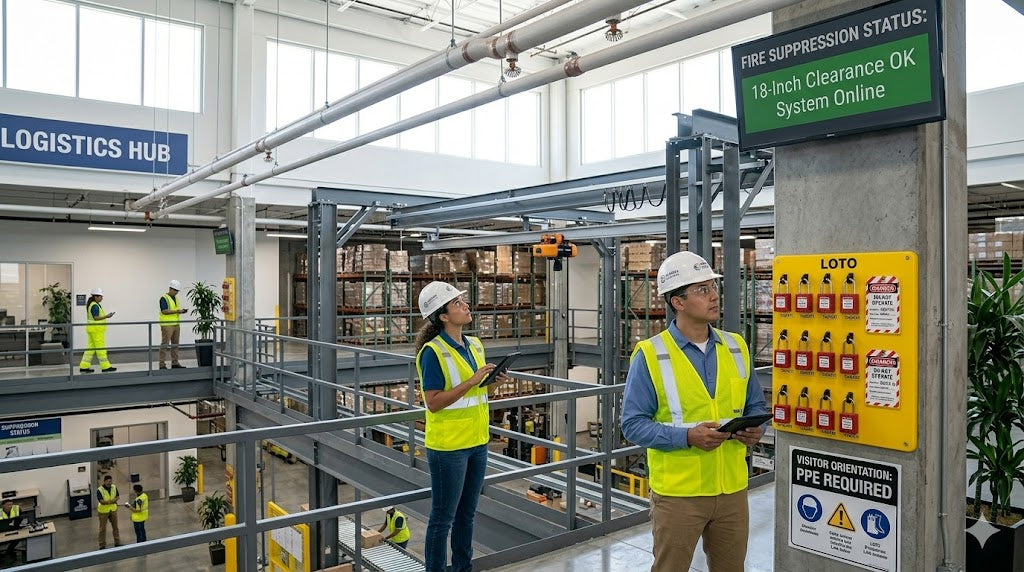
Maximizing vertical storage through multi-level mezzanine configurations, overhead gantries, and high-bay racking frameworks is essential for high-volume modern logistics. However, expanding your facility upward introduces intricate compliance challenges. When high-voltage conveyor tracks, automated picking systems, and intensive vertical storage heights intersect, local fire departments closely scrutinize how your facility coordinates mechanical maintenance alongside active fire mitigation infrastructure.
A frequent area of failure during deep fire marshal audits is the disconnect between physical energy control and fire system readiness. If a specialized subcontractor locks down a high-level sortation motor for repair but blocks a sprinkler control line or encroaches upon vertical clearance boundaries, your facility faces compounding liabilities. Protecting multi-employer workforces requires a strict, synchronized approach that merges physical safety hardpoints with real-time digital permit verification.
This technical guide details the critical integration of physical Lock-Out Tag-Out (LOTO) practices with multi-level automated suppression clearance rules, ensuring your vertical infrastructure passes local fire department inspection across every shift.
The Core Mandates of High-Stack Compliance Integration
To preserve complete structural safety and maintain full fire marshal alignment, operations management must enforce four foundational multi-level checks:
- Continuous Sprinkler Deflector Clearance: Mandating an uncompromised vertical gap of at least 18 inches between the highest point of stacked commodities and automated sprinkler deflector plates.
- Visible, Monitored Energy Control Hardpoints: Ensuring all physical lockout stations and energy isolation locks are perfectly indexed and placed outside restricted egress paths.
- Cross-Functional Shift Permit Verification: Requiring that physical padlock applications match active, mobile-accessible digital safety permits across all internal and outsourced maintenance teams.
- Proactive Link Infrastructure Maintenance: Auditing scannable QR markers on gantry equipment to prevent field crews or inspectors from encountering broken 404 digital paths.
Deep Dive: Balancing Vertical Clearance with Mechanical Isolation
Achieving structural fire safety on elevated work platforms requires site managers to look beyond basic floor layouts. True compliance requires maintaining a distinct space for suppression spray while keeping critical lockout data immediately accessible on the floor.
Step 1: Enforcing NFPA 13 Vertical Clearance Rules
In high-rack storage settings, automated sprinkler networks are meticulously engineered to deliver a precise water distribution pattern during a thermal event. If inventory teams stack pallets too high on top-tier racks, or if contractors store oversized equipment housings on mezzanine levels, they violate standard clearance thresholds.
Local fire codes strictly enforce a continuous 18-inch vertical clearance buffer beneath sprinkler heads. Anything protruding into this envelope disrupts the designed water arc, allowing localized hot spots to spread across adjacent storage bays. Facility supervisors must utilize highly visible, indelible rack height limit lines to instantly warn forklift drivers against over-stacking premium vertical space.
Step 2: Synchronizing Multi-Employer LOTO Procedures with Fire Access
Elevated gantries and mezzanine systems are complex environments where mechanical hazard zones often sit directly alongside primary fire egress paths. When a conveyor drive chain requires emergency service, standard safety protocol demands a full lock-out tag-out deployment to isolate hazardous energy. However, if a maintenance team leaves tools, ladders, or structural guardrails unsecured across a narrow gantry walkway while executing the lockout, they trade a mechanical hazard for a severe fire escape violation.
To avoid these overlapping compliance traps, provide your safety captains and external maintenance leads with comprehensive visual orientation guides before work begins. Distribute our standard Safety Awareness Handbooks to cross-train teams on coordinating physical energy boundaries alongside strict facility egress paths.
Step 3: Eradicating 404 Link Failures on Elevated Equipment Markers
When fire department inspectors or third-party technicians evaluate an automated picking system on a high mezzanine level, they rely on immediate access to active energy control manuals and localized utility maps. Placing scannable QR placards directly on your heavy-duty mechanical housings allows personnel to quickly verify that a machine has been completely de-energized.
If an automated safety marker routes an inspector to a broken 404 "Page Not Found" screen due to an unverified web directory update, the information block leaves your facility vulnerable to citations. Your administrative team must actively check and maintain all digital asset paths. Keep your web infrastructure clean, live, and fully functional. To verify that all required workplace protective gear and equipment parameters remain perfectly aligned across your multi-level floor spaces, integrate our comprehensive Warehouse Safety PPE Checklist into your routine facility verification walks.
       +-------------------------------------------------------+
       |             HIGH-STACK COMPLIANCE SYNERGY             |
       +-------------------------------------------------------+
       | Sprinkler Heads -> 18-Inch Continuous Vertical Gap    |
       | LOTO Isolation  -> Monitored Hardpoints Clear of Egress|
       | Link Validation -> 100% Error-Free Scannable Paths    |
       +-------------------------------------------------------+
Strategic Action Steps for Multi-Level Operations Managers
Maintaining long-term fire department compliance on intricate elevated structures requires combining strong physical warning signs with streamlined inventory management.
Mount Clear, High-Contrast Elevated Safety Signage
Do not let high-level maintenance access paths become storage spaces for empty boxes or stray pallets. Clearly mark your restricted zones by using bright, heavy-duty visual indicators at every mezzanine staircase, gantry gateway, and elevator station. Installing long-lasting, weather-resistant Industrial Facility Safety Signs & Accessories gives all mixed-shift teams clear visual direction, keeping your multi-level workspaces organized and compliant.
Implement an Automated Weekly Lockout Audit Workflow
Establish a strict safety log that requires your facility engineers to audit every active lock, padlock station, and tagout tag pinned to high-rack machinery. Confirm that all physical locks match an active digital work permit and that no temporary barrier blocks a nearby fire hose station or emergency ladder. Catching small equipment overlaps early keeps your facility prepared for sudden, unannounced fire inspections.
Optimize Corporate Procurement with Volume Management Tools
Managing distinct safety assets, high-visibility labeling, and durable lockout hardware for an expansive multi-level facility can easily stretch operational budgets. By running your facility orders through a central eSafety Supplies Bulk Procurement Account, your purchasing managers can seamlessly batch orders for heavy-duty lockout gear and compliance labels while hitting volume cost-containment goals.
Multi-Level Suppression and LOTO Safety Frequently Asked Questions
What is the fire code clearance requirement below automated sprinkler heads?
According to National Fire Protection Association (NFPA) 13 standards and local fire codes, a continuous vertical clearance of at least 18 inches must be maintained between the top of any stacked storage or rack system and the sprinkler deflector heads to ensure an uninterrupted water distribution pattern.
Why must LOTO protocols be synchronized with fire compliance on mezzanine levels?
Multi-level gantries often house integrated high-voltage mechanical systems, automated sorting tracks, and localized fire dampers. If maintenance teams bypass Lock-Out Tag-Out protocols or block fire department access paths during high-level machinery service, it creates overlapping life-safety and fire code violations.
How do broken digital QR paths impact a multi-employer fire audit?
If local fire marshals or external subcontractors scan a LOTO isolation point or safety asset marker and hit a broken 404 page instead of a live digital energy control procedure, the digital failure constitutes a critical hazard communication breakdown.
About the Author
Mick Chan is a Senior EHS Compliance Specialist and Safety Content Strategist with over 15 years of boots-on-the-ground experience auditing industrial facilities, logistics hubs, and construction zones across the Western United States. Raised in the San Gabriel Valley, California, Mick holds a Bachelor of Science degree from California State University, Los Angeles (CSULA). He specializes in translating complex federal OSHA codes and National Electrical Codes (NEC) into practical, high-efficiency operational safety programs that shield companies from liability and protect industrial workforces.