
Quick Answer
Fire extinguisher inspection tags help teams prove that extinguishers are being checked, maintained, and kept ready for emergency use. For workplace programs, OSHA requires portable fire extinguishers to be visually inspected monthly and maintained annually. A tag or inspection record gives your team a simple way to track the date, initials, extinguisher condition, and any corrective action needed.
The tag is not the whole program. It works best when paired with visible placement, clear access, the correct extinguisher type for the hazard, employee training, and an annual maintenance process.
What To Check Each Month
| Check area | What to look for | Why it matters |
|---|---|---|
| Location | The extinguisher is in its assigned place. | A missing extinguisher wastes time during an emergency. |
| Access | No boxes, pallets, carts, or doors block the unit. | Workers need fast access without moving clutter first. |
| Visibility | The extinguisher or its sign can be seen from the normal travel path. | Clear identification helps visitors and employees act quickly. |
| Pressure gauge | The needle is in the acceptable operating range. | A low or overcharged unit may not work as intended. |
| Pin and seal | The pull pin is present and the tamper seal is intact. | A broken seal can mean the unit was used or disturbed. |
| Physical condition | No obvious damage, corrosion, leakage, clogged hose, or missing label. | Visible damage is a signal to remove or service the unit. |
| Inspection tag | The current month is marked with date and initials. | Records help supervisors spot gaps before audits or incidents. |
Where Inspection Tags Fit
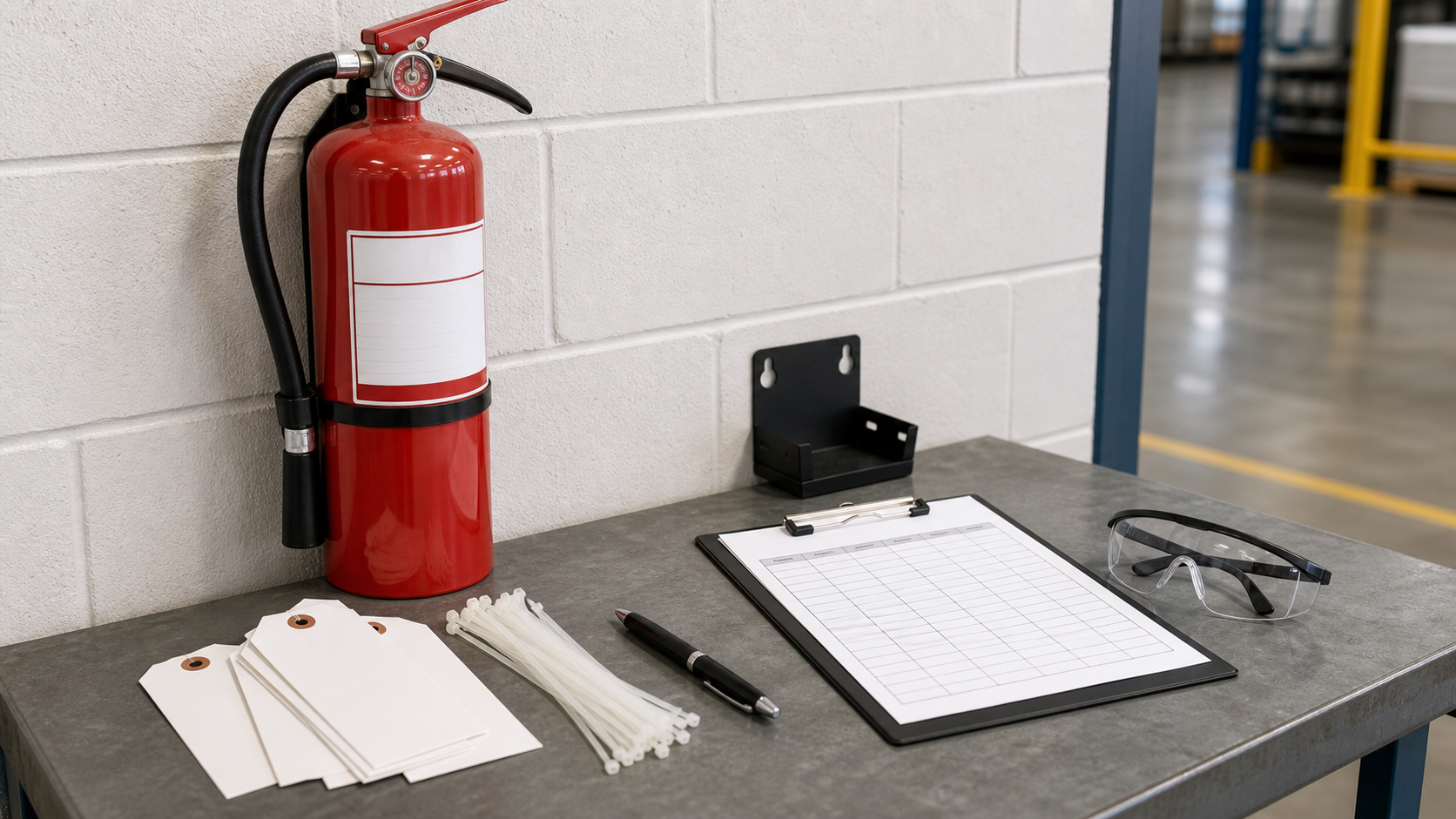
Use fire extinguisher inspection tags to make the monthly check easy to see at the point of use. A good tag should be durable enough for the environment, easy to write on, and attached securely with a wire, plastic seal, or approved tie that does not interfere with the extinguisher.
For larger facilities, keep a matching digital or paper inspection log. The tag shows the unit was checked; the log can capture details such as extinguisher ID, building area, deficiency notes, service vendor, and replacement status.
Placement Tips That Reduce Problems
- Place extinguishers where employees can reach them along normal paths of travel.
- Use wall signs, projection signs, or floor markings in warehouses where equipment may be hidden behind shelving or inventory.
- Keep extinguishers mounted, not sitting loose on shelves or floors.
- Review placement whenever the layout changes, especially after adding racks, machines, chemical storage, or temporary construction barriers.
- Do not let seasonal displays, pallets, trash bins, or parked equipment block access.
Common Mistakes To Avoid
The biggest mistake is treating a signed tag as proof that the extinguisher is ready when nobody actually checked the unit. Build the habit around a short visual inspection, not just initials. Another common issue is forgetting remote areas such as mezzanines, storage rooms, loading docks, fleet garages, and outdoor work zones.
Replace damaged or full inspection tags before they become unreadable. If a unit fails inspection, mark it clearly, remove it from service when needed, and arrange replacement or maintenance right away.
FAQ
How often should fire extinguishers be inspected?
OSHA requires employers to visually inspect portable extinguishers monthly and provide annual maintenance checks. Some sites may require additional checks based on hazard level, insurer requirements, local fire code, or company policy.
What should be written on a fire extinguisher inspection tag?
At minimum, record the inspection month, date, and inspector initials. Many facilities also track unit ID, location, condition, and corrective action in a separate log.
Can a tag replace annual extinguisher maintenance?
No. Monthly visual checks and annual maintenance serve different purposes. Tags help document routine checks, while annual maintenance should follow the applicable standard and service process.
About Mick Chan
Mick Chan is a safety supply specialist who helps businesses choose practical PPE, facility safety, and emergency readiness products for real workplace conditions. His guidance focuses on simple, usable safety programs that are easier for teams to follow every day.
Final CTA
Build a cleaner fire extinguisher inspection process with inspection tags, wall signs, labels, safety glasses, gloves, and facility safety supplies from eSafetySupplies.com.