
Quick Summary
Disposable gloves used for food handling must comply with FDA food-contact regulations and provide appropriate barrier protection. Nitrile and vinyl gloves are commonly used in food service environments, while latex gloves are less preferred due to allergy risks. Proper glove selection, storage, and change frequency are essential to prevent cross-contamination and maintain food safety compliance.
Why Proper Glove Selection Matters in Food Handling
Food safety violations can lead to contamination, health risks, regulatory fines, and reputational damage. Gloves act as a barrier between food and potential contaminants, but only when selected and used correctly.
Disposable gloves are widely used in:
- Restaurants and commercial kitchens
- Food processing facilities
- Grocery stores
- Catering services
- School cafeterias
However, gloves do not replace handwashing. They are an additional layer of protection.
FDA Requirements for Food-Contact Gloves
Disposable gloves used in food handling must comply with U.S. Food and Drug Administration (FDA) regulations under:
- 21 CFR Part 177 (Indirect Food Additives)
- Food Contact Substance (FCS) guidelines
Gloves must be labeled as “food-safe” or compliant for food contact. Manufacturers must ensure materials do not leach harmful substances into food.
Reference: FDA Food Contact Substance Guidelines
Best Types of Disposable Gloves for Food Handling
Nitrile Gloves
- Latex-free
- Strong puncture resistance
- Resistant to oils and grease
- Durable for extended food prep
Nitrile gloves are widely used in commercial kitchens due to durability and reduced allergy concerns.
Vinyl Gloves
- Cost-effective
- Latex-free
- Suitable for low-risk food prep
Vinyl gloves are commonly used for short-duration tasks such as sandwich preparation or bakery operations.
Shop Vinyl Food Handling Gloves
Latex Gloves
- Excellent elasticity
- Comfortable fit
Latex gloves are less common in food service due to potential allergy concerns and regulatory caution.
Are Powdered Gloves Allowed in Food Service?
Powdered gloves are generally discouraged in food handling environments because powder can contaminate food and surfaces. Many jurisdictions restrict or prohibit powdered gloves in commercial kitchens.
Powder-free gloves are the industry standard.
Color-Coded Gloves for Food Safety
Color coding helps prevent cross-contamination by designating specific gloves for different tasks.
- Blue gloves – easy visibility in food
- Black gloves – front-of-house food prep
- Clear gloves – low-risk applications
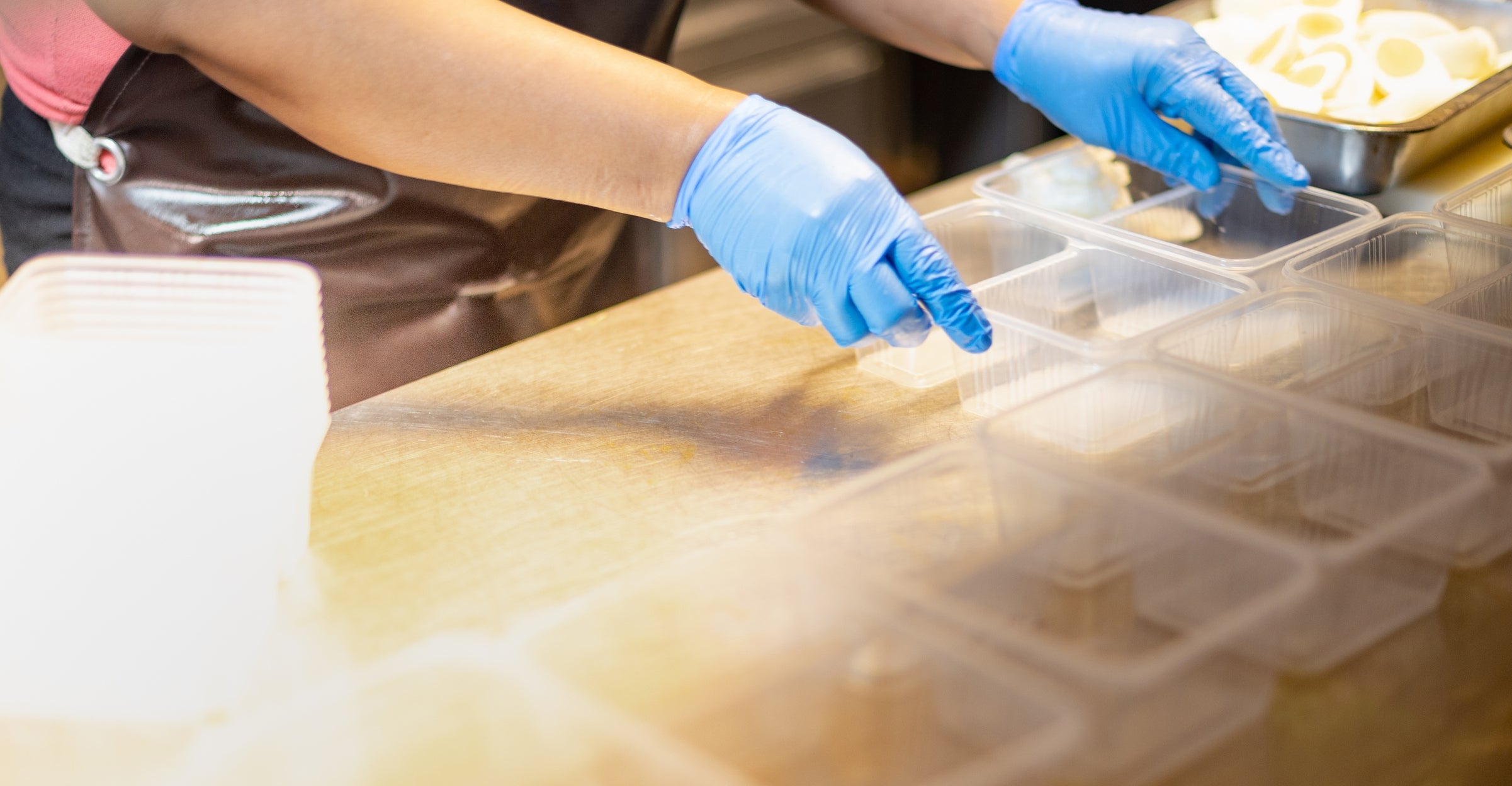
Blue gloves are particularly useful because they are easily visible if torn or dropped into food products.
When Should Food Handling Gloves Be Changed?
Gloves must be changed:
- Between handling raw and cooked foods
- After touching non-food surfaces
- After handling waste
- When torn or damaged
- After extended continuous use
Failure to change gloves appropriately increases contamination risk.
Glove Thickness for Food Service
Most food handling gloves range from 3–5 mil thickness.
- 3–4 mil: Light food prep tasks
- 5 mil: Added durability for high-volume kitchens
Thicker gloves provide greater tear resistance during extended shifts.
Common Food Industry Compliance Considerations
- FDA food-contact approval
- Local health department requirements
- Allergen management policies
- Proper glove storage (clean, dry environment)
- Employee glove training programs
Regulatory agencies may inspect glove usage practices during routine food safety audits.
Risks of Using the Wrong Gloves
- Chemical contamination
- Foodborne illness
- Allergic reactions
- Regulatory penalties
- Product recalls
Proper glove selection protects both employees and consumers.
Storage & Handling Best Practices
- Store gloves in original packaging
- Keep away from direct sunlight
- Avoid high heat and humidity
- Prevent exposure to cleaning chemicals
Improper storage may degrade glove integrity.
People Also Ask
Are nitrile gloves safe for food handling?
Yes, nitrile gloves labeled as food-safe are widely used in commercial kitchens and food processing environments.
Are vinyl gloves FDA approved?
Vinyl gloves that meet FDA food-contact regulations are approved for appropriate food handling applications.
Why are blue gloves used in food service?
Blue gloves are easily visible if torn or dropped into food, helping reduce contamination risks.
Can latex gloves be used for food handling?
Latex gloves may be used if food-safe, but many operations avoid them due to allergy concerns.
How often should food handlers change gloves?
Gloves should be changed whenever switching tasks, after contamination, or when damaged.
Conclusion
Disposable gloves play a critical role in food safety compliance. Nitrile and vinyl gloves are the preferred options for most food handling applications due to durability and allergy considerations. Selecting FDA-compliant gloves, training staff on proper usage, and maintaining strict glove-changing protocols are essential steps in protecting both customers and businesses.
Author
Mick Chan is a Safety Supplies industry professional with over 15 years of experience specializing in OSHA compliance, PPE regulations, and bulk safety procurement. Based in California, Mick advises businesses in food service, manufacturing, and industrial sectors on practical compliance and workplace safety solutions.